
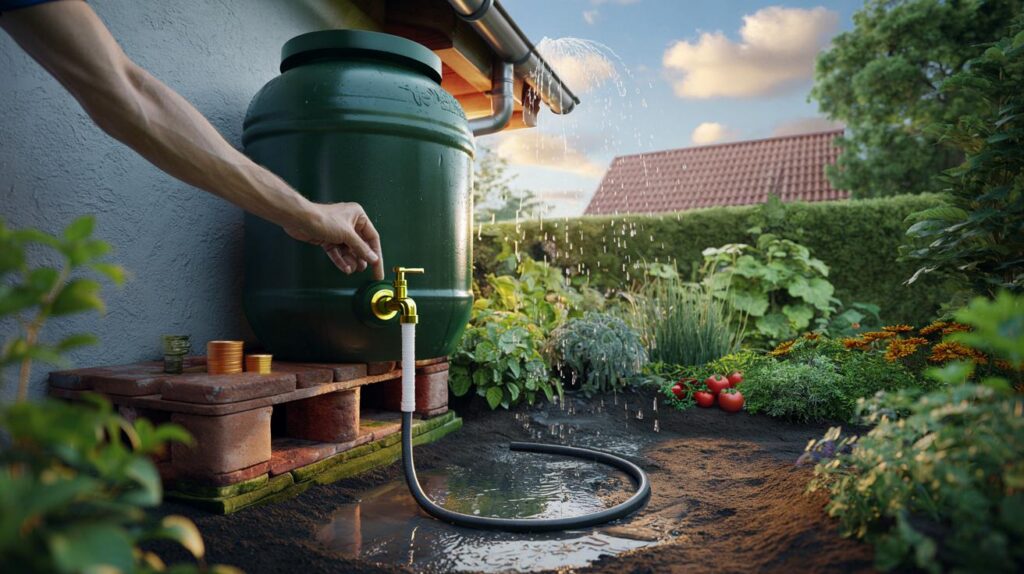
As bills rise and hosepipe bans loom, a tiny tweak promises calmer mornings, greener beds and change left in your pocket.
Across Europe this October, gardeners are turning to a near-costless way to water beds and trees without babysitting the tap. The method is simple, gravity-powered and built from parts you likely already own. The headline figure is hard to ignore: less than €10, an hour’s work, and a setup that keeps plants drinking when you are away.
Why a downpipe barrel changes everything
Turning roof runoff into plant-ready water
Rain is soft, chlorine-free and gentle on roots. Your roof is a catchment that pours it into a single downpipe. Set a barrel under that pipe and you turn bad weather into stored irrigation. Plants respond well to this steady, mild feed. Soil structure benefits, because you avoid the shock of hard, treated mains water.
One modest roof can deliver thousands of litres each year. Most households let it vanish down a drain.
Unlike mains water, stored rain reaches ambient temperature fast. That reduces plant stress after hot days. It also sidesteps local restrictions that often limit hose use during dry spells. Many regions still allow rainwater use when bans hit mains supply.
Ditching daily watering and cost anxiety
A gravity-fed barrel and a thin hose line take care of beds while you sleep or travel. You open a tap for a slow flow, or fit drippers for continuous release. The result is less time spent lugging cans, and fewer painful surprises on your quarterly bill. Because the system runs without electricity, there is nothing to program and little to break.
Retail kits vs a €9 hack
What shops sell and why many balk
Off-the-shelf irrigation kits add timers, pumps and proprietary tubing. They work, but costs climb fast. Add a controller, battery packs and special connectors, and the total often clears several dozen euros or pounds. For a small veg bed, it feels like overkill. Complexity also puts beginners off. A Saturday lost to fittings and manuals helps no one.
The do-it-yourself route with scraps and sense
A bare-bones setup can water a kitchen garden for months. Think reuse first: a food-grade drum, a simple tap, a slim hose. Add a stand made from blocks or pallets. Elevation gives pressure. A mesh under the downpipe keeps leaves out. The rest is common sense and a roll of tape to seal threads.
Gravity is your pump. A little height equals a steady, free drip to every root you care about.
Build the €9 autonomous system in under an hour
What you need
- A clean drum or barrel, 40–100 litres for small spaces, larger if you have room
- A budget tap or spigot (often under €3/£3)
- Thin hose for drip or seep watering, length to suit your beds
- A hole saw or drill to fit the tap near the base
- Thread tape or a rubber washer to seal joints
- A sturdy stand: bricks, blocks or a pallet stack to lift the barrel
- A fine mesh or gutter guard to catch leaves and grit
- A tight lid to limit evaporation and keep insects out
How to set it up
Place the barrel under the downpipe and raise it at least 30–60 cm. Drill low on the side and fit the tap. Seal threads with tape and hand-tighten, then snug with a spanner. Attach the hose to the tap and run it along the bed. Pin it down with wire staples or small pegs. Add simple drippers or pierce pinholes near each plant for a slow, even soak.
Test for leaks, then run the tap a quarter-turn to gauge flow. Adjust height if the drip is too weak. The higher the barrel, the better the pressure. Even one cinder block can make a visible difference.
Friction-free tweaks
Fit a small inline filter if your roof sheds grit. Use a first-flush diverter if birds frequent your gutter. On sloped ground, split the hose into two branches so lower plants do not steal all the flow. Mark the tap with a paint dot where the drip is perfect. That saves guesswork each time you open it.
How much you could save
Water and money
One 100-litre barrel filled ten times between autumn and late spring gives roughly 1,000 litres. In many areas, 1,000 litres of mains water can cost £2–£4 before sewer charges. Households with metered wastewater often pay more. The payback on a €9–£8 kit comes in weeks during a dry spell.
Ten refills can offset a thousand litres of mains water. That is money saved and resilience gained.
You also cut peak use on hot evenings, when pressure drops and neighbours compete for flow. Your plants receive a slower, deeper soak that builds stronger roots. That can reduce losses during heatwaves, when replacement plants and compost add hidden costs.
A quick reckoner
Use the table to estimate monthly yield. Multiply roof area by rainfall, then by 0.9 to account for losses.
| Roof area | Monthly rain | Approx. water captured |
|---|---|---|
| 10 m² | 20 mm | ≈ 180 litres |
| 20 m² | 50 mm | ≈ 900 litres |
| 40 m² | 30 mm | ≈ 1,080 litres |
Common snags and safe practice
Slow flow, leaks and clogs
If flow crawls, lift the barrel or shorten the hose. If a joint weeps, add another wrap of thread tape. If drippers block, swish the line in a bucket and back-flush. Rinse the barrel at the end of winter and mid-summer to clear sediment. A simple schedule keeps smells and slime away.
Hygiene, mosquitoes and frost
Always fit a tight lid. Add fine mesh under the downpipe to stop larvae. In warm regions, a teaspoon of vegetable oil on the surface can break the breeding cycle, but avoid this if you run a pump. Site the barrel on a stable, level base and strap it if children play nearby. Drain or isolate the system before hard frosts to prevent cracks. Never use stored rain for drinking or kitchens.
Scale it your way
Balcony, beds or fruit trees
Balcony growers can run a 20–40 litre can to a planter stack with micro-tubing. Veg beds love a 100–200 litre drum feeding two or three drip lines. Young fruit trees benefit from a ring of hose with two holes per tree. Move emitters as canopies spread. Add a second barrel in series if you have the space.
Upgrades when budget allows
Later on, fit a simple timer to open the tap for 10–20 minutes every two days. Add a first-flush diverter to improve water quality. Install a coarse filter in the gutter and a finer one before the hose. None of these are required for the €9 version, but they add comfort if you expand the system.
Start small, keep it simple, and let gravity do the hard work. The rest is routine checks and common sense.
If you want to check sizing, sketch your bed layout and estimate litres per week. Leafy crops in warm weather often need 10–15 litres per square metre weekly. A 100-litre drum can cover a 6–10 m² bed for a gentle top-up. For water security, aim for two weeks of storage. Add shade over the barrel to limit algae growth and evaporation.
Think about risk as you grow the setup. Heavy drums must sit on solid ground. Overflow should drain away from walls and neighbours. Fit a simple overflow hose that leads into a soakaway or a second barrel. These small steps keep your kit tidy, safe and welcome on any street.



This is the kind of €9 fix I can get behind. We’ve had hose bans two summers running and lugging cans is a pain. A barrel + a slim line seems like low-risk, high-win. Quick Q: will a 100L drum at 50 cm height give enough pressure for 10 m of micro-tubing? I’m definitley keen to test this before the next dry spell.