
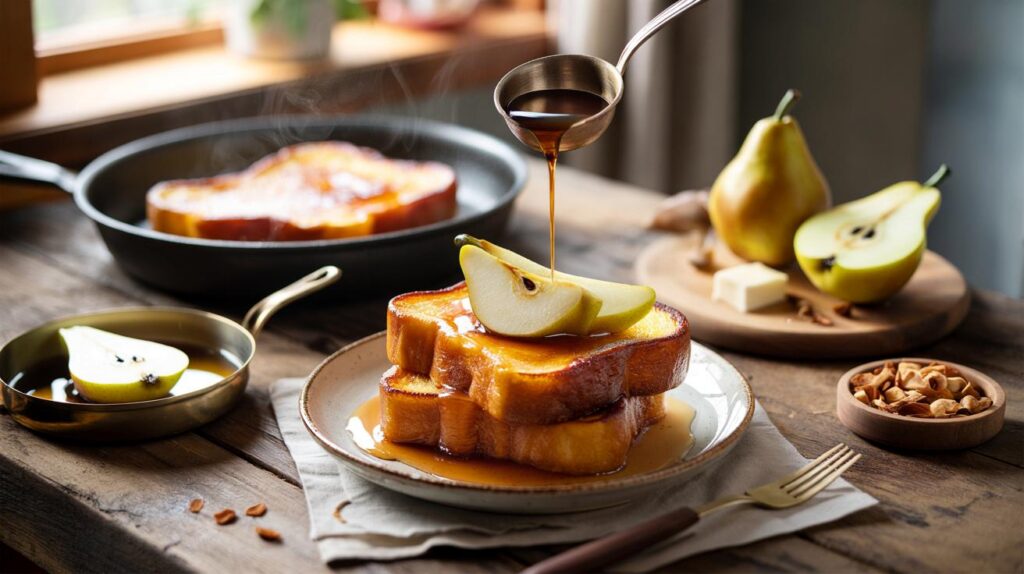
A chill creeps in, clocks shift, and the kitchen calls. A golden, warming fix waits with barely any effort.
The season leans towards comfort, yet mornings remain rushed. A quick pan, a short list, and a soft, fragrant finish bring calm to breakfast time without derailing the day.
Why this golden breakfast is trending now
Autumn favours warmth and softness. People want speed, thrift and real flavour. This pear and brioche French toast hits those marks. It uses cupboard basics. It wastes nothing. It looks like weekend luxury, yet it slots into a weekday routine. Children love the sweetness. Adults like the balance of fruit, spice and crunch.
Ready in 12 minutes, golden at the edges, custardy in the middle, with pears that turn silky in their own syrup.
Use slightly stale brioche to reduce waste and gain texture. Go for pears that feel firm at the stalk and fragrant at the base. That mix holds in the pan, then melts on the plate.
The 12-minute method
What you need
- 4 thick slices of brioche, about 2–3 cm each
- 2 pears, just ripe (Conference, Comice or Williams work well)
- 2 eggs
- 150 ml whole milk
- 40 g golden caster sugar
- 1 tsp vanilla extract or 1 tbsp vanilla sugar
- 30 g unsalted butter for the brioche, plus 10 g for the pears
- Pinch of cinnamon (optional)
Step-by-step
Whisk eggs, sugar and vanilla until light and foamy. Stream in the milk and whisk again for a smooth custard. Avoid undissolved sugar to keep the soak even.
Lay the brioche in the custard. Turn each slice once or twice. Let the liquid reach the centre without breaking the crumb. Aim for moist, not soggy.
Heat 30 g butter in a wide pan on medium heat. Slide in the soaked slices. Fry 2–3 minutes per side until deep gold with caramelised edges.
Keep the heat moderate. A steady sizzle gives colour outside and a custardy set inside.
While the brioche cooks, peel and core the pears. Slice into slim wedges. Melt 10 g butter in a second pan. Add the pears, 1 tbsp sugar and a pinch of cinnamon if you like. Cook until tender and glossy, with a light syrup forming.
Plate the brioche. Spoon the pears on top. Pour over the pan juices. Dust with a touch of vanilla sugar or cinnamon. Serve hot.
Smart swaps and seasonal twists
Fruit and spice variations
Apples bring bite and a tart edge. Quince cubes give perfume and hold their shape. A few orange zest strands brighten the syrup. Ground cardamom adds a floral lift. A crack of black pepper cuts the sweetness and brings warmth.
Dairy-free and vegan route
Use a dense seeded loaf instead of brioche. Swap eggs and milk for a mix of 200 ml oat milk, 1 tbsp cornflour and 1 tbsp maple syrup. Fry in a neutral oil and finish with plant-based butter for flavour.
Nutrition, cost and timing at a glance
| Measure | Estimate per serving (2 slices) |
|---|---|
| Time from pan to plate | 12 minutes |
| Energy | Approx. 520 kcal |
| Protein | 14 g |
| Cost (UK retail, approx.) | £1.20–£1.60 |
| Fibre | 5–6 g |
Using slightly stale brioche reduces waste and improves the crust-to-custard contrast.
Make it work on a weekday
Measure the custard base the night before. Chill it in a jug. Slice and cover the brioche so it dries a touch. In the morning, soak, fry and top with pears. The pan does the rest.
Batch-cook pears at the weekend. Keep them in the fridge for three days. Warm a spoonful in the pan while the brioche browns.
Serving ideas that actually help
- Crushed roasted hazelnuts for crunch and oils that boost aroma
- A spoon of thick crème fraîche for tang against the syrup
- A light drizzle of runny honey or date syrup for depth
- Cocoa nibs for texture without extra sugar
- A squeeze of lemon to sharpen the pears
Common mistakes and quick fixes
Custard too thin or too sweet
Add 1 tsp cornflour and whisk to stabilise. Reduce sugar by 10 g if your brioche is very sweet.
Soggy slices
Soak for less time and use firmer brioche. Lower the milk by 20–30 ml. Keep the pan on medium, not low.
Pears falling apart
Pick pears that yield only slightly near the stalk. Cut thicker wedges. Stop cooking once the syrup coats the slices.
Extra context: pear varieties and texture
Conference pears soften quickly and perfume the kitchen. Comice pears turn buttery and keep a gentle shape. Williams pears cook fast and bring a honeyed note. Choose fruit that sits just shy of full ripeness. It softens in the pan and stays on the fork.
Firm pears at the start, tender pears on the plate. The heat does the ripening for you.
Food safety and storage
Eat the brioche hot from the pan for best texture. If you must hold it, keep it on a low oven shelf for 10 minutes. Store cooked pears in a sealed container in the fridge for up to three days. Reheat gently until steaming. Do not leave egg-based custard at room temperature for long.
Why this small ritual pays off
This dish turns leftovers into a treat. It respects the season. It uses short, clear steps. It feeds two people well and scales without fuss. It suits children and adults. It works for brunch, a late snack or a simple pudding with a spoon of ice cream.
Want to lighten it? Swap half the brioche for slices of country bread. Cut the butter by a third and use a non-stick pan. Add toasted seeds for extra fibre. Want to boost energy before a long morning? Keep the brioche, keep the butter, and add a side of Greek-style yoghurt for protein that lasts.



Tried it before work—golden edges, custardy middle. Nailed it.
520 kcal for two slices feels steep for a weekday. If I reduce butter by a third and swap half the brioche for country bread (as you note), will the custard still set without going dry? And could I keep the pears glossy with orange juice and a pinch of cardamom instead of the extra sugar? I love the 12-minute promise and the budget range, just want to lighten things a touch without landing in soggy-slice territory. Any texture tips for using slightly stale non-brioche loaves?