
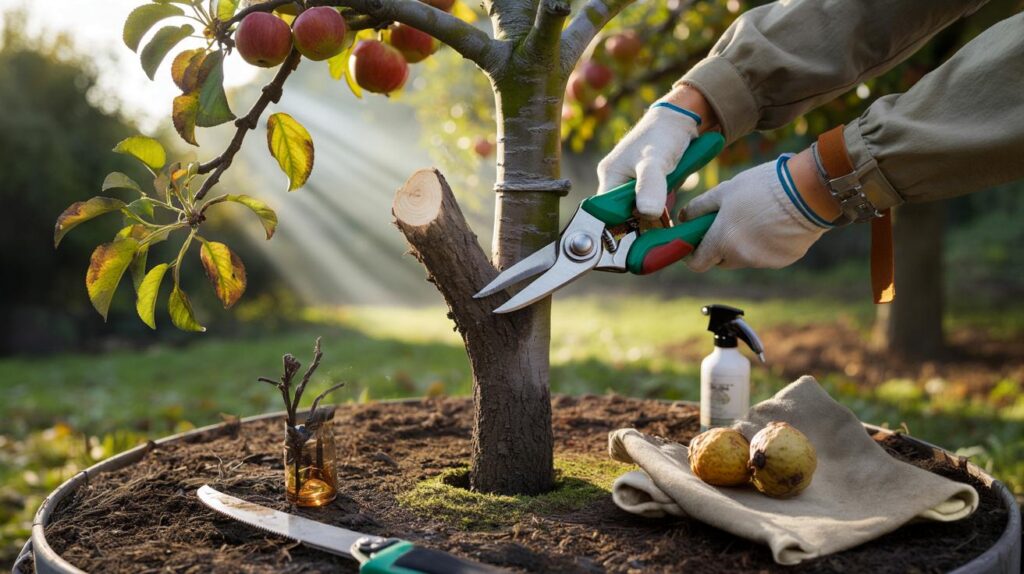
Shorter days and cooling nights change your orchard’s rhythm, and a quiet October habit begins to shape next spring’s rewards.
Professionals slip out with secateurs as the sap falls, tidying what most people leave until spring. That single, careful sweep through dead and misdirected wood reduces disease, lifts light levels, and sets your trees up for a steadier show of blossom when warmth returns.
October’s quiet cut: why now matters
As daylight shrinks, fruit trees enter dormancy. Growth slows, leaves yellow and drop, and energy shifts to roots and buds. This is the moment when gentle intervention does the least harm and the most good. Clean removals of dead wood, damaged spurs and crossing shoots reduce infection pressure and help light reach the sites where flowers form.
Most flower buds for next year were initiated in late summer. Their quality still hinges on light, airflow and the tree’s ability to conserve carbohydrates over winter. A small October tidy-up supports that process, without the stress of heavy pruning.
What the tree is doing while you work
Through autumn, sap flow eases and tissues harden. Cuts made in this window tend to bleed less. Trees direct resources into root growth and storage, then seal wounds more effectively once cold weather bites. Removing dead or rotten wood now closes a door to cankers, borers and fungi that overwinter in cracks.
One clean cut through dead or crossing wood in October can remove months of disease pressure and restore vital sunlight to flower spurs.
How to spot the moment to act
- Leaves are yellowing or have mostly fallen, showing sap is retreating.
- You can see dead, split or hollow branches hidden by summer foliage.
- Fine shoots rub or cross near the centre, shading the spur system.
- The forecast offers a dry spell and no hard frost within 48 hours.
The October gesture: remove dead wood and crossed branches
Think “sanitation and light”, not reshaping. Focus on what steals energy or harbours disease. Keep the canopy open enough for a bird to fly through, yet sheltered from harsh winds. Aim for short, accurate cuts that respect the branch collar so wounds can seal promptly.
Five precise cuts most gardeners need
- Cut out dead wood back to healthy tissue, just outside the branch collar.
- Remove one of any two crossing branches; keep the one with the better outward angle.
- Shorten long, whippy water shoots that shade spurs, cutting to an outward-facing bud.
- Snip out stubs and torn ends left by wind or earlier work to a clean junction.
- Lift low, trailing twigs that drag on soil, which spread scab and rot.
Keep blades immaculate: a quick wipe with alcohol between trees prevents invisible infections hitching a ride.
Tools, timing and technique
- Sharp bypass secateurs for live, small-diameter wood; anvil types suit only dead wood.
- A curved pruning saw for anything thicker than your thumb; use a three-cut method to avoid tearing.
- Sturdy gloves and eye protection; stable footing on dry ground.
- Pick a dry day around 8–15°C; avoid cutting if a freeze is due within two days.
Species cues you can trust
Different fruit trees respond differently to timing. October is ideal for hygiene cuts across the board, but be selective with stone fruit to dodge silver leaf disease.
| Tree | October action | Avoid | Reason |
|---|---|---|---|
| Apple and pear | Remove dead, diseased, crossing and inward shoots; light thin for airflow. | Heavy structural cuts | Big cuts can stimulate rank regrowth; keep major work for late winter. |
| Plum | Sanitation only: dead or broken wood, mummified fruit off the tree. | Major pruning | Autumn and winter cuts raise silver leaf risk; reshape in summer. |
| Cherry | As for plum; remove cankered twigs and fruit mummies. | Large live cuts | Cherry also suffers silver leaf; keep big cuts for mid-summer. |
| Peach/nectarine/apricot | Dead wood out; clear congested tips lightly. | Hard pruning | Best shaped soon after harvest to limit disease entry. |
| Fig | Remove dead wood; tie in young shoots; protect against frost later. | Cutting green tips hard | Young tips can be frost-prone and store next year’s figs. |
What happens after the cut
With dead and misdirected wood gone, the canopy breathes. Light reaches fruiting spurs on older wood. Air dries leaves faster after rain. These two shifts suppress scab and mildew, which thrive in shade and damp. The tree can hold onto more stored energy across winter, improving blossom quality and fruit set in spring.
Small, neat wounds close more quickly than ragged ones, reducing the window for pathogens. Leaving the branch collar intact triggers callus formation along the natural ridge. Wound paint is usually unnecessary; well-made cuts on a dry day seal better without it.
Your quick pre-winter checklist
- Collect and bin mummified fruit and scabby leaves; do not compost them cold.
- Rake out old prunings and weeds from the dripline to remove pest refuges.
- Top up mulch 5–7 cm deep, keeping it 10 cm clear of the trunk to deter rot.
- Fit grease bands to apple and pear trunks to trap winter moth females.
- Guard trunks from rabbits and strimmers with a ventilated spiral or mesh.
How seven minutes per tree pays back in spring
Most home trees need 7–15 minutes now. That short session can lift light at key spurs, where apples and pears bear most fruit. It also reduces the number of weak, shaded buds that drop early. The result is not showy today, but it stacks the odds for a more even bloom, fewer disease sprays, and sturdier, well-coloured fruit.
Work with restraint: remove the worst 10–20% of clutter, then stop. Less shock now means calmer growth later.
Three smart checks before you snip
- Trace each suspect branch back to its origin and decide which piece truly blocks light.
- Check for canker lesions, gum exudation or frass; cut well below any visible infection.
- Visualise next May: will sun reach fruiting wood by mid-morning? If not, make one more precise cut.
Extra gains most people leave on the table
Soil health shapes spring performance. A simple autumn test for pH and potassium guides winter feeding. Many British garden soils run short of available potash, which supports flowering and fruit quality. Where tests confirm low K, a light application of sulphate of potash in late winter complements your October clean-up.
Water strategy matters, too. Dry spells still hit in April and May. A circle of organic mulch now stabilises soil moisture and temperature, helping roots stay active as blossom opens. Paired with open, well-lit canopies, this reduces June drop and fruit cracking in changeable weather.
A small-orchard scenario you can copy
Three trees, one hour: 15 minutes per apple, 10 for a pear, 10 for a plum, plus 25 minutes for clean-up and mulching. You remove dead stubs, two crossing branches, and a handful of water shoots. You bag mummies, wipe blades with alcohol, and refresh mulch. By spring, buds sit in light, leaves dry faster after showers, and winter moth damage drops thanks to grease bands.
Risks to manage and the safe limits
- Do not remove more than a fifth of the canopy now; big shocks invite rank regrowth.
- Avoid cutting in wet or freezing conditions; both slow sealing and invite disease.
- Keep large live cuts on stone fruits for summer to sidestep silver leaf.
- Dispose of diseased wood away from the compost unless you hot-compost to at least 60°C.
For keen growers, light training with soft ties now also helps. Space young laterals about a hand’s width apart, favouring branches at roughly 45–60 degrees from vertical. This geometry supports strong scaffolds and productive spurs without heavy pruning later.
If pollination has been patchy, plan companions during winter ordering. Matching bloom groups across apples or adding a compatible pear can lift set without extra effort. Your discreet October cut then becomes part of a wider, confident routine that carries fruit trees from dormancy to a fuller spring show.



This is the clearest October pruning guide I’ve read—definitley trying the three checks before cutting. I like the ‘bird can fly through’ canopy test and the reminder to wipe blades with alcohol. Thanks for stressing light and sanitation over reshaping; my apples need exactly this.
Quick question: you say sanitation only for plums and cherries to avoid silver leaf. In a mild, damp UK autumn, is even a small live cut still safe, or should I wait until mid-summer no matter what? I’ve seen conflicting advice and dont want to mess it up.