
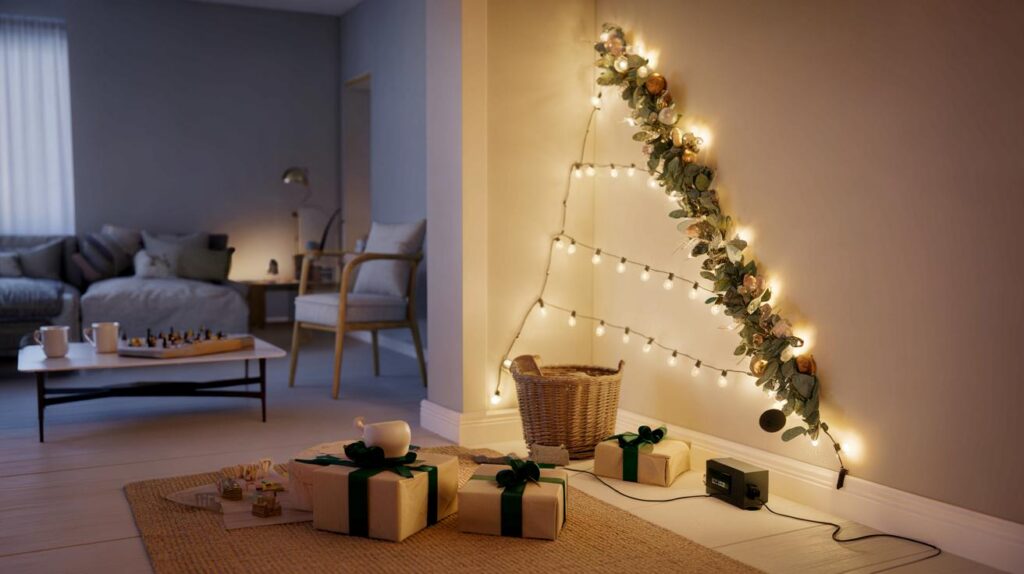
Rising bills, shrinking rooms and greener habits are reshaping December traditions, pushing many households to seek lighter festive ideas without clutter.
Across Britain and beyond, a modest idea is quietly challenging the centrepiece that once felt non-negotiable. A wall-based, glowing “tree” now tempts space-poor renters, eco-minded parents and design fans with an elegant promise: keep the sparkle, lose the bulk. Retailers hint at the change, social feeds show it in action, and early-bird planners say it frees time and space when the calendar tightens.
Why the classic spruce faces a rethink
Families weigh cost, space and waste in new ways. A natural tree smells lovely yet sheds, needs watering and ends up at a collection point. An artificial tree spreads cost over years, yet it takes storage room and rarely suits compact flats. Many households now prize tidy layouts and flexible zones that can host board games one minute and gift-giving the next. A wall tree answers that brief.
The pitch is blunt and practical: 0 m² of floor space, under £30 if you shop smart, and about 15 minutes from box to glow.
The appeal also rests on mood. Warm light on a clean wall feels calm, not crowded. You curate what matters—soft LEDs, a few meaningful ornaments, a hint of green or texture—without a forest of branches to manage. When guests arrive, the corner glows like a stage, and you still have room for chairs, snacks and a cat-friendly route around the presents.
How the flat, glowing tree works
The design uses an inside corner as a ready-made frame. Peel-and-stick hooks mark the “branches”. A slender LED string traces the outline. A green garland, a ribbon, a wool cord or painted driftwood can suggest the foliage. Presents stack below as normal. The trick sits somewhere between wall art and festive lighting, with just enough depth to feel sculptural.
Materials at a glance
- 8–14 clear adhesive hooks (removable pads for painted walls)
- 1 warm-white LED string (battery pack or USB; 6–10 metres)
- 1 slim garland: faux pine, eucalyptus, wool cord or ribbon
- Mini baubles, paper ornaments or wooden drops (optional)
- Painter’s tape and a pencil for light marking
Steps to shape the silhouette
- Sketch the outline with tape: wide base, steady taper, crisp tip at shoulder height or slightly above.
- Place two hooks per “branch”, one on each wall of the corner, starting from the base and working upward.
- Run the LED string between hooks to draw the branches, then up to a star point.
- Lace the garland along the same path, or weave it between rows for a fuller look.
- Hide the battery pack behind a basket or fix a USB lead down the skirting line.
- Hang light ornaments near hooks so they sit flat and stay stable.
- Add wrapped boxes, a jute basket or a folded throw at the base to ground the display.
Choose warm-white or golden LEDs; stark blue-white light kills the cosy tone that makes December feel special.
Style choices that feel personal
- Scandi calm: white paper stars, light wood beads, linen ribbon.
- Retro glow: tinsel touches, matte baubles in ’70s hues, a felt star.
- Nature notes: faux eucalyptus, pinecones, dried orange slices.
- Monochrome drama: all-white or deep green with brass accents.
- Kids’ corner: handmade paper chains, salt-dough shapes, mini frames with drawings.
Families embrace the set-up
Children can place hooks and choose the branch pattern. Teens curate a layout that photographs well. Adults enjoy the speed: no vacuuming needles, no bending metal branches, no wrestling a tree bag back into a cupboard. The living room keeps its flow, and the corner becomes a photo backdrop for the big night. Many who try it once keep the idea and remix it each year with new textures and light shapes.
Shops signal a lighter season
Big names push compact, reusable décor for 2025. You will see more battery LED strings, peel-off fixings, slim garlands and flat ornaments designed for walls, shelves and doorframes. Modular kits promise quick results without drilling. IKEA leans into warm tone LEDs and natural materials; Maisons du Monde plays with soft metals and craft textures suited to small spaces. The message is clear: clear surfaces, softer light, less faff.
Does it really beat a tree? A quick snapshot
| Option | Typical cost | Set-up time | Floor space | Aftercare |
|---|---|---|---|---|
| Natural tree (5–6 ft) | £35–£70 | 30–45 min | 0.5–1 m² | Watering, needle drop, disposal day |
| Artificial tree | £60–£180 | 30–60 min | 0.5–1 m² | Box storage year-round |
| Wall tree (LED + garland) | £20–£45 | 10–20 min | 0 m² | Hooks peel off; small storage |
Safety, tenancy and storage notes
- Use LEDs with intact insulation and a CE mark. Avoid mains cables that tighten across walkways.
- Pick removable adhesive pads that match your paint finish; test one pad behind a frame first.
- Keep battery packs out of reach of small children and pets; choose screw-closed cases.
- If you rent, photograph the wall before and after to prove clean removal.
- Store lights in a zip bag, garlands in a shallow box; label by length to speed next year’s setup.
Costs you can actually plan
A budget build sits near £30: £8–£15 for LEDs, £6–£12 for a slim garland, £4–£8 for hooks, plus any ornaments you already own. Push the look with metallic drops or paper art for another £10–£15, yet most households find their first-year spend beats the price of a mid-range cut tree. The running cost is tiny; LEDs sip power, and many battery sets last the whole period when used for a few hours each evening.
Small space, big mood: ways to extend the idea
The wall tree sets a tone you can echo across a flat. Line a bookshelf with the same warm LEDs, tuck a mini string under a mantel edge, or pin a short run around a mirror. If you miss the scent of pine, add a natural diffuser or simmer cinnamon sticks, orange peel and cloves on low heat for an hour before guests arrive. Those touches bring depth without bulk.
Who should keep the classic tree?
A real spruce still suits families who host large groups, relish the tradition and have room to spare. If you love a full, layered décor with garlands, wreaths and a big centrepiece, the wall idea can live alongside the main tree as a second, playful scene in a hallway or children’s room. Many households now mix both: a compact natural tree plus a wall feature that lights the gift zone.
What to try next
Test layouts with painter’s tape a week before December starts. Time the build. Photograph each step so you can repeat it fast. If you want movement, add a second LED strand with a gentle twinkle setting and keep the primary outline static to avoid visual clutter. Consider a colour rule—two tones plus warm white—so every new ornament feels intentional. A simple rule set cuts decision fatigue and keeps the look calm.



We did a wall tree last year in a tiny flat—15 minutes, no needles, zero floor mess. Cost was ~£26 with warm LEDs and removable hooks. Honestly felt calmer than our old plastic tree. Definately keeping this, and adding dried oranges next time.