
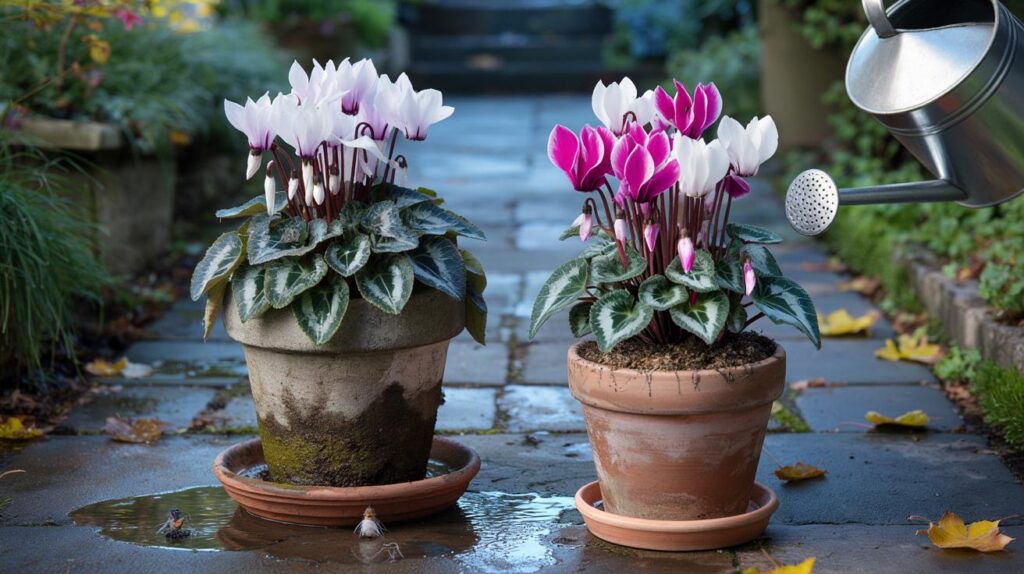
Autumn pots look glorious, then suddenly collapse. Britons report soggy crowns, limp leaves, and lost blooms within weeks.
Cool nights and damp days can turn cyclamens from dazzling to doomed. A few precise tweaks stop the slide and protect your bulbs.
What your cyclamen really needs
Cyclamen thrive in cool air, bright shade, and sharply drained compost. They hate stale moisture. They resent heat. Keep daytime temperatures near 10–15°C. Aim for light mornings and filtered afternoons. Place pots where rain does not pound the crown.
Keep the crown dry, the compost airy, and the water moving. Rot struggles in a well-drained home.
Choose a peat-free mix with 30–40% horticultural grit or perlite. A dense potting soil suffocates roots and holds chill water around the tuber. That is when rot sets in, fast.
Spot the early warning signs
- Leaf stems flop and feel cold and wet at the base.
- Blotches appear on leaves, then blacken along the veins.
- Flowers collapse from the centre first, not just at the tips.
- The tuber softens, smells sour, or shows brown pits.
- Fungus gnats hover over the surface, signalling constant wet.
The fatal error to avoid
Most people water as if it were July. Autumn air stays moist. Night condensation and light rain already add water. Topping up on that schedule drowns roots. Standing water in a saucer finishes the job. The tuber sits in a cold bath and rots.
Never leave a cyclamen sitting in water. Empty the saucer within 15 minutes of any drink.
Watering that works in October
Wait until the top 2 cm of compost feel dry. Then water from the saucer, not the top. Let the pot drink for 10–15 minutes. Pour off the excess. In a 12 cm pot, 100–150 ml often suffices. Use rainwater or dechlorinated tap water at room temperature. Keep the crown dry at all times.
In cool, bright shade, most pots need water once every 7–10 days. In a windy spot, the interval may shorten. Check by feel, not by habit.
The foolproof fix: drainage that wins
A £5 bag of clay pebbles or aquarium gravel can save a tray of plants. Line the base of each pot with 2–3 cm of pebbles. Add a coffee filter or a scrap of mesh to stop fines clogging holes. Then fill with gritty compost and set the tuber high, with the top just above the surface.
Lift the pot on feet, add a drainage layer, and use a saucer with an overflow. You slash rot risk in days.
Outdoor troughs benefit from extra insurance. Drill more holes. Mix 30% grit through the whole volume. Slope the container a few degrees so rain runs off the back. In borders, blend sharp sand and leaf mould into the planting hole to boost porosity.
Smart kit for busy gardeners
- Moisture meter: stops guesswork and overwatering.
- Long-spout watering can: reaches the edge without wetting the crown.
- Pot feet or bricks: lift containers off cold paving.
- Fine mulch: 1 cm of grit deters splashback and fungus gnats.
Where to place pots for a longer show
Think dappled light and gentle airflow. A north-east windowsill outside, protected from direct rain, suits florist cyclamen. A porch with bright shade works as well. Avoid radiators, closed conservatories at midday, and gusty corners. In beds, tuck cyclamen near evergreen groundcovers that break the wind yet allow light.
Feed, tidy, repeat
Twist spent stems off cleanly at the base. Do not snip; a stump invites rot. Remove damaged leaves weekly. Feed every three weeks with a low-nitrogen liquid fertiliser at half strength. This fuels buds without forcing lush, floppy leaves. Keep the routine light and regular.
Fast checks when things go wrong
| Symptom | Likely cause | Fix |
|---|---|---|
| Yellow leaves with firm tuber | Too warm or too dark | Move to cooler, brighter shade; reduce feeding |
| Leaves collapse from the centre | Crown got wet | Water only from saucer; improve airflow |
| Blackened leaf bases, sour smell | Persistent saturation | Repot into gritty mix; remove rotten tissue; cut watering |
| Few flowers, lots of leaf | High nitrogen feed or heat | Switch to bloom feed; aim for 10–15°C |
Expert habits that pay off
Three mistakes to bin today
- Using a pot one size too big. Extra compost stays wet and chills roots.
- Leaving the saucer full. Fifteen minutes is the maximum sitting time.
- Watering the crown. Always aim to the edge or from below.
Five practices that keep plants alive
- Set the tuber high, not buried.
- Blend 30–40% grit into peat-free compost.
- Raise pots on feet and shield from driving rain.
- Deadhead by twisting stems, not cutting.
- Feed little and often, every three weeks in active growth.
Choosing the right cyclamen for your space
Not all cyclamen want the same life. Florist cyclamen (Cyclamen persicum hybrids) suit cool porches, covered steps, and bright windows outdoors. They dislike frost below 0–2°C. Hardy species, such as Cyclamen hederifolium for autumn and Cyclamen coum for late winter, shrug off cold once established. They thrive in thin, humus-rich soil beneath deciduous shrubs. Match the plant to the place and the care becomes simple.
If frost threatens, move florist cyclamen under cover overnight. A cold frame or an unheated hallway keeps the display going. Hardy species can stay put, provided the site drains fast after rain.
When disease strikes
Grey mould on spent petals points to Botrytis. Remove fallen blooms, thin crowded foliage, and improve airflow. A drench that targets damping-off organisms may help in severe, wet spells, but most cases resolve when you dry the compost and stop splash. Fungus gnats fade when you allow deeper dry-down and add a top layer of horticultural grit.
Practical add-ons that boost results
Try a watering log for each pot. Note date, volume, and conditions. After two weeks, you will spot the rhythm for your balcony. Another trick saves money: mix your own compost from 2 parts peat-free mix, 1 part grit, and 1 part leaf mould. The blend drains quickly, breathes well, and supports steady flowering.
Set a simple rule: water only when the top 2 cm are dry, and never from above the crown.
Extra context for keen growers
Seed-grown florist cyclamen take 12–18 months to flower. If you like projects, sow in late summer in a cool, bright spot. Keep them just moist and shift seedlings into 9 cm pots with a gritty blend. For instant displays, buy compact plants with firm tubers and plenty of buds at the base. Avoid any that sit in soggy trays at the shop.
Companion planting helps. Heuchera, ivy, and small grasses break wind and hide containers while allowing light through. A thin grit mulch also deters slugs, which nibble petioles and open doors for rot. With these layers, you reduce risk, cut waste, and keep colour rolling right up to the first hard frost.



Just tried the £5 clay pebbles + pot feet trick and my soggy pot perked up in 3 days. Who knew the crown hates a shower? Thanks for the clear 30–40% grit guidance—finally stopped guessing. Saved me from overwatering (again). 🙂