
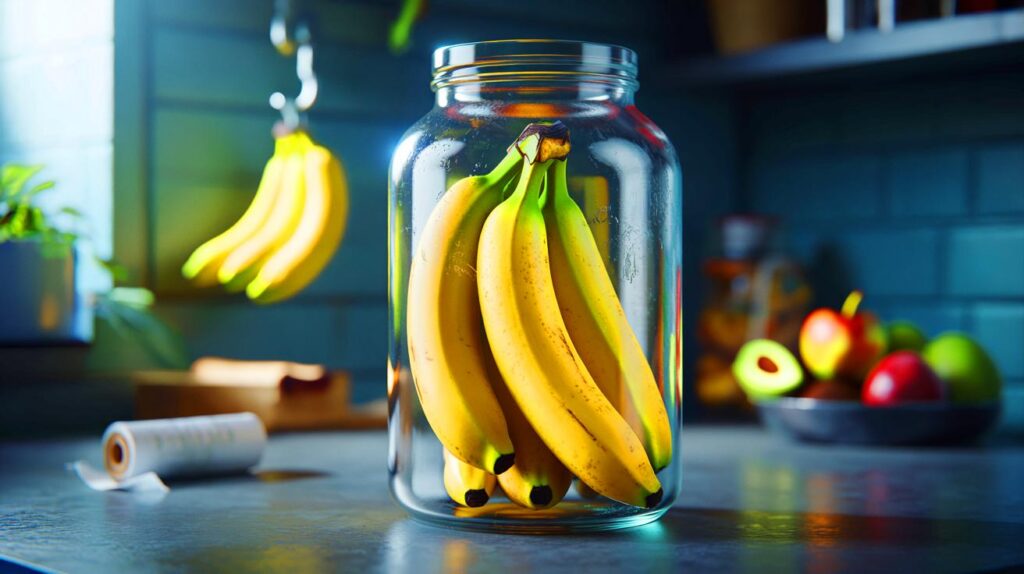
Households fight bruised fruit and rising prices. A quiet shift in how you stash bananas could spare both.
A viral method shared by @amycrosslegacy claims to hold bananas at a usable, yellow stage for up to 16 days. The approach leans on simple household science: manage temperature, light and ethylene, the ripening gas, and the clock slows dramatically.
Why bananas brown so fast
Bananas generate ethylene, which ramps up enzymes that soften flesh and darken the skin. Warm rooms accelerate that chemistry. Bright spots heat fruit and push ripening harder. Contact bruises add more browning, especially around the crown where ethylene activity is highest.
Cut surfaces also brown as enzymes meet oxygen. That is why a half-eaten banana can look sad by morning. Managing air contact, temperature and light changes that outcome.
Control temperature, light and ethylene to slow ripening. Not magic, just household science with immediate pay-offs.
The jar-and-chill method, step by step
The method is straightforward and cheap. It uses a clean, airtight glass jar, a dark spot, and a steady cool of about 12°C. The creator says she adopted it to stop her children’s half-bananas turning brown overnight, and then applied it to whole fruit with striking results.
- Pick firm bananas with minimal bruising. Slightly green tips work best.
- Separate the bananas so the crowns do not touch. Trim ragged stems if needed.
- Make sure skins are dry. Moisture encourages spots and mould.
- Place the bananas upright in a glass jar with a tight lid. Keep them unpeeled.
- Store the jar in a cool, dark room at about 12°C. Avoid the kitchen, which swings in temperature.
- If condensation appears, open briefly, wipe dry, and reseal. Keep the jar clean.
Target roughly 12°C, limit light, and reduce airflow with a sealed glass jar. Users report up to 16 days of yellow, firm fruit.
What the viral creator says
The TikTok account @amycrosslegacy popularised the trick, reporting sixteen days of fresh-looking, snack-ready bananas. The claim centres on stabilising conditions at home, not special gadgets, and appeals to families juggling school snacks and food budgets.
How it compares to classic hacks
Many households already wrap stems in film, hang bananas on a hook, or tuck them in the fridge with a paper towel. Each tactic targets a different part of the ripening puzzle. The jar approach bundles several controls at once.
| Method | What it targets | Typical result | Watch-outs |
|---|---|---|---|
| Wrap stems with film | Slows ethylene escape at the crown | Small delay in ripening | Fiddly; adds plastic waste |
| Hang on a hook | Reduces bruising and contact points | Fewer black marks on the peel | Does not control temperature or light |
| Fridge with paper towel | Lowers temperature; absorbs surface moisture | Flesh lasts; peel darkens | Risk of chill injury below ~12°C |
| Sealed glass jar at ~12°C | Stable cool, low light, reduced airflow | Yellow skin and firm texture longer | Needs a cool room; monitor condensation |
Why 12°C matters
Bananas ripen fast at 18–24°C because respiration soars. Cooling slows that chemical pace. Around 12°C, the fruit keeps its structure without the chill injury that can turn flesh grey. Many fridges sit at 3–5°C, which is ideal for greens and milk but hostile to bananas. A cool pantry, cellar or unheated utility space hits the sweet spot more reliably than a kitchen benchtop.
Direct light also acts like a heater and can increase localised ethylene responses. An opaque jar or a dark corner dampens those cues. Reduce oxygen exchange and you slow both browning reactions and water loss. The sum is a longer window for eating.
Risks, limits and food safety
Check the jar each day. If you see condensation, dry it. Do not wash bananas just before storage, as residual moisture encourages mould. Keep them away from apples, pears and avocados, which emit extra ethylene. Remove any banana that smells off or shows soft, wet patches.
Bananas still produce ethylene inside a jar, but the cool, stable environment curbs the pace. If your space regularly dips below 10–11°C, you may see internal browning. Move the jar to a slightly warmer shelf. If you only have a warm flat, choose the least sunny, lowest spot you can find and expect a smaller benefit.
Who gains, and by how much
UK homes throw away large numbers of edible bananas each day. Extending life from five or six days to fourteen or sixteen reduces top-up trips and cuts waste. A household that buys a dozen bananas at about 18p each saves the price of the bruised few that used to end up in the bin. Time saved matters too: fewer last-minute snack runs and less frantic baking to rescue speckled fruit.
What to do with very ripe bananas
Use the longer window to plan. Batch-freeze sliced bananas for smoothies and porridge. Mash two or three into pancake batter for weekend breakfasts. Keep a small tub for banana bread portions and bake when you have enough. Peel before freezing to avoid wrestling with icy skins.
Peeled halves and kids’ leftovers
If a child leaves half a banana, set the cut end upright in the jar to minimise air contact. Cover the cut end with a beeswax wrap cap if you have one. Expect less browning than on a plate. Eat these halves first, before the whole fruit.
Practical extras to try this week
- Put a cheap fridge thermometer in your coolest cupboard for a day to confirm it sits near 12°C.
- Label the jar with the date you start. Count the days you gain in your own home.
- Test one jar with a paper towel at the base and one without. Keep whichever stays drier.
This method asks for no gadgets, no special sachets and no constant attention. It nudges three variables—temperature, light and airflow—and lets the biology do the rest. For busy households and tight budgets, that combination lands where it matters: bananas that stay yellow, snacks that stay welcome, and a fruit bowl that finally keeps up with real life.

Tried this over the weekend: clean 2L glass jar in a dark utility room around 12–13°C. My slightly green bananas stayed firm and yellow for 12 days so far. Condensation popped up once; wiped and resealed. Definately saving snacks and cash.
Genuine question: if ethylene builds up in a sealed jar, wouldn’t that accelerte ripening? The article says the cool temp offsets it, but that sounds a bit contradictary. Any peer-reviewed source on the 12°C sweet spot?