
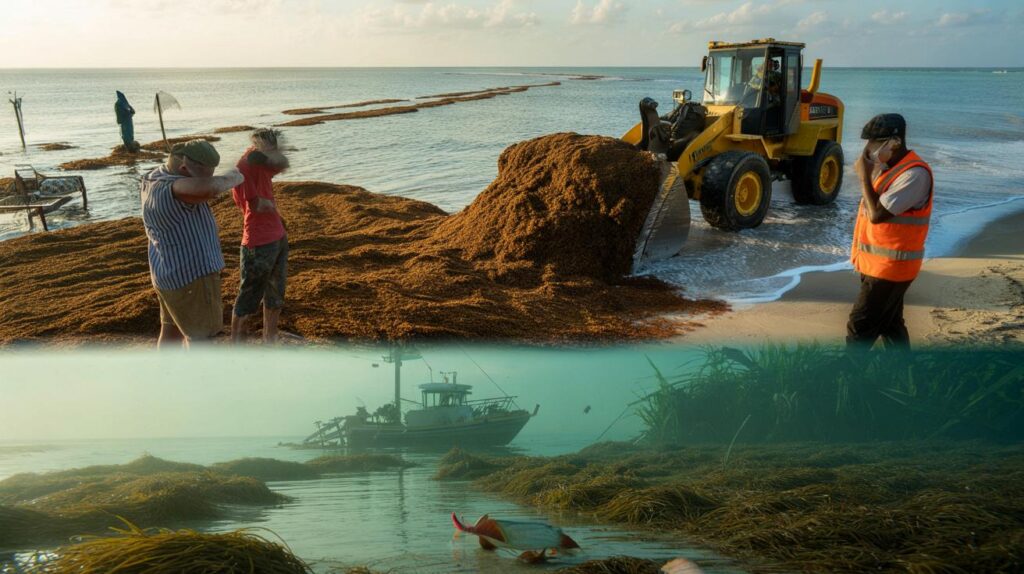
Brown streaks now snake across Atlantic waters, touching wallets, reefs and lungs, as river-borne nutrients supercharge a drifting tide.
What began as scattered rafts of seaweed has swollen into a transoceanic belt visible from space. Scientists track it week by week, while coastal towns brace for the smell, the mess and the bills. The Great Atlantic Sargassum Belt has moved from curiosity to kitchen-table issue.
What the belt is and why you should care
Sargassum is a free-floating brown seaweed. It naturally forms mats in the Sargasso Sea, a calm gyre in the North Atlantic. Fish shelter under it. Young turtles hide in it. Birds hunt around it. In modest amounts, it supports life and fuels a rich food web.
A floating habitat that turned into a highway
Over the past decade and a half, those patches stitched into a continuous ribbon. Today, the belt stretches from West Africa to the Caribbean and the Gulf of Mexico. In May 2025, satellites estimated roughly 37.5 million tonnes of sargassum spanning more than 8,800 km, roughly twice the width of the continental United States. That scale now shapes beach seasons and port operations on two continents.
37.5 million tonnes stretched 8,800 km in May 2025, turning a marine habitat into a continent-crossing conveyor.
Scientists warn that the belt changes the balance between benefit and harm. Where the mats drift offshore, they still host life. Where they stack into thick swathes, they shade reefs, consume oxygen at night and rot into noxious gases.
The nutrient engine behind the surge
Why did the belt grow so quickly? A 40-year analysis of satellite imagery, water chemistry and field samples found a marked rise in bloom frequency since 2011. Researchers link that rise to more nutrients in surface waters. Between 1980 and 2020, nitrogen measured within the algae climbed by about 55%, with nitrogen and phosphorus enrichment in surrounding waters up by roughly 50% over similar periods.
- Fertilisers and soil wash off fields during rains and flow down rivers, carrying nitrogen and phosphorus to the sea.
- Urban wastewater, storm overflows and leaky infrastructure add dissolved nutrients and organic matter to coastal waters.
- Atmospheric dust and pollution settle on the ocean, sprinkling extra nutrients from above.
- The Amazon pushes huge pulses of nutrient-rich freshwater into the Atlantic during the wet season, priming the bloom. Drier months ease the feed and slow growth.
- Winds, currents and warmer surface waters shape where mats gather and how long they persist at the surface.
Rivers, farms and sewers now feed an ocean-scale bloom, turning local pollution into a problem that drifts across borders.
This is not a single-cause story. The belt draws strength from the sum of these inputs plus ocean physics. When currents converge, mats pile up. When waves calm, they linger and thicken. When a storm hits, they break, regroup and raft ashore in the next lull.
When benefits flip to harm
Offshore, sargassum acts as a nursery. NOAA counts over 100 species that use it. The balance shifts once the weed masses arrive in bays or strand on beaches for days. Decay becomes the main process and that creates a very different risk profile.
Health and climate risks you can smell
Rotting mats release hydrogen sulphide, the “rotten egg” gas. In sea-breeze conditions, that smell can drift inland. Short exposure can irritate eyes and throats. People with asthma may wheeze. Workers on clean-up crews need masks and breaks. Decomposition also emits methane and carbon dioxide, adding to greenhouse gases. Thick layers block sunlight, stress seagrass and corals, and consume oxygen at night, creating pockets where fish and crustaceans struggle to survive.
Costs that hit households and councils
Caribbean islands, Mexican resorts and Gulf Coast towns spend heavily to clear beaches each summer. Bulldozers, barges and booms move the weed, but tides bring more. In extreme cases, sargassum can clog seawater intakes. In 1991, build-up near a Florida plant forced a temporary pause after seaweed choked the cooling system’s intake canal. Marinas report jammed propellers. Fishers lose time cutting weed from nets. Tourists cancel plans when webcams show brown surf and blackened shorelines.
| Sector | Where it hurts | Typical consequence |
|---|---|---|
| Beach communities | Beaches and promenade zones | Daily clean-ups, odour complaints, reduced footfall |
| Tourism workers | Hotels, rentals, tours | Refunds, schedule changes, lower occupancy |
| Fishers and marinas | Harbours and nearshore waters | Fouled gear, damaged engines, lost fishing days |
| Utilities | Seawater intakes and canals | Screen blockages, emergency maintenance, downtime |
| Reefs and seagrass | Shallow, clear habitats | Light reduction, oxygen dips, habitat stress |
Who pays, who acts
Local councils often shoulder the first costs. They deploy floating booms offshore to divert mats. They push stranded weed into windrows and cart it away. They pay staff and fuel through long summers. Ports plan intake screens and rapid debris removal. Resorts now publish real-time sargassum updates to manage guest expectations and plan beach grooming around tides.
National agencies invest in forecasts. Satellite maps show where mats drift. Ocean models project landfall windows. Early warnings let crews stage kit before a surge. Cross-border coordination matters because the belt ignores maritime boundaries. Nutrient control upstream matters even more. Farm practices that cut runoff, upgrades to sewage plants, and wetland restoration remove fertiliser before it hits the sea. These actions do not fix a belt overnight, but they blunt the fuel line.
What you can do this season
- Check recent forecasts and beach advisories before booking. Look for flexible cancellation policies in peak months.
- Choose hotels that manage sargassum responsibly, with containment booms, safe disposal and worker protection.
- Avoid swimming in thick mats. The weed can trap you and hides jellyfish and debris.
- If you smell strong hydrogen sulphide, move upwind. People with asthma should carry medication near affected beaches.
- Support local clean-up programmes that compost or stabilise sargassum rather than dumping it back to sea.
What scientists watch next
Researchers now trace nutrient fingerprints to separate river sources from wastewater and atmospheric inputs. They pair high-resolution satellite sensors with drones to measure thickness and biomass. They tune drift models to winds and currents to estimate where mats will land and how long they will persist. These efforts feed early warning services for ports, desalination plants and coastal towns.
Teams also test uses for harvested sargassum: soil amendments, biochar, packaging, even biogas. The algae often accumulates arsenic and salt, so farmers need safeguards before spreading it on fields. Processing that locks contaminants away, such as pyrolysis to biochar, looks more promising than raw compost in many settings.
Key numbers that put you in the picture
- 37.5 million tonnes: the estimated biomass in May 2025 across the tropical Atlantic belt.
- 8,800 km: the length of the belt at its seasonal peak.
- 55%: the rise in nitrogen found in algae samples compared with the 1980 baseline.
- 100+ species: the marine life that relies on sargassum as habitat when mats remain offshore.
Pollution control upstream, smart forecasts at sea and safer handling onshore form the only credible path to fewer brown beaches.
Helpful context you can use
Hydrogen sulphide smells at very low concentrations. Your nose notices it before most instruments do. Prolonged heavy exposure can dull smell and mask ongoing risk. On beaches, fresh air and wind reduce levels quickly, but hotel basements and low-lying rooms can trap odours. Ask for a higher floor if forecasts warn of landfall.
Think of the belt as a moving conveyor. Currents gather weed into lines, winds push those lines shoreward, and tides do the final lift. A few days of steady trade winds can strand thousands of tonnes on a single coastline. The same winds can clear a beach in a week. That variability means plans need flexibility: clean-ups timed to tides, holiday dates that can shift, and contingency budgets that match the season rather than the calendar.



Sobering read. If nitrogen in algae rose ~55% since 1980, what are the top 3 policy levers that actually cut runoff fast—cover crops, buffer strips, or fertlizer caps? And who compels cities to fix leaky sewers when budgets are tight?
Is this just seasonal hype, or a real regime shift? We’ve seen sargassum surges before—what makes 2025 materially diferent beyond satellites spotting more of it?