
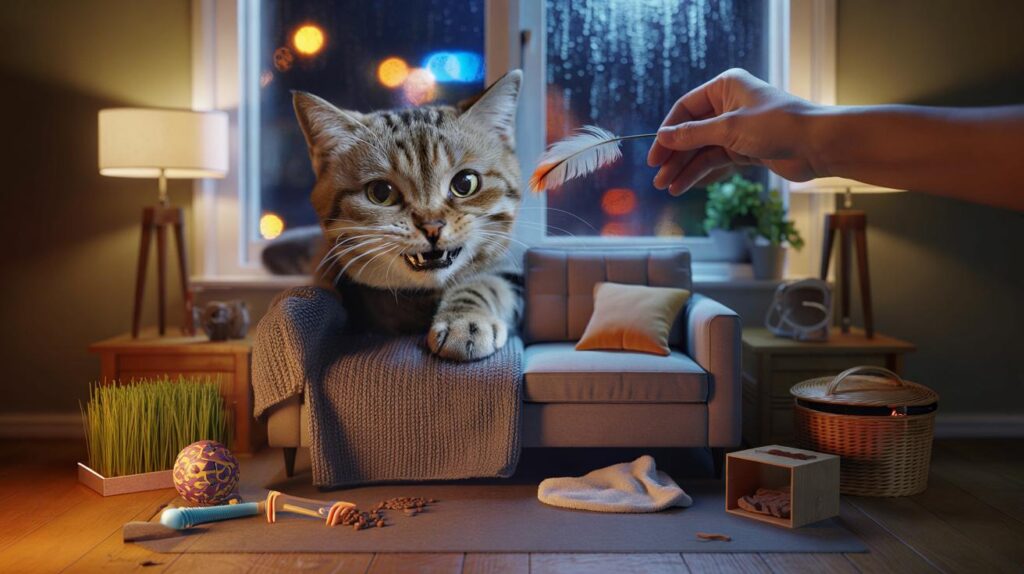
Rain-soaked commutes end with frayed sleeves and tiny teeth marks. A seasonal puzzle leaves households juggling affection, anxiety and knitwear.
As evenings draw in across the UK, many owners face the same scene: a purring companion and a nibbled cardigan. This guide explains what your cat is signalling and sets out practical steps you can start tonight to protect both your wardrobe and your bond.
Why your cat chews clothes
Fabric-chewing rarely comes from spite. Cats use their mouths to soothe, play and investigate. Your knitwear feels warm, smells like you and often hangs within reach. That mix can turn a sleeve into a comfort item or a target for tension.
Stress and boredom in indoor routines
Longer nights and fewer window-watching opportunities can leave a lively cat understimulated. Chewing gives sensory feedback and releases energy. Homes that stay quiet by day and busy at dusk set the scene for attention-seeking mouthing when people finally sit down.
Leftover kitten habits
Some cats continue wool-sucking behaviours from early life, especially if weaned early or bred from lines that prize oral comfort. Soft textures mimic the feel of nursing and become a default coping strategy when the environment feels unpredictable.
Nutritional and medical drivers
A craving for roughage can push a cat to mouth fabrics, particularly if the diet is low in fibre or enrichment. Pain also changes behaviour. Dental disease, mouth ulcers or nausea can prompt licking and chewing of odd items. Constant thread-pulling can lead to swallowing, which risks a dangerous intestinal blockage.
Cloth-chewing is a message, not malice. Read the context, then address the need: calm, occupation, diet or veterinary care.
The first 24 hours: steps that work tonight
Start with control, alternatives and clear feedback. You want fewer temptations, more legal things to bite and immediate rewards for using them.
- Remove targets: shut wardrobes, use a lidded laundry basket and store knitwear in sealed boxes.
- Offer safe chew options: fabric kicker toys, rope-free plush, silicone chew sticks made for cats, and catnip or silvervine pouches.
- Run two short play bouts (5–10 minutes): use a fishing-rod toy to chase, then let your cat “win” and finish with food.
- Feed the hunt: deliver at least one meal in a puzzle feeder or scatter small portions on washable mats.
- Add gentle fibre: grow cat grass or include a vet-approved high-fibre wet food to satisfy foraging urges.
- Change the scene: open a perch by a window, place a cardboard box near your sofa and rotate toys before bed.
Use the three Rs: replace the fabric with a toy, reward the correct choice, remove access to clothes.
Reading the signals: what behaviour means and what to do
| Sign you see | Likely meaning | Next step |
|---|---|---|
| Chews only when you sit down | Attention-seeking and play deficit | Schedule interactive play before you settle; reward calm resting nearby |
| Seeks wool or fleece and kneads | Self-soothing habit from kittenhood | Provide a dedicated fleece “comfort square” and redirect gently to it |
| Chews and drools, paws at mouth | Possible dental pain or oral discomfort | Book a dental check; use soft toys only until examined |
| Chews, vomits, strains in litter tray | Risk of fabric ingestion | Seek urgent veterinary advice; remove strings and threads from reach |
| Night-time raids on washing basket | Boredom during quiet hours | Set a timed feeder for a small midnight meal; leave a puzzle toy loaded |
Build a lasting plan that protects your wardrobe
Enrichment that sticks
Think vertical, varied and novel. Add a sturdy cat tree, a window perch and a rotate-and-hide system. Put three toys out, hide three, and switch daily. Create a five-day cycle so items feel “new” without constant buying.
Structured play and rest
Most cats thrive on two to three predictable play sessions a day. Use prey-style toys that move away from your cat and stop before they catch. Let your cat grab, then feed a small portion. This pattern satisfies the chase–catch–eat–groom–sleep sequence and reduces scavenging of fabrics.
Feeding that reduces fabric appeal
Many indoor cats eat quickly, then look for more stimulation. Break meals into smaller servings. Scatter a teaspoon of kibble down a corridor for a mini “track and trace” each evening. Offer safe greens. If hairballs or constipation crop up, ask your vet about fibre adjustments rather than DIY supplements.
What not to do
- Do not shout or use punishment. It can raise anxiety and make chewing more likely when you are not watching.
- Avoid essential oil sprays on fabrics. Several oils are toxic to cats.
- Skip string toys unless you supervise closely. Pack away after use.
When to call the vet
Book a veterinary check if your cat chews daily, swallows threads, drools, loses weight, or shows mouth sensitivity. A professional can rule out dental disease, gastrointestinal trouble, thyroid issues or true pica. Behaviour support then builds on a healthy baseline.
Fabric ingestion can cause a “linear foreign body”, a serious condition. If you see string disappearing under the tongue or vomiting with lethargy, seek urgent care.
Small changes, big savings
Replacing a favourite knit costs money and patience. Preventive steps keep cash in your pocket and stress out of your evening. A lidded laundry bin, two daily play sessions and a set of chew-safe toys cost less than a single ruined jumper and may spare a costly emergency visit.
Extra ideas to try this week
Set a simple, repeatable routine
- Morning: 7 minutes of wand play, then breakfast in a puzzle bowl.
- Afternoon: window time with a perch and a bird-feeder view if possible.
- Evening: 10 minutes of chase, then a small wet-food snack and a chew toy.
Build a “legal chew” station
Fill a shallow box with fabric offcuts, two kicker toys and a catnip pouch. Scent it by storing with a worn T‑shirt in a sealed bag for 24 hours. Place this station near your sofa so the correct choice sits closer than your sleeve.
Make clothing less tempting without hazards
Use texture barriers that are safe: aluminium foil on the laundry lid, double-sided tape on the basket rim and smooth hangers that keep sleeves tucked. Keep citrus peels, menthol and eucalyptus away from cats; they can cause harm.
If you need a deeper reset
Some cases benefit from a pheromone diffuser, a gradual increase in foraging games or a referral to a feline behaviourist. Ask your vet for a plan that fits your cat’s age, breed tendencies and health. Track progress in a simple log: note time, target fabric, redirect tool and outcome. Patterns emerge within two weeks and show you which changes work.
Beyond clothes: channel the same drive safely
Cats who love to mouth and tug excel at supervised fetch, food-string “treasure trails” where the string is removed before eating, and crinkly paper nests. Redirect that oral curiosity to materials designed for cats. The result is a calmer pet, quieter evenings and knitwear that stays in one piece.



Finally, practical steps I can try tonight—love the three Rs 🙂
7 fixes sounds great, but isn’t ‘chewing clothes’ often a sign of stress you can’t just distract away? Feels a bit like sticking a plaster on a bigger behavour issue. Also, silicone chew sticks—are those actually vet-safe? Would appreciate sources.