
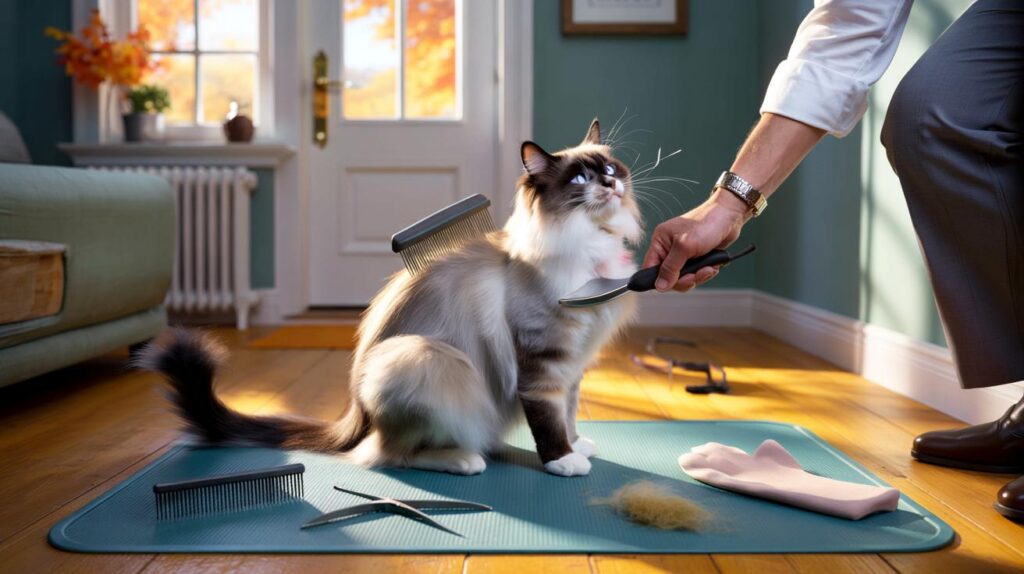
As shedding season returns, a new UK snapshot reveals how small grooming errors spiral into daily stand-offs at home nationwide.
Across Britain, owners brace for a blizzard of fur and an uptick in feline friction. The annual autumn moult brings loose undercoat, static, and a sharper eye on the state of the sofa. New figures and expert guidance point to a simple truth: routine, tools, and timing turn that tense brush-out into something both calm and quick.
What the numbers say
A fresh survey of 1,500 UK cat owners conducted this October paints a telling picture of the domestic brush battle. Nearly two in three households report tension around grooming. Many admit they over-brush, rush, or use tools that scratch rather than sweep. The cost is not only emotional: time wasted, fur Everywhere, and rising vet bills for mat removal.
64% report grooming tension at least once a week; average time lost per session: 12 minutes; 1 in 5 skip brushing entirely.
Households with long-haired cats face the sharpest pinch. Owners of Persians, Ragdolls and Maine Coons recorded 32% more mats and nearly double the grooming time compared with short-haired households. Yet change starts with tiny adjustments you can make tonight.
The culprits you can fix today
Pick the right tool
Not all brushes behave the same on skin and coat. Some lift undercoat neatly. Others snag, scratch, or build static. A quick audit of your kit can diffuse most flashpoints.
| Tool | Best for | Skin comfort | Owner acceptance rate | Typical price |
|---|---|---|---|---|
| Soft silicone groomer | Short hair, sensitive cats | High | 78% | £6–£12 |
| Slicker with flexible pins | Medium to long hair, undercoat | Medium–high | 71% | £10–£18 |
| Dematting comb (wide–narrow) | Knots, seasonal moulting | Medium | 63% | £12–£20 |
| Metal rake with rigid teeth | Dense double coats | Low if used with pressure | 52% | £8–£15 |
| Grooming glove | Nervous or first-time cats | High | 76% | £7–£14 |
Run a fingertip across the pins. If it scratches you, it will scratch them. Favour flexible pins and rounded tips. Keep a light grip to avoid pressing on the skin. Always brush with the lay of the coat, then gently lift the undercoat in short strokes.
Match frequency to the coat
Frequency should track coat length, density and the season. Autumn and early winter need more structure, not more force.
- Short hair: 2–3 quick sessions a week, 2–3 minutes each.
- Medium hair: 3–4 sessions a week, 4–6 minutes each.
- Long hair or double coat: daily micro-sessions, 3–5 minutes, focusing on friction zones.
- Seniors or arthritic cats: shorter sessions with softer tools; add a warm cloth wipe to reduce static.
Target hotspots: behind the ears, under the forelegs, along the trousers, and at the base of the tail. These areas mat first and fuel the fight later.
Make consent the rule
Rushing triggers pushback. Progress comes from small, predictable steps that your cat can predict and accept.
- Start where your cat already likes touch: cheeks, neck, spine.
- Watch the signals: still ears and soft blinking say “carry on”. A tail flick, skin ripple or tongue flick says “pause”.
- Count five slow strokes, then stop before tension builds. Offer a moment’s distance. Restart if the body relaxes.
- End every session while things still feel calm. Stopping on a win sets tomorrow up for success.
Stop at the first tail flick; end relaxed; reward the smallest win. Those three rules cut pushback in half.
Reinforce with rewards
Positive reinforcement resets expectations. Pair each calm step with something your cat loves. You do not need a mountain of treats; you need timing.
- Use pea-sized soft treats or a lickable paste. One for cooperation at the start, one midway, one at the end.
- Swap food for a 30‑second play burst with a wand toy if your cat lives for the chase.
- Build a “grooming mat” ritual: mat down, brush appears, reward happens, short groom, reward, mat away.
Keep a weekly treat budget in mind. For an average 4 kg adult, limit grooming extras to around 20–30 kcal. That’s roughly three small soft treats or two teaspoons of lick paste.
A simple four-step routine
This routine suits most households and respects feline boundaries while still removing shed undercoat.
- Minute 0–1: place grooming mat, present brush for a sniff, treat on the mat.
- Minute 1–2: five gentle strokes along the spine with a flexible slicker; treat or praise.
- Minute 2–3: two short passes on each hotspot; stop if the tail twitches; brief play burst.
- Minute 3–4: soft silicone groomer to lift loose fur; chin rub to finish; brush away, mat away.
If your cat stiffens or turns away, trim the plan. Two calm strokes beat fifteen fraught ones.
Why this matters now
Autumn shedding dumps undercoat across carpets, vents and radiators. Static rises as heating clicks on. Loose fur mats faster in collars and armpits. Left alone, mats tug the skin, trap moisture, and can lead to hot spots or infections. Vets charge £80–£150 for dematting under light sedation, and more for complex cases. A calm weekly routine costs pennies and saves pain.
There is a gut angle too. More shed fur means more self-grooming and hairballs. Regular brushing lowers the volume swallowed, cutting the risk of blockages. For indoor cats on dry diets, that difference can be stark.
What to change this week
- Switch one tool: trade a rigid metal rake for a flexible-pin slicker.
- Shrink sessions: cap them at 4 minutes, twice daily for long coats, thrice weekly for short coats.
- Anchor rewards: treat at start, mid, end. Keep the sequence identical.
- Log friction zones: note where knots form; address them first next time.
Extra context you can use
Undercoat versus guard hair
Guard hairs lie on top and shine; undercoat insulates and sheds in clumps. You should skim guard hairs lightly and lift undercoat with short, shallow strokes. Avoid sawing motions. That movement heats the skin and spikes resistance.
A two-week desensitisation plan
Days 1–3: brush stays near feeding area; reward when the cat sniffs it. Days 4–6: two strokes while the cat eats, then remove the brush. Days 7–10: add a new body area for two strokes. Days 11–14: knit the strokes into the four-step routine. Keep the tempo slow and end early every time.
When to seek help
- Skin looks red or flaky after light brushing.
- Mats sit close to the skin or cover the armpits.
- Your cat growls, hides for hours, or stops eating after sessions.
A feline-friendly groomer can demonstrate pressure and stroke length in ten minutes. Many will trim friction zones and set a home plan for under £30.
Change the tool, shorten the session, reward the calm: three tweaks, seven days, a different cat at brush time.
Small add-ons that make a big dent
- Anti-static trick: lightly mist your palm with water and smooth the coat before brushing.
- Warmth helps: brush after a sun-nap or near a warm radiator to relax the skin.
- Timing matters: choose predictable windows — before breakfast or just after play.
- Storage counts: keep the brush in a sealed bag to stop odours that can put cats off.
Most households do not need a full grooming overhaul. They need a brush that glides, a clock that limits, and a ritual their cat can predict. The pay-off shows up in quieter mornings, fewer tumbleweeds of fur, and a bond that holds when the leaves and the undercoat start to fall.



Just switched from a rigid rake to a flexible-pin slicker and followed the “five strokes then stop” tip. My grumpy tabby went from daily stand‑offs to purrs in under a week. I used to burn 12 mins before work; now it’s 4 and the sofa isn’t snowing fur. It defintely helps!
Do we really need a “grooming mat ritual”? Feels like over‑engeneering a brush. My barn cat tolerates a cheap comb and a towel just fine. 64% tension might be more about owner anxiety than cats. But hey, I’ll try the anti‑static trick before I roll my eyes again.