
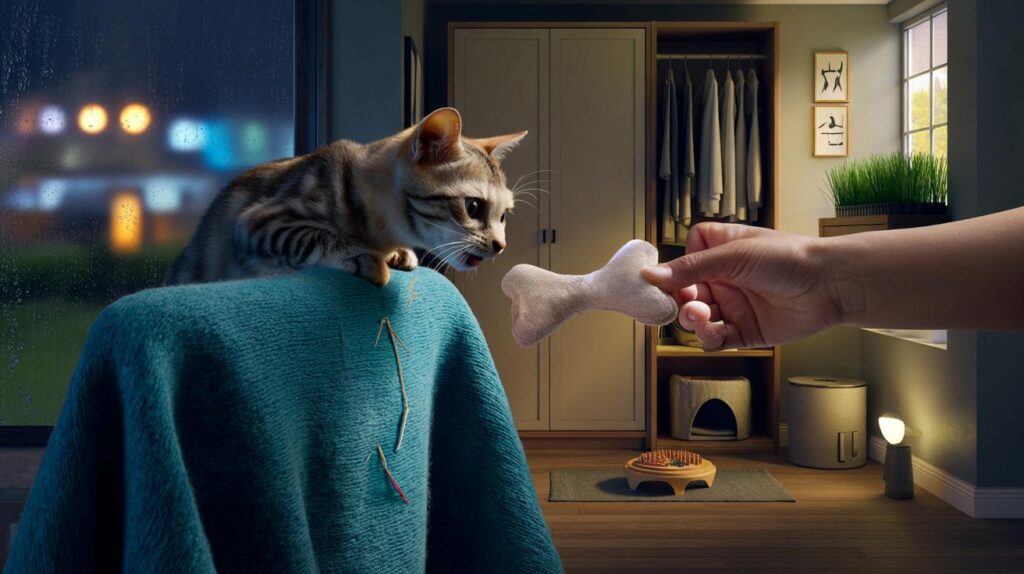
Rain outside, shredded knitwear inside. Many readers report a sudden spike in nocturnal nibbling of sleeves and seams.
If your favourite jumper looks like it lost a bar fight, your cat may be sending signals. Here’s what that behaviour often means, and the practical steps you can start before bedtime.
Why cats target your clothes at home
Chewing fabric rarely comes from spite. Cats lean on textures, scents and routines to cope with their world. When those change, clothes become tempting: soft, warm, and rich with your smell. The pattern matters. Some cats gnaw when the house falls quiet. Others do it during busy spells or just as you grab your keys.
Cats use clothes-chewing as communication. Track when, where and what they chew before you try to change it.
Stress, boredom and the autumn routine
Shorter days keep indoor cats away from windows and garden patrols. Less daylight reduces natural hunting opportunities. With spare energy and nothing to stalk, a sleeve feels like a stand‑in mouse. Many cats self‑soothe with rhythmic mouthing, especially after long, silent afternoons.
Diet and oral needs
A lack of fibre can push some cats to seek textures that mimic plant matter. Early weaning may leave a lifelong urge to suck or chew soft fabrics, often wool. Dental irritation can also drive gnawing, particularly if you see drooling, bad breath or one‑sided chewing at mealtimes.
Texture, scent and learned habits
Wool and fleece hold heat and scent. Lanolin-like odours in some knits resemble animal smells, making them irresistible. If your cat once got attention, a laugh, or a chase for pinching a sock, that tiny reward can cement the habit. Behaviour that “works” for a cat tends to return.
| Trigger | What you notice | What to do first |
|---|---|---|
| Stress or boredom | Chewing after long alone time, pacing, over‑grooming | Two short play hunts daily, add perches and hiding spots |
| Diet or fibre gap | Hard stools, hairball build‑up, plant nibbling | Ask your vet about fibre; grow cat grass; use puzzle feeders |
| Dental discomfort | Drool, pawing at mouth, preferring soft food | Book a dental check; swap to safe chew toys |
| Learned habit | Chews when watched or when you react | Ignore the act; redirect; reward calm chewing on toys |
| Separation cues | Chews when you dress, leave or return | Store laundry away; add scent‑neutral items; give a pre‑departure puzzle |
Seven fixes you can start today
- Lock down the laundry: use a lidded hamper, closed wardrobe and hooks. Keep knitwear off sofas and chairs.
- Offer chew‑safe outlets: fabric kickers, rubbery cat chews, silvervine or catnip toys. Rotate two or three items daily.
- Schedule play like a sport: two 8–10 minute wand‑toy “hunts” morning and evening. Let the cat catch, then end with a small meal.
- Add fibre and variety: split meals into three or four servings; try a vet‑approved fibre topper or a teaspoon of pumpkin; grow fresh cat grass.
- Create a calming map: add vertical shelves, a covered hide, and a window perch. Use a pheromone diffuser near the laundry zone if your vet agrees.
- Redirect and reward: when teeth meet fabric, calmly swap in a toy. Mark the switch with a tiny treat. No shouting, no chase.
- Use deterrents carefully: bitter fabric sprays on sacrificial items, foil or plastic mats to block access, and doors kept closed during your absences.
Three steps beat chaos: manage the space, meet the need, then train the habit you want.
What progress looks like in the next two weeks
Day three often brings fewer raids if you secure clothes and start the play‑then‑feed cycle. By day seven, many cats seek their chew toy on their own after a nudge. Expect relapses when routines slip or guests visit. Note them, tighten management, and resume the schedule.
A simple 14‑day plan
- Days 1–3: block access to clothes; add two new chew toys and a cardboard hide; log when chewing happens.
- Days 4–7: start two daily play hunts; split meals; introduce one food puzzle; plant cat grass on a sunny sill.
- Days 8–10: rotate toys; add a mid‑day puzzle on workdays; place a perch by the best window.
- Days 11–14: fade deterrents; keep doors closed; reward calm resting on a blanket that carries your scent.
When to call your vet
Seek help if your cat swallows string, elastic or fabric, or shows vomiting, constipation, belly pain, drooling or weight loss. A clinical check can rule out dental disease, gut issues or the compulsive eating disorder known as pica. Your vet can tailor a diet plan, advise on fibre sources and assess whether anxiety management or a behaviour referral makes sense.
If fabric goes missing and your cat retches without producing anything, treat it as an emergency. Thread can saw through the gut.
Extra ideas that save money and time
Turn a delivery box into a den by cutting two doors and sprinkling dry food inside. Stuff a sock with crinkly paper and silvervine for a cheap kicker. Make a slow‑feeder from a muffin tray and ping‑pong balls. You can set up a full enrichment circuit for under £15 with household bits.
On long workdays, stage the flat: close the bedroom, lay out one chew toy, one puzzle and one nap spot in separate areas. Set a timed feeder for a small mid‑day portion. Aim for quiet play after dark, when dusk instincts surge. A regular programme calms the urge to hunt your knitwear and gives your cat a predictable way to burn energy.
Seasonal shifts drive this behaviour for many households. Heating dries the air, new fabrics arrive from shops, and daylight shrinks. Adjust the routine with earlier evening play and a fresh toy rotation. Most cats shift focus within days when needs are met and chances to grab clothes dwindle.



Do you have a rule of thumb for when it’s dental vs boredom? My 5‑year‑old started chewing sleeves only at night; no drool, but some pawing at the mouth after dry kibble. Vet appt booked, but wondering if I should add fibre now or wait. Also, does pumpkin (a teaspoon) actually help hairballs, or just… orange the litter box?