
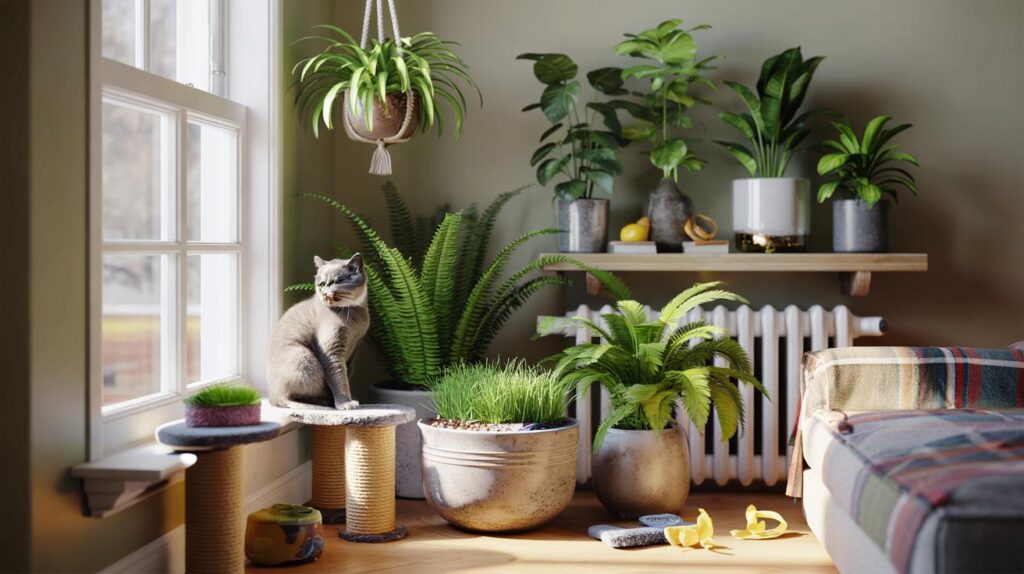
Short days, restless paws and a windowsill jungle set a scene many pet owners know. The leaves keep calling. The cat answers.
Your living room looks lush, the temperature drops, and your cat treats every pot like a salad bar. Behind the comedy lies risk. Several popular houseplants can trigger drooling, vomiting or worse. The fix starts with understanding why cats target foliage, then offering safer, tastier greenery they actually prefer.
Why cats target green leaves
Curiosity drives many cats to sample anything that moves or rustles. Leaves sway, smell fresh and look like prey. Some cats also seek fibre to help pass hair, regulate digestion or prompt a timely vomit after grooming. Texture matters. Tender growth feels satisfying to bite, and soil smells rich with new scents.
Indoor life amplifies the urge. Less outdoor stimulation means more experiments on shelves and sills. A single successful nibble becomes a habit. Novelty keeps that habit alive, especially when new plants arrive or older ones push fresh shoots.
Many indoor cats chew leaves to self-manage digestion and to relieve boredom. Treat both needs, and the habit wanes.
The hidden hazards on your windowsill
Not all greenery is equal. Several common houseplants irritate the mouth, trigger gastric upset or cause more serious signs. Pothos (Epipremnum), ficus, dieffenbachia, peace lily (Spathiphyllum) and philodendron can all cause drooling, retching and abdominal pain. True lilies are far worse for cats; even small exposures risk kidney injury. Aloe can upset the gut. Cycads are extremely dangerous. Symptoms may include drooling, pawing at the mouth, vomiting, diarrhoea, lethargy, dilated pupils or wobbliness.
If your cat chews a suspect plant, remove access, offer water, and call your vet. Take the plant label or a photo to help identification.
| Common houseplant | Risk for cats | Safer swap |
|---|---|---|
| Pothos (Epipremnum) | Mouth irritation, drooling, vomiting | Cat grass mix (wheat, barley, oats, rye) |
| Peace lily (Spathiphyllum) | Oral pain, gastrointestinal upset | Spider plant (Chlorophytum) in a hanger |
| Ficus elastica/benjamina | Irritant sap, stomach upset | Areca palm placed out of reach |
| Dieffenbachia | Burning mouth, swelling | Boston fern grouped in a cat-safe corner |
| True lilies (Lilium, Hemerocallis) | Severe, kidney risk | Orchid (Phalaenopsis) behind a closed door |
| Aloe vera | Gastrointestinal upset | Catnip (Nepeta cataria) in a small pot |
Safe, irresistible alternatives that work
Cat grass: simple, cheap and fast
Cat grass mixes supply soft fibre and a satisfying bite without toxins. Most blends use wheat, barley, oats or rye. They germinate quickly, even on a cool sill.
- Choose a wide, heavy container to discourage tipping.
- Fill with peat-free compost. Avoid fertilisers or slow-release pellets.
- Sow thickly with untreated seed. Press in and water until moist, not soggy.
- Place in bright light. Turn the pot daily for even growth.
- Expect shoots in 3–5 days and grazing height in 7–10 days.
- Keep two or three pots in rotation so a fresh tray is always ready.
- Budget £2–£4 for seed, plus a recycled container you already own.
Some cats prefer short blades, others longer. Trim with scissors to test preferred height. Replace the pot when growth becomes tough or yellowed.
Catnip, silver vine and scented lures
Catnip (Nepeta cataria) rewards many cats with playful, relaxed behaviour. Silver vine (Actinidia polygama) works for cats that ignore catnip. Offer dried leaves in toys, a small potted plant, or a sprinkle near the grass station. Short sessions keep interest high and prevent overstimulation.
Blend textures and scents. A sisal post set by a fresh grass pot often steals attention from your ficus. A felt toy lightly dusted with catnip or silver vine placed beside the safe greenery directs the nose—and the teeth—to the right place.
Set up at least two edible greenery stations along your cat’s favourite routes—near a window perch and near a nap spot.
Take back your indoor jungle without a stand-off
Some cats will still test the boundaries. Adjust the space as well as the menu.
- Lift valuables high: use wall shelves, macramé hangers or ceiling hooks for trailing plants.
- Create a cat zone: cluster safe pots, add a scratcher and hide treats nearby to build a routine.
- Top-dress soil with pebbles or coco chips to reduce digging. Avoid cocoa mulch, which is unsafe.
- Wrap pots in double-sided tape briefly if a specific rim attracts chewing.
- Use mild, plant-safe deterrents around pots, such as citrus peels placed on the soil; refresh weekly.
- Feed the brain: rotate puzzle feeders, scatter kibble on a snuffle mat, and add one daily 10‑minute play burst.
- Shut doors when you cannot supervise. A bathroom orchid survives longer than a windowsill buffet.
Lighting changes in winter can make leaves lean and flutter, which tempts pounces. Stake leggy stems and prune lightly to reduce motion. Water in the morning to avoid evening droplets that catch the eye.
What to do after a nibble
Act calm and methodical. Remove plant access. Wipe the mouth with a damp cloth if you see sap. Offer fresh water. Check for drooling, pawing at the mouth, vomiting, diarrhoea or changes in behaviour. Call your vet if any signs appear, or if the plant may be toxic.
Be ready to share your cat’s weight, what was eaten, the time of ingestion and a photo of the plant. Do not try to make your cat vomit at home. Keep labels from any new plants for quick reference.
How to grow a winter-safe routine
Set a weekly rhythm. Sow a fresh grass tray every Sunday. Refresh toys on Wednesdays. Move a safe pot to the sunny perch on Fridays. These small rituals redirect interest and reduce raids on tender foliage.
Watch the calendar. Holiday bouquets often contain lilies. Decline them or keep them outside the home. Store fertilisers, pest sprays and plant food in sealed cupboards. Many sprays are not formulated for pets. Read every label before use and choose pet-safe options.
Numbers that help you decide
Households across the UK share space with an estimated 11 million cats. Emergency consults for suspected plant ingestion can reach £200–£350 before tests or treatment. A three-pack of cat grass seed costs less than a takeaway. Two safe stations plus raised shelving often end the habit within a fortnight.
Choose small, measurable goals. Aim for two safe greenery points within ten steps of your cat’s favourite sleeping place. Add a five‑minute feather‑wand session before dinner. Track incidents in a notes app. Most homes see nibbles decline as the safe buffet becomes routine.
Extra pointers you can try today
- Swap plastic pots for heavy ceramic to stop tipping and turn raids into brief investigations.
- Use motion to your advantage: a dangling toy near the safe pot beats a still leaf on the shelf.
- Offer a chilled ceramic tile as a cool nap spot; rested cats hunt leaves less.
- Test palates: some cats favour barley grass over wheat. Grow two mini-pots and see which empties first.
Interested in a quick trial? Set up a “green triangle” today: one cat grass pot by a window perch, one beside a scratcher, and one near the evening lounge spot. Add a catnip toy to each point. Track leaf raids for seven days. Most cats shift their chewing within 72 hours when the safe choice sits on their path and smells more interesting.
For plant lovers, consider a map of your home with three zones: cat‑free, supervised and cat‑friendly. Place precious or high‑risk plants in the first zone, resilient species in the second, and edible greenery in the third. This small planning exercise protects your collection, trims stress, and gives your cat a clear, rewarding route through the day.



Brilliant breakdown—my windowsill jungle finally has a truce. The swap table is gold; had no idea peace lilies were risky. I’m trying two grass pots in rotation and moving the ficus high. Will report back after a week; hoping to dodge those £350 vet bills!