
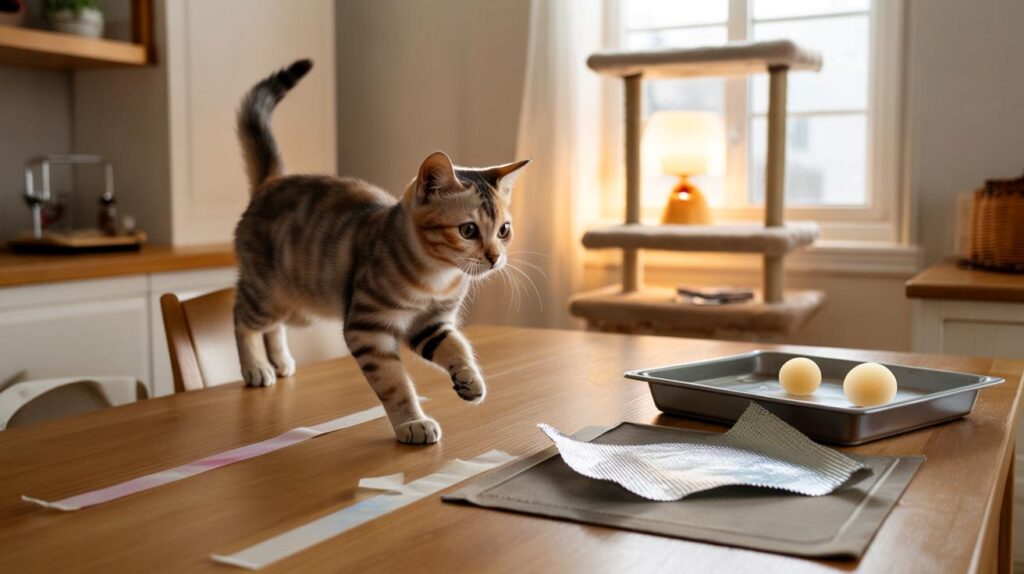
Colder days push cats to higher, warmer spots. Owners face spillages, broken glasses and vanishing crumbs during every meal.
Autumn crowds families indoors and narrows feline options. Height looks tempting. Heat radiates off lamps and laptops. Food smells linger. You can redirect that energy without shouting, gadgets or guilt.
Why your cat aims for the table
Tables offer height, warmth and a wide view of the room. Those three magnets drive most climbing. A chair pulled out becomes a ready-made ladder. A plate left out rewards the raid. Attention, even a scold, can also fuel the habit.
Heat, height and habit
Heat draws cats to sun patches, radiators and appliance tops. Height meets a deep need to watch the room safely. Habit forms because the table paid off before. Remove pay-offs, add a higher legal perch, and patterns shift fast.
Change two things at once: cut food and heat cues on the table, and add a perch at least 10 cm higher.
The £5 trick that turns paws around
Double-sided tape flips the risk–reward balance. Sticky equals yucky for paws. The sensation surprises, not scares. Most cats rethink the route after a few touches. Furniture and cats stay safe if you choose the right tape and use it briefly.
How to deploy it today
- Clean and dry the target strip of table first to protect the finish.
- Lay 2–3 cm-wide bands along the front edge and the usual landing spot.
- Leave visible gaps so you can lift it quickly and to avoid full coverage.
- Run the setup for short windows: 20–40 minutes during peak temptation times.
- Pair it with a “yes place”: a perch 10–20 cm higher than the table, nearby.
- When paws hit the perch, mark with a calm “nice” and give a pea-sized treat.
- Remove the tape between sessions to protect finishes and keep novelty high.
Make the wrong choice mildly annoying and the right choice instantly rewarding. The memory lingers longer than the tape.
Safety and care
Use low-tack, furniture-safe tape. Test on a hidden patch. Avoid loose strands that could wrap a toe. Do not place tape near hot hobs, candles or bare cables. If fur sticks, stop and switch to the wobble method below.
Make the landing wobbly, not dangerous
Unstable surfaces nudge cats to pick steadier ground. You want noise and movement, not fear. Build a harmless wobble that ruins the perfect touchdown.
- Foil crinkled on a placemat: adds noise and slip without mess.
- Empty tins on a tray: roll and clatter when nudged.
- Silicone mat partly off the edge: flexes under weight.
- Baking tray with ping-pong balls: rolls unpredictably, then resets.
| Method | Approx cost | Setup time | Best for | Watch-outs |
|---|---|---|---|---|
| Double-sided tape | £5–£8 | 5 minutes | Edge deterrence | Test finish; short sessions |
| Foil on mat | £1–£3 | 2 minutes | Noise-sensitive cats | Avoid hot surfaces |
| Tray with tins/balls | £0–£5 | 3 minutes | Wobble on landing | Keep away from glassware |
| Wobbly book stack | Free | 1 minute | Quick wins | Remove during meals |
Offer a better place to be
Behaviour moves where value lives. Give your cat a higher, warmer, more interesting station within a stride of the table. Make that perch pay every single time paws land there.
Small homes, big wins
- Window shelf with a fleece pad and suction cups rated above 10 kg.
- Radiator bed for cold rooms; add a washable cover.
- Wall-mounted step and shelf a hand higher than the table.
- Sturdy cat tree positioned for a view of the action, not the wall.
- Puzzle feeder on the perch for slow snacking after meals.
Set the legal perch 10–20 cm higher than the table and feed value there: light, warmth, treats and praise.
Train the household as well as the cat
Consistency wins the day. Chairs tucked in remove ladders. Plates cleared within five minutes end scavenging. No one sneaks scraps by hand. Doors to the kitchen shut during prep. A single routine beats the cleverest cat.
Timing and rewards
Use a marker word such as “nice”. Say it the instant paws land on the perch. Pay with a tiny treat or a wand-toy burst. Keep food rewards small: four to six pea-sized pieces per session. Switch to praise and play once the habit sticks. If the cat aims for the table, stay calm and silent. Guide to the perch and pay there.
A seven-day reset you can run this week
- Day 1: Identify jump routes and heat sources. Move chairs. Wipe food odours. Place the perch higher than the table.
- Day 2: Add tape during peak hours. Run three 10-minute sessions. Reward every perch visit.
- Day 3: Swap tape for a wobble tray at lunchtime. Keep the perch sunlit or warmed with a safe pad.
- Day 4: Introduce a puzzle feeder on the perch after your meal. Clear plates within five minutes.
- Day 5: Reduce deterrent time. Keep paying the perch. Start brief training: “perch” cue, then treat.
- Day 6: Remove deterrents during breakfast. Keep consistency and rewards. Note any relapse routes.
- Day 7: Run with no deterrents for one meal. Pay the perch. Reintroduce tools only if raids return.
When a check-up makes sense
Sudden climbing can signal hunger or stress. An older cat that jumps more and begs could have thyroid issues. A young cat that raids at night may need more play. Aim for two 10–15 minute play bouts daily. Review calories and feeding times. If change feels abrupt or obsessive, book a vet visit and discuss diet, pain and enrichment.
Extra context that saves drama later
Risks to avoid
- Water sprays and shouting raise anxiety and can poison your training.
- Glass deterrents risk breakage; keep wobble kits lightweight and soft-edged.
- Hot hobs, candles and full kettles are non-negotiables: shut the kitchen or supervise.
Advantages you gain
- Cleaner surfaces and fewer broken glasses.
- A calmer cat that knows where good things happen.
- Better family habits around food hygiene and clutter.
Think like a designer and a coach. Remove pay-offs on the table. Add value just next to it. Use a £5 tape for short stints, or a wobble tray for noise and movement. Pay the behaviour you want within three seconds. After a week of steady practice, most homes see fewer leaps and quieter meals.



Genuinely useful. Tried the £5 tape for two 20‑minute windows and our tabby decided the window shelf was “the place.” The “nice” marker + pea‑sized treats worked faster than I expected. Chairs tucked in made a big differnce too. Would definately recommend short sessions over all‑day setups.