
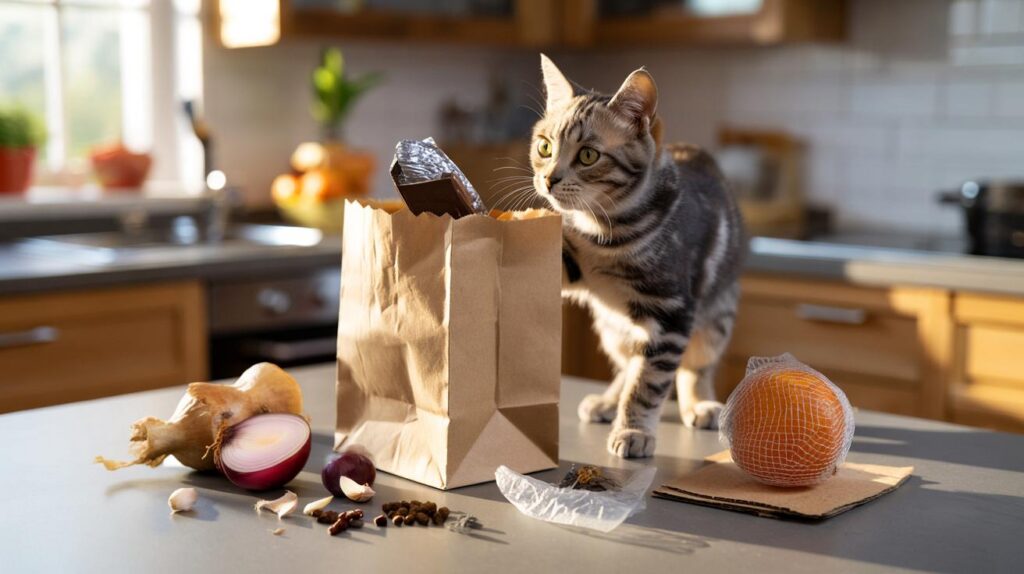
Back from the shop, you drop bags on the counter. Seconds later, a whiskered inspector arrives, tail high, plotting mischief.
What looks playful often hides sharper instincts: scent-hunting, novelty-seeking and the thrill of rustling paper. With autumn treats and party food piling up, the stakes rise for every household with a curious cat.
Why cats target shopping bags
Your cat isn’t being contrary. Bags smell like a treasure map. Groceries carry intense odours: meat juices, ripe fruit, smoked foods, bakery crumbs. Even a sealed packet leaks micro-scents a feline nose can track. Crinkly material amplifies the fun. A bag caves in, rustles, hides shadows and offers ambush potential — it mimics hunting.
Novelty counts too. A new object enters “their” territory and must be investigated, then claimed. Some cats rub, knead or sit inside to mix their scent with yours, which can soothe stress after you’ve been out. Others tip out the contents because rolling objects release even more smells and sounds.
The first ten minutes after you get home decide whether curiosity stays cute or turns risky.
Scent, novelty and a sense of control
Three drives feed the behaviour: powerful smell, novelty reward and a small animal’s need to control the environment. A rummage scratches those itches fast. If the household feels lively or unpredictable, the bag becomes a quick-win puzzle that your cat can solve.
What turns a rummage into risk
Common groceries can harm cats. Many are innocuous to humans yet dangerous to a small body. Other hazards look harmless: string that binds cheese, elastic bands, plastic clips, cling film, netting around citrus, and foil from chocolate or pâté. A bite, a swallow or a tangle can escalate within minutes.
| Item in the bag | Risk to cats | What you may notice |
|---|---|---|
| Chocolate (bars, cocoa powder, desserts) | Toxic theobromine | Agitation, vomiting, fast heart rate |
| Grapes, raisins, sultanas (mince pies, trail mix) | Kidney damage risk | Lethargy, decreased appetite, vomiting |
| Onions, garlic, leeks (fresh, powdered, stock) | Red blood cell damage | Pale gums, weakness, tummy upset |
| Cooked bones (roasts, takeaways) | Splinters, blockages | Drooling, retching, painful abdomen |
| String, elastic, cheese wire, plastic clips | Choking, gut obstruction | Gagging, thread at the mouth, constipation |
| Alcoholic or boozy desserts | Alcohol poisoning | Wobbliness, low body temperature |
| Plastic wrap, foil, net bags | Entrapment, ingestion | Laboured breathing, vomiting |
Assume every crinkle, string or morsel is a hazard until it’s out of paw’s reach.
A safe-unpacking routine you can start tonight
Switch from chaos to a practiced drill. You’ll cut risk and keep your cat satisfied.
- Stage the bags on a worktop, not the floor.
- Close the kitchen door if you can, then unpack at speed.
- Move risky foods straight to a high shelf or shut cupboard.
- Bin strings, nets, bands and plastic wrap as you go.
- Flatten paper bags and store them out of reach, or offer one empty bag under supervision only.
Five quick fixes that redirect curiosity
- Mat training: toss three treats on a designated mat before you open bags; pay every glance towards the mat for two minutes.
- Foraging toy: preload a puzzle ball with kibble; hand it over as you carry in the first bag.
- Cardboard decoy: keep one sturdy box; drop two crumpled paper balls inside and park it two metres from your unpacking area.
- Timed play: give a three-minute wand-toy chase the moment you lock the door, then unpack; hunting need satiated, interest in bags drops.
- Door routine: hang a hook by the entrance; pop bags on the worktop first, then close the door behind you so the cat can’t dash between legs.
When to worry and call the vet
Phone your vet promptly if your cat chews chocolate, grapes, onions or garlic, or swallows string, elastic or plastic. Signs that need urgent help include repeated vomiting, sudden lethargy, panting or noisy breathing, pacing and retching, a swollen or tense abdomen, or any string visible from the mouth or bottom. Do not pull a string — it can saw through the gut. Keep the packet of whatever was eaten for the vet to assess. Costs for foreign body surgery can breach £1,000, so early action saves both the cat and your wallet.
Seasonal reality check for UK homes
October to January brings high-risk items into kitchens: boxed chocolates, raisins in mince pies and puddings, onion-heavy stuffing, cured meats, foil-wrapped cheeses, and leftover bones from roasts. Add ribbon, tinsel and gift strings, which behave like deadly toys when swallowed. Even bouquets can bite — lilies are notorious and shouldn’t enter a cat home. Build your routine now, before the festive rush loads the table with temptations.
Why prevention works better than correction
Shouting or scolding after a rummage teaches little; your cat already hit the jackpot of smell and sound. Prevention pays because it delivers a faster, clearer result. You control the scene, trim the reward, and swap it for a safer outlet. Most cats learn the pattern within a week: mat means treats, box means play, worktop means “boring, nothing to steal”.
Make your kitchen cat-smart
Small layout tweaks
- Keep a lidded bin within arm’s reach of the unpacking spot.
- Reserve one high cupboard for all risky foods and make opening it part of your sequence.
- Store elastic bands and clips in a tin, not in drawers that gape.
- Rotate toys weekly so novelty comes from safe objects, not your shopping.
If you want to go further
Run a quick simulation on your next shop: time how long it takes to go from door to “all hazards contained”. Aim for under five minutes. If you’re over, remove one friction point — a missing bin bag, a cluttered worktop, or a door that won’t close — before the next trip.
Try a “two-bag system”: one bag holds all high-risk foods, the other holds safe goods. Put the risky bag down last, on the highest surface, and unpack it first. You’ll cut the window of opportunity from minutes to seconds.
For multi-cat households, add a second mat or a wall-mounted feeding shelf. Separation reduces competition and reduces raids. If anxiety drives rummaging, schedule two short play sessions daily and feed at predictable times; a calmer cat investigates less aggressively.
Your cat will keep sniffing the story your shopping brings home. Give them a safer chapter: swift unpacking, tidy strings, a decoy box and a tiny hunt to scratch the itch. The thrill stays; the danger doesn’t.



Brilliant breakdown—this explains our nightly chaos. The mat training + decoy box combo is definitley working here; my torbie now beelines for her puzzle ball while I speed-unpack. I also added a lidded bin next to the counter and it cut my panic by half. Love the “first ten minutes” rule; framing it as a routine made it stick.