
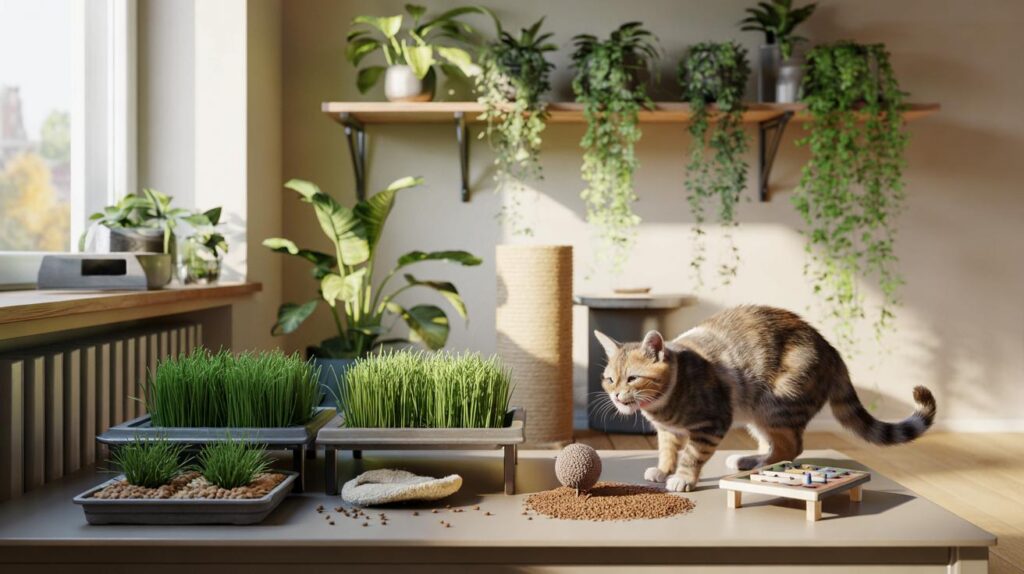
Short days, twitchy whiskers, tender leaves. As autumn creeps in, homes brim with greenery—just as curious paws sharpen their plans.
Your shelves look like a mini rainforest, your cat thinks it’s a salad bar. It’s not malice. It’s instinct, routine, and boredom colliding with glossy foliage. You can keep the plants and protect the pet. You just need smart swaps, a nudge to your layout, and a bit of routine.
Why your cat raids the greenery
Many cats nibble plants because the behaviour does a job. Chewing blades helps shift swallowed hair. New textures relieve stress. Stalks sway, so they invite play. Indoors, that urge has nowhere to go unless you channel it.
Boredom, digestion and territory
- Enrichment gap: a quiet flat means plants become the moving, rustling novelty.
- Hair control: rough fibres can help bring up fur. Grasses work better than rubbery houseplant leaves.
- Space marking: rubbing and mouthing on leaves spreads scent. It’s cat politics, not vandalism.
Some popular plants aren’t safe. Pothos, ficus and peace lily can irritate the mouth and gut. True lilies are far worse. Even a lick of pollen can be dangerous. If your cat drools, vomits, loses appetite or hides after a bite, call a vet.
Assume curiosity wins. Keep risky plants out of reach, offer edible greens on tap, and act fast if symptoms appear.
Safe swaps that actually work
Give your cat something better to chew than your monstera. Edible greens cost pennies and grow indoors, even by a dim window. The goal is to make the allowed option easier and more rewarding than the forbidden one.
The two reliable crowd-pleasers
- Cat grass mixes: trays of wheat, barley, oat or rye. Tender, fast, cheap. Use untreated seed.
- Catnip (Nepeta cataria): aromatic, non-toxic, and fun. Offer as a plant, dried sprinkles, or stuffed toys.
Set up a mini “green bar”. Sow in shallow trays with peat-free compost. Water, put near light, and rotate trays so there’s always fresh growth. Most grasses sprout in 4–6 days and last 10–14 days before getting coarse.
An easy two-week rotation
- Day 1: sow two trays of grass. Mark the date under each tray.
- Day 5: put tray A out for grazing. Keep tray B growing by the window.
- Day 10: sow tray C. Retire tray A when tough; swap in tray B.
- Day 15: tray C replaces tray B. Repeat the cycle.
Place the greens where your cat already hangs out—next to the scratch post, beside a favourite window, or on a sturdy low shelf. Add a catnip toy nearby so the area becomes a magnet for attention.
Keep two to three edible greens available at all times. Refresh weekly. If your cat ignores the first batch, try a different grain mix or brighter spot.
Make your layout do the work
A few adjustments can save your philodendron and your nerves. Use height, spacing and barriers to steer behaviour without scolding.
Three small moves with big impact
- Go vertical: hang trailing plants from the ceiling or wall brackets, at least 1.8m high and out of leap range.
- Create a “green zone”: group cat-safe greens in one spot and keep risky plants behind a door or on a high shelf with no launchpads.
- Protect soil: cover potting mix with river pebbles or coco chips to prevent digging and flicked compost.
Short on space? Use a ladder shelf. Place cat-safe trays on the lower tiers, treasured plants at the top, and remove any mid-level step your cat could use as a springboard.
What to keep, what to lift, what to bin
| Plant | Risk to cats | Practical action |
|---|---|---|
| Pothos (Epipremnum) | Mouth irritation, drooling, vomiting | Place high, block access, or rehome the plant |
| Ficus (rubber, weeping fig) | Skin and gut irritation | Keep out of reach; wipe sap spills promptly |
| Peace lily (Spathiphyllum) | Oral pain, salivation, tummy upset | Best kept in a cat-free room |
| True lilies (Lilium, Hemerocallis) | Severe toxicity | Avoid indoors if you live with cats |
| Spider plant (Chlorophytum) | Non-toxic but attracts nibbling | Pair with abundant cat grass to reduce interest |
| Catnip, wheatgrass | Cat-safe in moderation | Offer regularly; rotate fresh trays |
This list is not exhaustive. Mixed bouquets can hide lily pollen, and new purchases often arrive with fertiliser sticks. Check labels, and remove slow-release spikes from any pot within reach.
When to call the vet, and what it might cost
Seek help if you spot drooling, pawing at the mouth, vomiting, diarrhoea, wobbliness, or sudden withdrawal. Bring a plant sample or photo. Many clinics can advise by phone first. A consultation often starts around £60–£90. Treatment for mild ingestion can push past £200. Intensive care for lily exposure can exceed £500. Prevention beats a late-night dash and a bruised wallet.
Your seven-step, cat-proof plant plan
Add play and training to seal the deal
Plant protection works best with short, daily play. Ten minutes of wand chasing drains energy that would go into leaf-chewing. Scatter-feed a portion of dinner in puzzle toys so the brain gets a workout. If your cat fixates on a particular pot, teach a simple “leave” cue. Say “leave”, redirect to the grass, then reward. Repeat often. Most cats learn in days when rewards are timely.
How the numbers stack up
One £4 bag of mixed grain seed can fuel four standard trays. Each tray lasts roughly two weeks. That’s two months of chewable greens for the price of a takeaway coffee. Compare that to a single emergency consult at £70 plus medication. The maths makes the case for prevention, and your shelves will thank you.
Extra tips that save headaches
- Water from the base so leaves stay less appealing to lick.
- Wipe dusty leaves; dust can trigger interest and cause coughs.
- Avoid citrus oils or pepper sprays on leaves; they can irritate cats.
- If you bring home a new plant, quarantine it for a week and watch your cat’s reaction.
Seasonal shifts change behaviour. In darker months, cats nap more and seek new stimulation. Rotate toys weekly, add a window perch over a radiator, and keep the “green bar” topped up. If your cat is a relentless chewer, try silver vine or valerian toys as an alternative sensory hit, and place the toy next to the grass to anchor the habit where you want it.
Planning a festive centrepiece? Skip lilies and mistletoe. Go for rosemary or thyme in low bowls near the cat-safe greens. You’ll get the fragrance; your cat gets a legal snack and a calmer evening. That small swap keeps the peace—and your plants—in one piece.



This is the first guide that made me feel I dont have to pick between my monstera and my menace. The two-week grass rotation is genius, and the cost breakdown finally sold my partner on it. Bookmarking.
Does the pebble covering actually stop digging, or do cats just yeet them out? Asking because mine treats pebbles like marbles on hardwood.