
The chill is back, stews are simmering, and kitchens are busy again. Yet one sneaky surface keeps undoing your hard work.
Many households scrub, rinse, and stack boards to dry. Then the onion and fish odours return. Microbes linger as well. A few smart, natural moves stop the smell and the risk without bleach or fuss.
Why your current clean-up routine keeps failing
Wood drinks in juices. Plastic scars and holds residues. Both develop tiny grooves. Food particles lodge there. Moisture feeds microbes. A quick soapy wipe masks the odour but leaves the cause behind.
Soaking a wooden board swells fibres. Cracks form. Bacteria spread deeper. A hot dishwasher can help plastic, but it warps wood and softens glue. Mild cycles stay below true sanitising heat. Fragrance-heavy detergents fight smell, not germs.
Odour is a warning, not just a nuisance. If your board smells after washing, biofilms may already be forming.
The three natural moves that actually work
You need simple pantry staples. They scrub, deodorise, and cut microbial load. No harsh chemicals. No pricey sprays.
- 1 tablespoon coarse salt
- 1 lemon, halved
- 2 tablespoons bicarbonate of soda
- 2 tablespoons white vinegar (neat)
Salt and lemon for a fast reset
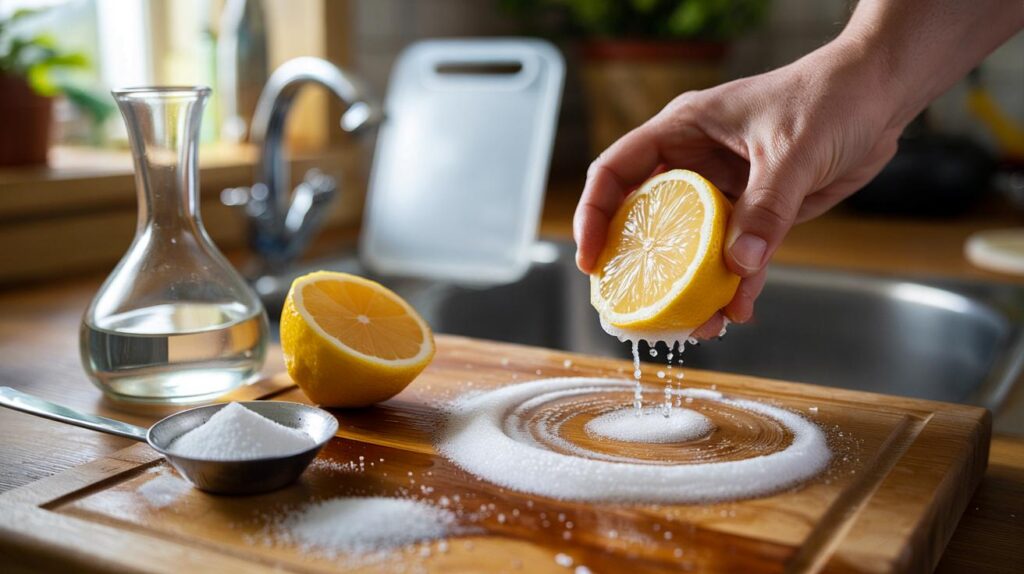
Sprinkle 1 tablespoon of coarse salt over the board. Use half a lemon as a scouring pad. Work with the grain on wood. Spend 60 seconds on the most marked areas. Leave the salty lemon juice on the surface for 5 minutes. Rinse hot. Dry upright.
The salt abrades the film that traps odour. The citric acid helps break down fats. The rind adds grip that lifts stubborn bits. This is your go-to after fish, onion, garlic, or cured meats.
Bicarbonate paste for deep deodorising
Mix 2 tablespoons of bicarbonate with a splash of water to form a paste. Spread a thin coat. Leave 10 minutes. Scrub with a stiff brush. Rinse hot. Dry until fully bone-dry before storage.
Bicarbonate neutralises volatile compounds. It cuts lingering sulphur notes. It is gentle on wood and robust on plastic. Use weekly if you cook fish or chop alliums often.
Neat white vinegar for a microbial hit
Apply 2 tablespoons of white vinegar directly. Wipe to cover the surface. Let it sit for 5 minutes. Rinse lightly or leave to evaporate if the next task is non-porous prep. Air-dry upright.
Acidic conditions hinder many kitchen pathogens. Vinegar also helps loosen mineral films from hard water. Keep it as the final step when you plan to store the board.
| Method | Quantity | Contact time | Best for | Material notes |
|---|---|---|---|---|
| Salt + lemon | 1 tbsp salt + 1/2 lemon | 5 minutes | Grease, strong odours | Safe for wood and plastic |
| Bicarbonate paste | 2 tbsp bicarb + water | 10 minutes | Deep deodorising | Gentle on all boards |
| White vinegar (neat) | 2 tbsp | 5 minutes | Microbial reduction | Avoid soaking wood |
Use the trio in sequence after heavy use: salt + lemon, bicarbonate pause, then a vinegar finish. It takes under 20 minutes.
Daily habits that extend a board’s life
Wipe the board the moment you finish chopping. Remove wet residues before they settle. Rinse with hot water. Stand it on edge to dry with air circulation. Never leave a wooden board in a sink or under a damp cloth.
Rotate jobs. Keep one board for raw meat and fish. Use another for bread, fruit, and ready-to-eat items. Colour-coding helps households and shared kitchens. Replace sponges with a brush that dries rapidly between uses.
Oil wooden boards monthly. Use food-grade mineral oil. Warm the board slightly. Rub a thin coat with a lint-free cloth. Leave overnight. Wipe off excess. Oiling blocks water ingress and slows cracking.
Inspect surfaces often. Deep cuts hold risk. Sand wooden boards with fine paper if grooves catch a fingernail. Wash away dust. Re-oil. Retire plastic boards when lines stay grey after cleaning.
Cracked wood or deeply scarred plastic should be replaced. Cheap boards cost less than a single bout of food poisoning.
Safety context and the numbers that matter
Campylobacter and salmonella can survive for hours on damp cutting surfaces. Onion and fish odours fade slowly as the same moisture supports bacterial growth. Warm, wet boards create an ideal stage.
Kitchen studies show cross-contamination spikes when boards stay damp. Raw chicken juices move to salad leaves via knives and hands. A clean-looking board may still transfer microbes if not fully dry.
Heat helps, with limits. Many domestic dishwashers run between 50°C and 65°C. That range reduces risk on plastic. It warps wood, loosens laminates, and invites cracks. Keep wooden boards out of the dishwasher. For plastic, use the hottest hygienic cycle and let it finish the dry phase.
Dryness is a powerful control step. A fully dry board is far less welcoming to bacteria than a spotless but damp one.
A quick, realistic routine for busy evenings
Try this three-minute reset after strong-smelling prep. It fits between plating and washing up.
- Sprinkle 1 tablespoon coarse salt and scrub with half a lemon for 60 seconds.
- Rinse hot. Spread a thin bicarbonate paste. Leave while you eat.
- Rinse. Wipe with 2 tablespoons white vinegar. Air-dry upright overnight.
Costs stay low. One lemon is around £0.30. Salt, vinegar, and bicarbonate cost pennies per use. The routine delays replacement. It keeps cut marks cleaner and safer for longer.
Common mistakes that keep odours hanging around
Don’t mask smells with perfumed detergent alone. Deal with the residues that cause them. Don’t stack damp boards flat; trapped moisture breeds trouble. Don’t chop raw meat and then bread without a clean break; wash hands and switch boards.
Avoid heavy bleach on wood. It raises grain and strips oils. It also leaves a persistent whiff. If you must disinfect plastic after high-risk jobs, opt for a brief, diluted treatment, rinse well, and dry completely.
When to replace, repair, or repurpose
Retire a wood board if it splits, cups, or moves under a flat palm. Replace plastic when it stays stained and furrowed after a thorough clean. Sand light scars in wood and re-oil. Turn end-of-life boards into plant stands or serving trivets for wrapped items.
For heavy prep households, keep two medium boards rather than one huge one. Smaller surfaces clean and dry faster. They also fit in drying racks, which reduces damp time and lowers risk day after day.



Tried the salt + lemon then vinegar—smell gone in minutes. Defintely keeping this routine.