
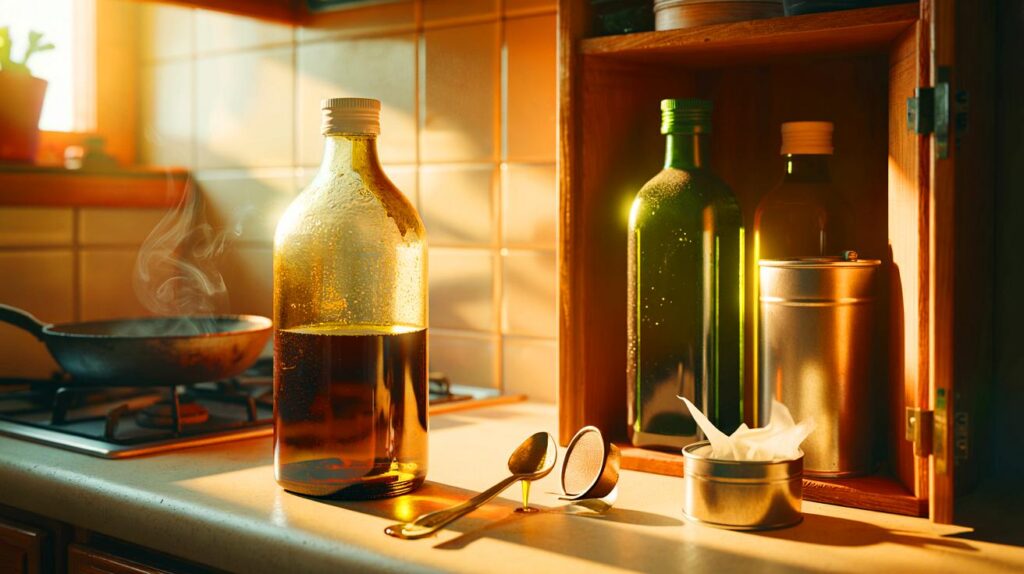
A dusty bottle lurks by the spices, its date long gone. Do you bin it, or dare to drizzle?
Here’s what that little date actually signals, how to spot trouble, and when an ageing oil still belongs in your pan.
Best before dates and what they really mean
Most edible oils carry a best before date, not a use by date. That label forecasts peak flavour and texture rather than a hard cut-off for safety. Once the date passes, quality can slide if the oil has met too much air, light or heat. An opened bottle oxidises faster than an unopened one. Dark glass slows damage; a cap left loose speeds it up.
For most households, the first risk with old oil is disappointment on the plate, not a dash to the doctor.
Different oils age at different speeds. Saturated and monounsaturated fats (such as coconut and olive) tend to hold up longer than oils rich in polyunsaturates (such as walnut or linseed). Storage conditions tilt the balance. A cool cupboard extends life. A warm shelf near the hob shortens it.
Typical lifespans if stored well
| Oil | Unopened best before (months) | After opening (months) | Fridge helps? |
|---|---|---|---|
| Olive (extra-virgin) | 12–18 | 6–12 | Not needed; cool, dark cupboard |
| Sunflower | 18–24 | 6–12 | Optional for longer keeping |
| Coconut | 12–24 | 12 | Not necessary; solidifies in fridge |
| Grapeseed | 9–12 | 6–9 | Yes, slows oxidation |
| Sesame | 9–12 | 6–9 | Yes, especially toasted sesame |
| Walnut | 9–12 | 3–6 | Yes, strongly advised |
| Linseed (flaxseed) | 6–12 | 3–6 | Yes, strongly advised |
Numbers vary by producer and packaging. Dark glass and nitrogen-flushed bottles often fare better. Once opened, aim to finish delicate oils within a season rather than stretching them across the year.
How to spot rancidity fast
Oxidation changes smell, colour and feel. Your senses pick it up quickly if you know what to check.
- A sharp, stale or putty-like odour instead of the oil’s original aroma.
- A darker, muddier colour, sometimes with haze or visible sediment.
- A thicker, tacky or slightly sticky texture on the neck or cap.
- A bitter, waxy aftertaste when you test a single drop on a spoon.
If the scent reminds you of old nuts, paint, crayons or cardboard, oxidation has taken hold.
Cloudiness alone is not always a problem. Cold storage can cause harmless crystals in some oils. Let the bottle sit at room temperature for 20–30 minutes; true rancidity will not clear.
Is rancid oil dangerous?
A sip of past-its-best oil rarely triggers sudden illness. The real loss sits in taste and nutrition. Oxidation breaks down delicate fatty acids and aromas, so dressings taste flat or bitter. Repeated use of heavily degraded oils, especially those heated many times, can produce compounds you do not want in your diet. Keeping frying oil fresh, and rotating bottles sensibly, avoids that drift.
Quality fades first. Sensible storage and replacement before off-flavours appear keeps risk low and food enjoyable.
Can you still cook with it?
Good candidates for use
If an oil smells and tastes normal, looks clear, and has been stored cool and dark, it usually remains fine for everyday cooking past its best before. Neutral oils that have not turned can handle quick sautéing or baking. Robust extra-virgin olive oil often holds flavour beyond the date when kept sealed and shaded.
When to pass
Skip any oil with rancid notes, sediment that persists after warming, or a sticky neck. Avoid reusing deep-frying oil more than a handful of times; filter after each session and stop once it darkens, smokes sooner, or smells stale. High heat accelerates breakdown and raises smoke, which ruins food and stings eyes and throat.
Storage habits that extend life
- Buy sizes you finish within 2–6 months once opened.
- Choose dark glass or tins; keep caps firmly closed.
- Store away from the hob, sunlight and radiators; a cool cupboard works well.
- Refrigerate fragile oils such as walnut, linseed and toasted sesame; temporary cloudiness is normal.
- Wipe the neck after pouring to avoid sticky residues that speed oxidation.
Second lives for tired oil
When flavour slips but the oil is not foul, small household uses can spare waste. Lightly oil squeaky hinges or garden tools to fend off rust. A thin film on a spade can help soil slide off. Some people make cold-process soap with surplus oil; if it smells markedly rancid, the scent may carry, so test a small batch first.
Never pour oil down the sink. Cool it, bottle it, and take it with used cooking oil to your local recycling point.
Very small amounts can go into a home compost heap if mixed well with dry browns, though large quantities upset the balance. Check local guidance for collection schemes that turn used oil into biofuel.
What that label on cosmetic oils means
For skin and hair oils, look for the period after opening symbol. Once opened, many plant oils lose their skin benefits quickly and can clog pores when oxidised. Keep them cold, use pumps to limit air contact, and stop if you notice an off smell or a change in skin reaction.
Practical examples to guide your choice
- Bottle of olive oil, opened nine months, stored in a shady cupboard, smells grassy and tastes clean: fine for dressings and cooking.
- Sunflower oil, unopened, one year past best before, tin kept cool: open, sniff and taste; if neutral and clear, use for baking or shallow frying.
- Walnut oil, opened four months, kept on a warm windowsill, faint painty note: retire from food, repurpose or recycle.
A quick plan to curb waste and keep flavour
Pick two everyday oils: one robust all-rounder (extra-virgin olive or rapeseed) and one neutral high-heat option (refined sunflower or groundnut). Add one small bottle of a delicate oil for finishing, and store that one in the fridge. Label caps with the opening month using a marker. This simple setup trims forgotten bottles, protects flavour, and saves money over the year.



Finally, a clear, pratical guide—thanks!