
That dusty bottle behind the spices nags at your budget and your nerves. The date has passed. The nose decides.
You want to cut waste. You also want dinner to taste good and feel safe. Oil complicates things because labels blur quality and safety. The answer sits in storage, smell, and what you plan to cook.
Best-before vs use-by on oils
Most edible oils carry a best-before date, not a use-by date. Best-before speaks to flavour and texture. Use-by is for short-life foods that may become unsafe. Oil rarely falls in that category.
Quality drifts after the date. The drift speeds up with air, light, heat, and repeated opening. A sealed tin on a cool, dark shelf ages slowly. An opened clear bottle by the hob ages quickly.
Best-before is about quality, not safety. Your senses and storage history trump the calendar on the cap.
How long different oils typically last
Durations vary with fat profile. Saturated and monounsaturated oils keep better than polyunsaturated ones. Packaging matters as well.
| Oil type | Unopened shelf life | After opening | Storage tips |
|---|---|---|---|
| Olive (extra virgin) | 12–18 months | 6–12 months | Dark glass, cool pantry, cap tight |
| Sunflower (standard) | 18–24 months | 6–12 months | Keep away from heat, use for frying first |
| Coconut (refined or virgin) | 12–24 months | 12 months | Stable at room temperature, solidifies when cool |
| Sesame | 6–12 months | 3–6 months | Refrigerate after opening for best flavour |
| Grapeseed | 6–12 months | 3–6 months | High PUFA, keep chilled once opened |
| Walnut or flax (linseed) | Up to 12 months | 4–8 weeks | Always refrigerate, use in dressings only |
These figures assume cool storage under 20°C and minimal light exposure. A hot summer kitchen shortens every line in that table.
Red flags that mean bin it now
Your senses spot rancidity fast. Oxidation produces sharp, stale, sometimes paint-like notes. The texture and colour change as molecules break down.
- Acrid or waxy odour that lingers in the nostrils.
- Colour turns darker, or the liquid looks hazy or muddy.
- Sticky, thick, or gluey texture on the neck of the bottle.
- Harsh, bitter, or soapy taste even in tiny amounts.
If it smells like crayons, old nuts, putty, or nail varnish remover, do not cook with it.
When you can still cook with it
A bottle a few weeks past best-before can still perform if it smells and tastes fresh. Use it where flavour impact is lower and exposure to air stays brief.
Low-risk ways to use a slightly tired oil
- Quick sautés under medium heat for vegetables and eggs.
- Baking where spices or cocoa dominate the aroma.
- Short marinades used immediately, not stored.
Avoid cold uses like dressings if the aroma has dulled. A salad amplifies flaws. Heat can mute minor staleness, but it also accelerates breakdown if the oil is already oxidised.
Health and taste: what rancidity actually does
Rancidity results from oxidation and, to a lesser extent, hydrolysis. Oxygen attacks unsaturated bonds and forms peroxides and aldehydes. These compounds smell and taste harsh. They also lower the smoke point.
Using heavily oxidised oil for frying raises polar compounds and off-flavours. Pan residues build up faster. Food browns unevenly and smells greasy. Commercial rules often bin oil when total polar compounds approach 25%. Home cooks can watch for darkening, foam, and persistent smoke at normal temperatures.
Good oil fries crisply at its usual temperature. Rancid oil smokes early, foams, and leaves a sticky film.
Small accidental intakes are unlikely to trigger acute illness in healthy adults. Regular use of badly oxidised oils can nudge inflammation and diminish nutrient quality. Children, pregnant people, and anyone with lipid disorders benefit from fresher fats and gentler heat.
Storage habits that buy you extra months
Light, oxygen, and heat do the damage. Reduce those and oil lasts longer.
- Keep bottles in a dark cupboard away from the hob and dishwasher steam.
- Choose dark glass or tins. Avoid clear plastic for long storage.
- Close caps firmly. Decant large tins into 250–500 ml bottles to limit headspace.
- Refrigerate delicate oils such as walnut, flax, and sesame. Clouding in the fridge is normal and reverses at room temperature.
- Label the opening date with a marker. Aim to finish open bottles within three to six months.
Cool, dark, and sealed beats any date stamp printed on the label.
Frying oil: when to refresh and when to ditch
Repeated heating breaks oil faster than time on a shelf. Each cycle adds oxygen and food residues. Filtering helps but cannot reverse oxidation.
- Strain cooled oil through paper after each use to remove crumbs.
- Store used oil in a dark container. Keep it for similar foods only.
- Retire the batch after 6–8 short frying sessions or 8–10 hours total, sooner if it darkens, smells stale, or smokes early.
What to do with old oil without wasting it
Do not pour oil down the sink. It clogs pipes and harms waterways. Small amounts can go in a sealed jar with coffee grounds or cat litter and into general waste. Larger volumes go to a recycling point where available.
You can still put a borderline bottle to work outside the kitchen. Lubricate squeaky hinges. Protect garden tools from rust. Make a small batch of soap if the odour remains neutral. Compost only tiny amounts mixed into browns to avoid smells and pests.
Quick test you can do in one minute
- Swirl the bottle and sniff immediately at the neck.
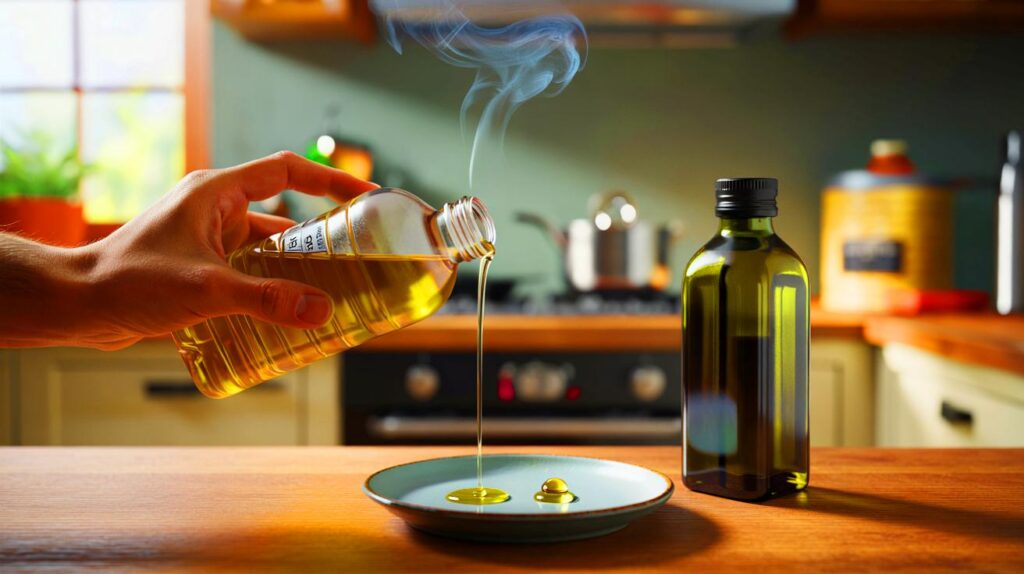
- Drip a teaspoon on a white plate and look for haze or tint.
- Taste a drop on the tongue and spit. Any bitterness or waxy note means stop.
Fresh oil smells clean and nutty or neutral. Old oil smells like stale nuts, crayons, or paint.
Extra context you can use today
Why some oils need the fridge
Oils rich in omega-3 and omega-6 oxidise quickly. Flax, walnut, and grapeseed fit this bracket. The fridge slows oxidation and preserves aroma. Cloudiness is harmless. Warm the bottle in your hands before dressing a salad.
How to buy smarter and waste less
Match bottle size to your cooking rhythm. A household that finishes 250 ml a month keeps flavour lively. Choose harvest-dated olive oil when possible. Rotate between a neutral high-heat oil for the pan and a fresher, smaller bottle for salads to reduce spoilage.



Great breakdown of best-before vs use-by. I always thought oils “expire” the day on the cap—this definately sets it straight.
If my bottle smells like crayons and old nuts, is that a new “aroma profile” or a red flag? Asking for my cupboard. 🙂