
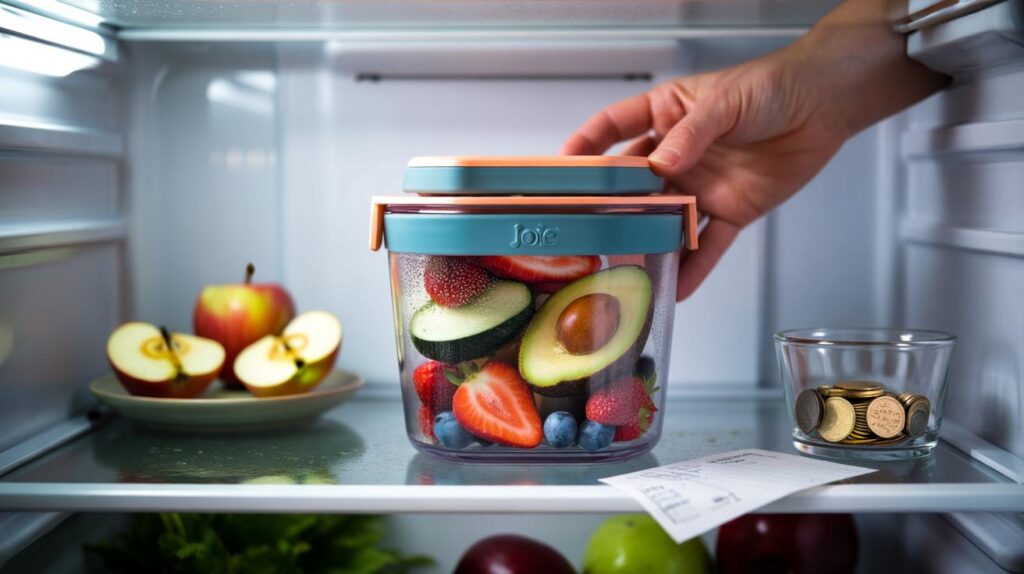
Cold evenings bring crumbles, soups and packed lunches, yet half-eaten fruit still slips into the bin and drains household budgets.
Shoppers across Europe have started whispering about a tiny, colourful container with a big promise: fewer browned apple wedges, fewer soggy cucumber rounds, and fewer guilty trips to the bin. The Joie fruit-and-veg pot, spotted in Action stores at €1.72, aims to squeeze extra days of life from whatever you didn’t finish. It looks playful. It costs less than a bus fare. And it targets a familiar pain point: waste that feels both avoidable and expensive.
The tiny tub shoppers are snapping up
Joie’s compact pot comes with a tight-fitting lid and a cheerful colour palette. It sits neatly on a fridge shelf or drops into a lunch bag without fuss. The body feels sturdy. The lid presses on with a reassuring seal. You rinse it fast, and it handles a dishwasher cycle without drama. The price—a lean €1.72 in Action—keeps it in impulse-buy territory, which matters when food prices keep rising.
Cut fruit and vegetables lose quality quickly once exposed to air, light and moisture. A simple, airtight boundary slows that spiral. This pot provides that boundary. It cradles a leftover half of apple, the final avocado quarter, or a handful of pepper strips. That cushion of protection buys time before textures go limp and colours turn dull.
Under €2, a lidded Joie pot from Action creates a snug, low-oxygen space that helps hold colour, crunch and flavour.
Why it works: air, light and moisture
Oxidation triggers browning in apples, pears and avocados. Oxygen feeds enzymes that darken flesh and flatten flavour. Airtight storage slows that reaction. Reduce air, reduce browning. The lid also shields from light, which can degrade pigments in tender fruit. Moisture swings matter too. Condensation can soften berries and tomatoes, while drying air can parch cut carrots. A sealed, smooth-walled tub regulates that microclimate better than a loose cover or a torn bit of cling film.
Timing plays a role. Pop the cut pieces into the pot within minutes. Pat them dry so droplets don’t pool. Fill the container sensibly, then press out spare air before sealing. Cold temperatures do the rest.
What to store, and what to expect
- Apple or pear wedges: often hold colour and snap for an extra day or two when sealed and chilled.
- Avocado halves: keep the stone in, seal quickly; expect less browning on the cut face for the next day’s toast.
- Grapes and berries: benefit from a gentle pat dry before sealing to avoid condensation softening them.
- Carrot sticks, pepper strips and cucumber rounds: keep crunch for snacks and lunchboxes with less drying.
- Kiwi halves and citrus segments: stay juicy and fragrant when shielded from fridge odours.
Results depend on how ripe the produce is and how cold your fridge runs. But most households see a clear uplift: food looks better on day two, and you actually eat it.
Seal out oxygen and stray light, act fast after slicing, and you extend edibility long enough to finish what you paid for.
Real-money impact for families
Waste feels small in the moment, but it adds up. Say your household bins one half-punnet of strawberries (£2) and a browning apple (£0.40) most weeks. If a €1.72 pot (roughly £1.50) helps you rescue even half of that, you keep about £5 a month in your pocket. Save more when school snacks come home half-eaten: carrots, grapes and apple slices go straight into the pot and survive to see tomorrow’s lunch.
Spread that across a season of crumbles, salads and packed lunches, and you start to notice a difference—not just in the bin, but in your bank account.
How to get the best from it
- Cut smart: remove bruised sections that accelerate spoilage.
- Dry the surface: use kitchen paper to dab away excess moisture.
- Fill and seal: minimise headspace, press the lid down evenly.
- Chill promptly: store at 0–5°C; a middle shelf often stays most stable.
- Label the day: a small note keeps you honest and avoids forgotten bits.
- Rinse and repeat: wash after each use to avoid odours and cross-contamination.
How it compares with common fixes
| Method | Cost | Air control | Reusability | Ease |
|---|---|---|---|---|
| Cling film | from ~£1 per roll | partial seal, leaks easily | single-use | fast, but wasteful |
| Beeswax wraps | ~£5–£10 each | good seal, shape-dependent | reusable | practice needed |
| Generic tub | £2–£5 | varies with lid quality | reusable | simple |
| Joie pot (Action) | €1.72 | tight seal for small portions | reusable | simple and compact |
Where to find it and what to expect
Action stocks the Joie fruit-and-veg pot in-store in the kitchen aisle. Colours vary by location. The form factor suits half pieces and snack-sized leftovers rather than big batches. If a branch sells out, ask staff about upcoming deliveries. The price point tends to hold around €1.72, which keeps it friendly for bulk-buying two or three to build a small rotation.
Extra tricks to stretch freshness
Acid shield for pale fruit
A light brush of lemon juice on apple, pear or avocado slows browning further. Use sparingly to avoid a sour note. Seal the pieces afterwards to amplify the effect.
Moisture management
For cucumber and tomatoes, line the base with a small piece of kitchen paper to catch condensation. Replace the paper if it becomes wet. For carrots and celery, a splash of cold water in the pot can revive limp sticks; refresh the water daily.
Ethylene awareness
Some fruit, such as bananas and apples, release ethylene, which speeds ripening. Keep ripeners away from delicate berries and greens. The pot helps shield sensitive items, but don’t store emitters together with fragile fruit for long periods.
Food safety and materials
Cool cut produce quickly. Keep the fridge below 5°C. When in doubt, smell and check texture; toss anything slimy or off. If you plan to store acidic foods, look for a food-safe symbol on the base of the pot. Avoid harsh scrubbers that score the plastic and trap odours. If you transport juicy items, keep the pot upright inside a bag to avoid pressure leaks.
If you can’t get to Action
Any small airtight container narrows oxygen exposure and slows wilt. Aim for a snug lid, smooth interior walls and a size that matches the portion. The Joie pot’s appeal lies in its price and compact design. But the habit matters more than the brand: seal it, chill it, eat it soon.
Batch-prep a week’s worth of snack pots on Sundays. Add lemon to pale fruit, line the base for wet produce, and rotate pots daily. Track your bin for a month and tally what you no longer throw away. Many households hit that £15 target fast, and some go further during peak fruit seasons.



Went to Action today and grabbed the Joie pot for €1.72—tiny but mighty! Day 2 apple slices still looked decent, which is a small mircale. If this really saves me even a fiver a month, I’m in. Also love the tip about patting fruit dry 🙂