
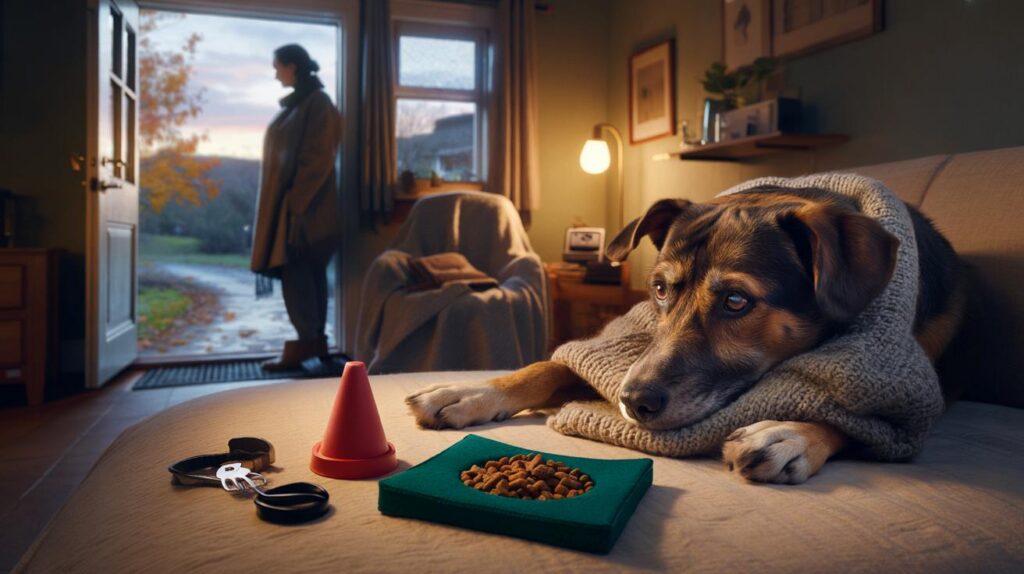
As clocks change and nights draw in, owners return to offices, and thousands of dogs struggle with the sudden quiet.
The seasonal shift hits routines, energy and mood. Darker evenings mean shorter walks. Busier diaries mean more time alone. Small, targeted adjustments can steady a worried dog and protect your house from stress-fuelled chaos.
Why autumn magnifies separation stress
Short daylight squeezes exercise windows. Wind, rain and chilly pavements make walks less appealing. Fireworks start rattling windows. Many employers pull staff back for more office days. Each factor pressures a dog’s coping skills. When routines change quickly, sensitive animals can bark, chew, or pace. Some toilet indoors. Others freeze and refuse food.
Predictability reduces panic. Dogs relax when the day unfolds in a familiar order, with clear signals for rest and activity.
You can change the arc of a day with simple cues. Feed, walk and depart on a pattern your dog can trust. Bring stimulation indoors when weather ruins plans. Keep arrivals low-key to prevent a daily rollercoaster of emotion.
What to do before you leave
Build a steady morning rhythm
Set a consistent wake-up, toilet break and breakfast. A short, purposeful walk helps many dogs nap after you go. Avoid frantic fetch that spikes adrenaline. Calm sniffing drains energy without over-arousal.
Use a repeatable countdown to the front door. Place keys in one spot. Switch the radio to the same station. Offer a chew. Say one neutral phrase such as “back soon”. Then leave. No teary cuddles. No long goodbyes. Your calm signals safety.
Use scent to anchor mood
Leave a worn jumper or pillowcase in the resting area. Familiar odour acts as a social blanket. Position it near, not inside, a safe bed to prevent nibbling. Replace it weekly so it keeps your smell.
Seven practical steps you can start today
- Set fixed times for meals, walks and departures so your dog can anticipate the day.
- Offer a food puzzle at the door as you leave to pair absence with a positive task.
- Rotate 2–3 chews and 2 puzzles to prevent boredom; keep one “special” item for alone-time only.
- Stage micro-absences at home: step out for 30–90 seconds, return calmly, and build to 10–15 minutes.
- Lower the drama at reunion: enter quietly, hang up your coat, then greet when your dog sits or settles.
- Reshape the space: add a cosy den, move the bed weekly, and create scent trails with a few hidden treats.
- Layer sound: gentle talk radio or white noise can mask outside bangs during the evening rush and fireworks.
Calm out, calm in. Keep departures boring and returns predictable so the middle of the day feels safe, not endless.
What to leave behind when you head out
Puzzles, chews and “sniff work” that buy you time
Food-dispensing toys like a Kong, snuffle mats, and cardboard boxes stuffed with paper keep noses, paws and brains busy. Many dogs settle for 20–45 minutes with one well-stuffed puzzle. Chews satisfy the urge to gnaw and release tension in the jaw.
| Item | Approx. cost | Set-up time | Typical occupied time |
| Stuffed rubber toy (e.g. Kong) | £8–£15 | 3–5 mins | 20–30 mins (freeze for longer) |
| Snuffle mat with kibble | £10–£25 | 2 mins | 10–20 mins |
| Natural chew (size-appropriate) | £2–£6 | 0 mins | 15–40 mins |
| Cardboard forage box | Free | 2 mins | 8–15 mins |
Use variety to protect novelty. Change the location of the activity each day. Keep a “quiet box” ready with two puzzles and a chew so you can leave on time without fuss.
How to manage your return
Turn fireworks into background noise
Many autumn evenings include bangs and whistles. Step in calmly. Put the kettle on. Speak in a normal tone. Ask for a simple behaviour like a sit. Reward with a treat or a short sniff on the garden. Skip the squeals and wrestling. Excitement at the door often raises anxiety the next morning.
Note the state of the house before greeting. If you see shredded post or a puddle, tidy later. Greeting comes first once your dog offers a moment of calm. Correcting after the fact only confuses a stressed animal.
Reward the state you want. Quiet body, loose face, and steady breathing earn attention and snacks.
Reading the signals and when to seek help
Track behaviours for two weeks. Log barking, pacing, drooling, indoor toileting, shadowing, and appetite changes. Many dogs improve as routines bed in. If signs escalate or last more than a month, bring a vet or qualified behaviourist into the plan. Pain, itching or gut issues can amplify distress. Medical checks protect progress.
Tech can help you see patterns. A cheap camera or old phone on a stand shows the first 30 minutes after you leave. Most problem behaviours happen in that window. Tailor training to what the footage shows, not guesswork.
Make the home feel interesting, not empty
Small environmental tweaks that pay off
Shift the bed away from draughts. Add a heavier blanket for warmth. Offer different textures: a fleece, a woven rug, a cardboard pad. Create small hideaways with a chair and a sheet. Rotate these features every few days to reset curiosity. Novelty eases fixation on the door.
Introduce gentle soundtracks during the day. City soundscapes or low-volume classical can normalise common noises. Pair them with easy chews so your dog learns that bangs predict mouth work, not panic.
Sample mini-schedule you can copy this week
Morning: 15–20 minutes of sniff-centred walking; breakfast in a puzzle; calm exit routine. Midday: a neighbour or walker if your dog is under six months or struggles for more than two hours. Evening: short training game, grooming, and a relaxed decompression stroll.
Three parts to a settled solo: predictable routine + brain work + low-key reunions.
For owners on tight time and budgets
Batch-fill three rubber toys on Sunday and freeze them. Save cardboard tubes and egg boxes for free forage games. Pre-bag kibble portions for snuffle mats. Keep a “leaving tray” by the door with keys, treats and that worn jumper so you never skip the plan.
Extra context to widen your options
Gradual desensitisation works best in tiny slices. Start by touching the handle and sitting down again. Then open and close the door. Step into the hall for ten seconds. If your dog stays relaxed, add five seconds next time. If you hit whining or panting, cut the duration in half and repeat until calm returns. Progress often looks like a staircase, not a straight line.
Avoid punishment for mess or noise. It masks signals and can make departures scarier. Channel chewing into safe items sized for your dog’s jaw. For high-energy breeds, swap one ball session for scent games that fatigue the brain without cranking arousal. Many owners report better afternoon naps after ten minutes of searching for scattered kibble than after 30 minutes of fetch.
Think ahead to winter holidays. Visitors, travel and party noise will scramble patterns again. Bank calm now with steady routines, and keep a backup kit in the car: a bed that smells of home, two puzzles, and a packet of high-value treats. Small, consistent inputs today build a dog that copes tomorrow.



Just tried the worn jumper + radio combo this week and it’s defintely helping. The “back soon” phrase keeps me calm too. Thanks for the super practical tips!
Genuine question: if my dog starts howling the second the door clicks, how do I do those micro-absences without rehearsing panic? Do I need to start with jsut touching the handle and rewarding quiet?