
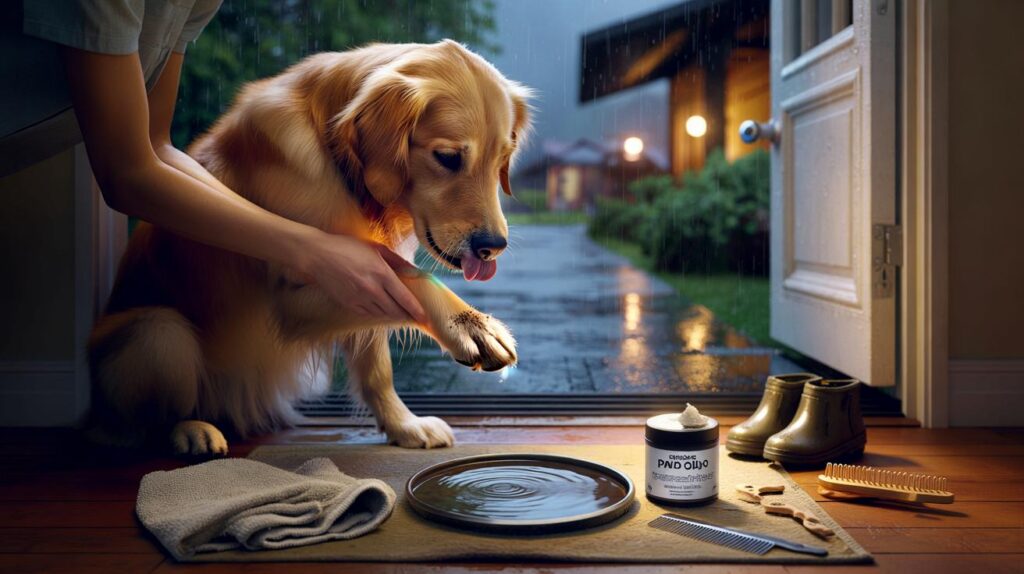
Cold nights, wet pavements and central heating change more than the weather; they reshape what your dog does with its paws after dark.
Across the country, owners notice the same ritual as the day winds down. A calm lick can be grooming. An intense session can spell a problem.
What your dog’s evening paw‑licking really means
Normal grooming or a silent warning
A quick tidy after a walk is common. Dogs remove grit, road salt and mud. They dry the fur. They soothe themselves after a busy day. Short, occasional licking with healthy skin rarely signals trouble.
Concern starts when the licking becomes a fixed routine, grows in duration, or shifts into chewing. If the dog stops playing to lick. If sleep breaks for licking. If paws look sore or smell yeasty. These are clues that discomfort, not hygiene, drives the behaviour.
Brief, quiet licking with clean, normal skin is fine. Persistent or frantic licking, odour, redness or damp fur between the toes is not.
Common causes, from pavements to parasites
Irritants picked up on walks
Autumn rain and gritted pavements leave residue on pads. Road salt and lawn treatments sting. Small splinters, thorns or grass awns lodge between toes. Micro‑cuts form on rough surfaces. Each factor can trigger a nightly clean‑up that slips into over‑licking.
Allergy and food intolerance
Environmental allergens persist into winter. Mould spores rise in damp homes. Dust mites thrive in warm bedding. Some dogs also react to proteins in food. Allergic itch often starts at the paws and ears. A diet trial typically needs 6–8 weeks to judge.
Anxiety, boredom and habit
Licking releases endorphins. Many dogs self‑soothe when the house quietens. A predictable routine, brain games and chews reduce that need. Unchecked, a coping strategy can become a habit loop that repeats each evening.
Skin disease you can miss at first glance
Yeast and bacterial infections love moist, licked skin. Mites and fleas also inflame the webbing. Interdigital cysts form with repeated trauma. A hidden foreign body can fester. Early treatment prevents a spiral of itch, lick and infection.
| Cause | Typical clues | Try at home | Call the vet if |
|---|---|---|---|
| Irritants | Post‑walk licking, small scabs, grey residue, worse after rain or salt | Rinse with lukewarm water, dry between toes, apply paw balm | There is limping, swelling, a lodged object or pain on touch |
| Allergy | Redness between toes, ear scratching, seasonal pattern, no foreign body | Wash bedding hot weekly, wipe paws after walks, discuss diet trial | Skin breaks, fur loss, frequent flare‑ups or ear odour develop |
| Anxiety/habit | Licking at rest, stops with engagement, normal skin early on | Enrichment, chew time, teach “settle”, increase sniffy walks | Licking occupies long periods or resumes despite redirection |
| Infection/parasites | Yeasty smell, brown staining, pustules, crusts, intense itch | Keep dry, prevent licking with a cone only if advised | There is heat, pus, bleeding, or the dog seems unwell |
What to do tonight
Clean, dry and protect
- Inspect each paw under good light for cuts, seeds, cracks and lodged debris.
- Rinse paws in lukewarm water for 30–60 seconds to remove salt and grit.
- Pat dry thoroughly, including between the toes, with a clean towel.
- Apply a thin layer of a veterinary‑approved paw balm; avoid products with tea tree oil.
- Trim long fur around pads to stop clumps forming, if your dog tolerates it.
Choose soft verges or smooth paths on bad-weather days. Use boots for sensitive dogs on gritted routes. Check that nails are short, as long nails alter gait and add strain to pads.
Redirect the behaviour
Give a safe chew or a food‑puzzle for 10–15 minutes after walks. Add two short training games in the evening. Teach a relaxed “settle” on a mat with quiet rewards. Increase sniff‑based activities. A five‑minute scent game tires the brain and lowers arousal without over‑exercising joints.
Do not punish licking. Redirect calmly, check the skin, then give the dog a better job to do.
When to book the vet
Seek an appointment if any of these apply. Acting early shortens recovery and reduces costs.
- Licking happens daily for a week or more.
- There is redness, swelling, moisture, or a strong odour between the toes.
- The dog limps, chews until the skin breaks, or wakes at night to lick.
- There are crusts, sores, bleeding or discharge.
- The behaviour worsens outdoors or after rain despite rinsing.
A vet may examine the skin with cytology, scrape for mites, or swab for bacteria or yeast. Imaging can reveal a hidden thorn. For suspected food reactions, expect a strict elimination diet for 6–8 weeks. Allergy care may include medicated washes, antiparasitic cover, ear care and itch control medicines. Behaviour‑linked licking benefits from a plan that combines enrichment and, if needed, calmative support.
Seasonal tips that save paws
Autumn and winter specifics
Rinse after any walk on gritted or muddy pavements. Dry thoroughly to avoid a damp toe web. Keep indoor humidity around 40–50% to counter dry air from heating. Fit a doormat routine: pause, wipe, reward. Store de‑icing products out of reach. Choose boots for snow days or long urban walks.
Home hygiene that helps
- Wash bedding weekly at 60°C and dry fully to curb dust mites.
- Vacuum with a HEPA filter, including skirting and under sofas.
- Rotate two or three resting spots to keep surfaces dry and clean.
- Schedule monthly nail checks; book a groom if you are unsure.
Two extras worth knowing
Acral lick dermatitis is a real risk
Chronic licking can create a firm, sore patch called an acral lick lesion, often on the front of a leg. The cycle feeds itself: itch triggers lick, lick inflames skin, infection follows, itch rises. Early action prevents this spiral. A protective collar, medicated care and behavioural tweaks work best together.
Keep a simple log to spot patterns
Track three things for seven days: when licking starts, what happened in the previous hour, and what helps. Note weather, route, cleaning, guests, noises and diet. Patterns guide your next steps. If licking spikes after certain routes, change them. If wiping reduces it by half, make it routine. Share the log with your vet to speed diagnosis.
Set yourself a clear rule: if licking lasts more than 10 minutes or causes redness, act within 48 hours.
If you want a practical checklist, use this tonight. Check for debris. Rinse. Dry. Offer a chew. Record what you see. If signs persist over 48 hours, book the vet. If they settle, keep the routine for two weeks and review.



Great checklist—rinse, dry, protect, redirect. Did this after our walk and the paw‑licking stopped in minutes. Seriously helpful.