
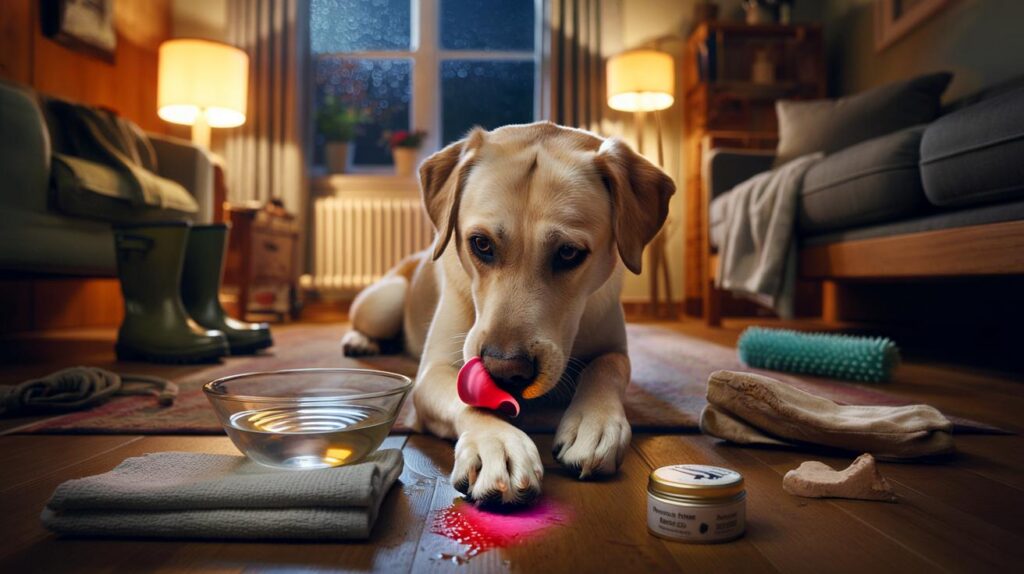
As evenings draw in, many owners notice a quiet ritual on the rug. A rhythmic lick, a pause, then another long session.
The pattern often peaks after the last walk, when mud, grit and indoor heating collide. Most cases stay harmless grooming. Yet a nightly routine can shift into a skin, pain or anxiety problem faster than you think.
Why paw licking spikes at night
Dogs tidy themselves after a day out. Damp lanes and leaf litter carry grit, pollen and spores that stick to pads and fur. When the house settles, licking can also act as self-soothing. The repetitive motion releases feel-good chemicals in the brain. It calms an anxious dog in the same way a worry bead steadies a hand.
Normal grooming versus red flags
Brief, occasional licking after walks, with healthy skin and no smell, usually reflects routine care. Trouble starts when the behaviour becomes frequent, long and hard to interrupt. Watch the clock, not your nerves.
Rule of thumb: if your dog licks the same paw for more than five minutes, more than twice a night, start a plan.
- Skin looks pink, raw or swollen.
- Fur thins between toes or on the top of the paw.
- There is a sour, yeasty or metallic odour.
- Night-time licking increases after wet walks.
- Your dog nibbles, limps, guards the paw, or seems irritable.
The usual suspects: allergens, pain, parasites and stress
Even in autumn and winter, allergens hang around. Road salt, mould spores and dust mites irritate exposed skin. A hidden grass seed can burrow into a toe web. Stiff joints can push a dog to fuss over a sore leg. Anxiety can turn a habit into a compulsion.
| Cause | Typical clues | Try at home today | When to see the vet |
|---|---|---|---|
| Seasonal or indoor allergens | Itchy between toes, worse after walks or at night, mild redness | Rinse paws in lukewarm water, dry well, apply paw balm | Itch persists beyond 48 hours or spreads to ears/armpits |
| Contact irritants (salt, cleaners) | Sudden flare after pavement gritting or floor mopping | Barrier wax before walks, rinse after, switch to pet-safe cleaners | Cracks, blisters or reluctance to walk on certain surfaces |
| Skin infection or yeast overgrowth | Greasy feel, brown staining, strong odour, persistent licking | None beyond gentle wash; avoid harsh shampoos | Sores, oozing or pain; needs medicated therapy and culture |
| Parasites (mites, fleas) | General itch, red papules, ear or belly involvement | Check and update parasite control | Scrapings or topical/systemic treatment required |
| Pain or foreign body | Limping, focusing on one paw, sudden onset | Inspect with a torch, remove obvious grit only | Suspected thorn/grass awn, bleeding, or ongoing lameness |
| Anxiety or boredom | Licking during quiet hours, stops when engaged | Evening enrichment, chews, short training bursts | Compulsive pattern despite activity and environmental changes |
Autumn and winter triggers you might miss
Central heating dries skin and can magnify itch. Pavement salt roughens pads and stings tiny cracks. Damp fur between toes stays warm and invites yeast. New festive treats can unsettle the gut and feed inflammation. A small routine shift—shorter walks, fewer games—can make a sensitive dog lick for comfort.
Dry, warm and clean beats fancy. Rinse, pat dry, then air-dry for ten minutes before settling for the night.
What to do in the next 48 hours
Act early, keep it simple and measure change. The goal is to reduce irritants, calm the skin and occupy the mind.
- Rinse and dry: after each walk, bathe paws in lukewarm water. Pat dry, then lift each toe to check for grit.
- Barrier and soothe: use a pet paw balm or wax under £15 to protect pads before walks and to soften after.
- Calm the evening: offer a long‑lasting chew, a snuffle mat or two five‑minute training games to switch the brain.
- Record it: note time, paw side, length of licking and what you did. Patterns guide faster solutions.
- Protect briefly: if licking breaks skin, use a soft boot or cone for short periods while you arrange care.
Budget guide: saline for rinsing costs £2–£5, paw balm £8–£15, a basic vet consultation £40–£70. Most owners can trial the home steps for a day or two while watching closely for change.
Stop immediately if you see bleeding, sudden swelling, foul odor or lameness, and contact your vet within 24–48 hours.
When to book the vet and what to expect
Book promptly if the skin breaks, licking persists beyond 48 hours, or your dog targets one paw. The vet may examine skin under the microscope, check for a foreign body, review parasite control and assess joints. Short courses of medicated washes or topical treatments often settle early infections. Dogs with recurring itch may need a diet trial for six to eight weeks, or prescription anti‑itch medicine during flare‑ups.
Ask what you can do at home between visits. Many clinics endorse weekly paw soaks, blow‑drying on cool, and regular nail and fur trims around the toes. If anxiety drives the pattern, a behaviour plan that pairs evening calm with structured play helps. Some dogs benefit from short, predictable routines: lights dimmed, chew time, a toilet break, then bed.
Prevention that actually works
Small habits, steady gains
- Wipe paws after every walk; rinse after salted pavements.
- Dry thoroughly, including between toes, then allow a short air‑dry.
- Use a barrier wax before wet or gritty outings.
- Rotate enrichment: scent games, cardboard shredding stations, lick mats.
- Keep floors pet‑safe: avoid strong cleaners on areas your dog frequents.
- Maintain year‑round parasite control and schedule regular pad checks.
What not to use on paws
Avoid hydrogen peroxide, methylated spirits and human steroid creams without veterinary guidance. Tea tree oil can be toxic if concentrated. Human moisturisers often contain additives that sting or invite licking.
Extra context for owners who like details
Consider “lick granuloma”: a sore patch that forms when chronic licking damages the skin. It can trap infection and pain in a loop. Early interruption prevents months of treatment. Another useful tactic is a seven‑day diary. Note weather, route, floor cleaning, new food, visitors and stressors. Owners often spot a link between gritted paths or a mopped kitchen and a flare that same evening.
Boots are not just for snow. Lightweight, breathable boots protect during flare‑ups and block contact triggers. Start with two‑minute indoor sessions and reward calm walking. Many dogs accept them within three days when introduced gradually.
If money is tight, prioritise what changes outcomes fastest: rinsing, drying and a vet triage if the skin breaks. Ask your clinic about nurse consultations for bandage changes or cytology, which can reduce costs. A clear plan, written down, helps everyone in the household respond the same way when the licking starts.



Really appreciated the clear 48‑hour plan. I’d been guessing, but the “rinse, dry, then air‑dry” routine plus a cheap balm made a huge difference for my itchy lab. The five‑minute rule helped me realise it wasn’t just boredom. We had that sour yeasty odour you mention and booked the vet—turned out early infection. Simple, practical advice that I can actually follow after work. Definately bookmarking this for winter.
Quick question: do you reccomend a specific paw balm under £15 in the UK? Also, when you say saline, is that the same as homemade salt water, or should I buy the sterile stuff from the chemist?