
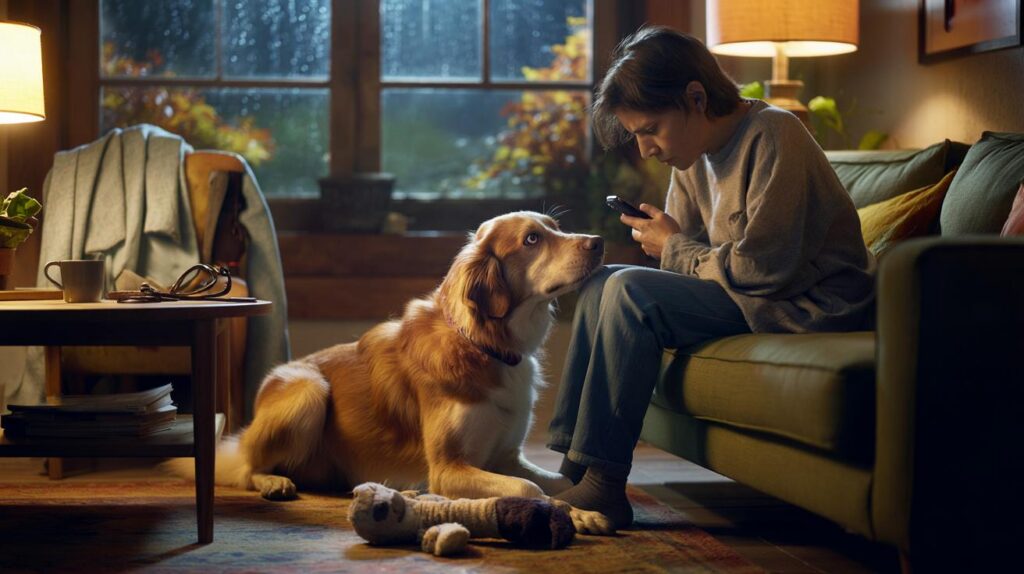
Shorter days, long coats, a warm mug in hand. In the corner, a familiar shape watches, silent and sure.
As autumn presses in and the air cools, many households lean on a four‑legged routine. Your dog is not only there for the walk and the bowl. They scan your face, your shoulders, your pace, your tone. Then they act. New research into canine behaviour pairs neatly with what owners report daily: subtle signals that suggest dogs track human emotion and respond in ways that feel like care.
Why dogs seem to read mood in seconds
Dogs live by tiny differences. They catch the shift in your stride after a draining call. They register a clipped hello, a deeper sigh, a quiet room. They notice as your shoulders drop and your hands still. They also sample scent constantly, and stress alters human odours. That blend of sound, sight and smell gives them a rapid picture of how you feel.
Dogs link micro‑movements, vocal tone and scent changes to states like sadness, anxiety and calm, then adjust their behaviour.
Context matters. A dog that sees you slump on the sofa after a commute may settle close. The same dog, faced with you moving briskly in trainers, will race to the door. Over time, your dog learns patterns and predicts what fits the moment.
Micro‑signals your dog tracks
- Hands: clenched fingers, fidgeting, slower strokes on the phone screen.
- Shoulders: a lifted shrug, rounded posture, head tilt without eye contact.
- Gait: shorter steps, dragging feet, hesitations at doorways.
- Voice: a flatter tone, longer pauses, softer volume.
- Face: a tight jaw, brow furrow, weak smile held too long.
- Routine shifts: skipped run, earlier curtains, lights dimmer than usual.
Most owners miss these because they sit below awareness. Dogs notice because survival once depended on reading others quickly and conserving energy around danger or tension.
What your dog does when you feel low
Comfort can look loud or quiet. Some dogs push a toy into your hand, lick your wrist, or hop beside you on the sofa. Others go still and shrink their movement, choosing silent proximity over fuss. Both patterns can be a response to human sadness or stress.
The most reliable sign of canine comfort is purposeful proximity: the dog chooses to be near and stays unless you ask for space.
Common comfort behaviours and how to respond
| Behaviour | What it may signal | What helps |
|---|---|---|
| Head on your knee | Seeking contact, checking mood | Slow strokes along the chest or shoulder, then a short pause |
| Leaning against your leg | Offering support, anchoring themselves | Stand steady, breathe slowly; reward with calm praise |
| Licking your hand | Social bonding, attention request | Redirect to a chew if you dislike licking; mark calm eye contact |
| Following from room to room | Monitoring, keeping you in sight | Relaxed reassurance; cue a settle on a mat to avoid clinginess |
| Dropping a toy beside you | Inviting interaction to change your state | Two‑minute gentle play, then a sniffing game to lower arousal |
| Quieter than usual | Respecting your calm, mirroring your pace | Thank the dog softly; keep the evening predictable |
The science behind the bond you feel
Owners report that dogs tell a smile from a grimace, and accept a hug on good days but offer stillness on bad ones. Lab work supports parts of this picture. Dogs can match human facial expressions to emotional voices. They respond to stressed human breath and tears with closer approaches. Oxytocin, a hormone linked to bonding, rises in both dog and person after warm eye contact and gentle stroking. These patterns do not prove that dogs grasp sadness like we do, yet they show dogs using human signals to guide choices that often soothe.
Think of it less as mind‑reading and more as skilled pattern‑reading that happens to help you feel better.
Therapy‑dog teams use this principle in hospitals and schools. Handlers shape behaviours that reduce human tension: soft approaches, slow movement, stillness beside the chair, then a brief nuzzle. You can borrow those tactics at home.
When comfort tips into stress for the dog
Comfort is not the same as coping. Some dogs absorb household tension and start to pant, pace or yawn repeatedly. Others avoid touch, show whale eye, or lick their lips between strokes. A few guard you from other people or pets. These are red flags that the dog needs a break and a plan.
- Give predictable retreats: a bed behind a baby gate, a quiet room, a covered crate left open.
- Use short, consent‑based contact: pet for three seconds, pause, continue only if the dog leans in again.
- Swap frantic play for calming work: scent games, scatter feeding, slow snuffle mats.
- Build independence: settled chews while you move about; short, routine departures and returns.
Strengthening the bond without piling on pressure
Dogs thrive on clear cues and calm repetition. Pair your down times with signals that make sense. A cue like “settle” plus a mat, a scent game and a chew can turn a gloomy evening into quiet companionship. Mark calm choices with a soft yes and a tiny treat. That feedback teaches your dog which responses help both of you.
Your body broadcasts whether you want closeness or space. Sit upright and pat your thigh if you welcome contact. Angle your body away and place a hand, palm‑out, near your hip if you need room. Consistency reduces confusion and lowers stress for the dog that wants to help but cannot guess perfectly.
A 10‑minute reset you can try tonight
- One minute: slow breathing, four counts in, six counts out. Your dog feels the tempo change.
- Two minutes: calm strokes from neck to chest, then pause for consent.
- Three minutes: scatter ten pieces of kibble on a mat for sniffing.
- Two minutes: short leash on indoors, walk gentle figure‑eights in the hall.
- Two minutes: settle on a bed with a safe chew; read a page beside them.
Seasonal lows, daily gains
Autumn brings darker commutes and heavier moods for many people. Dogs notice the change and often tighten their orbit around you. Use that pull wisely. Keep walks consistent, even shorter ones. Add daylight sniff‑stops. Rotate toys to keep interest fresh. Quiet predictability beats high drama when energy dips.
If sadness lasts or sleep falters, speak to a professional. A dog lifts a day. A trained person lifts the load. Both together serve you better than either alone.
Extra angles that broaden the picture
Smell sits at the heart of canine perception, yet most homes give it little space. Simple scent work pays off quickly. Hide five treats around one room while the dog waits behind a line. Release them with a calm cue and let them search. Sniffing lowers heart rate and burns mental energy, which supports comfort at your side later.
Multi‑dog homes add layers. One dog may offer contact while another keeps watch by the door. Reward each for their chosen role. Avoid competition over you by splitting rewards and giving each dog a clear place to settle. In households with children, teach a rule of short pets and frequent pauses so the dog can choose closeness rather than feel trapped.
Wearables now track canine movement and sleep. A week of data can show whether your dog grows restless when your stress spikes. If restlessness climbs, plan extra sniff‑time and earlier quiet hours. If sleep looks deep and regular on your sadder days, you may have a natural comforter who prefers stillness over play.
Finally, watch for clinginess that edges into anxiety. If your dog cannot relax away from you, ask a qualified trainer for a gradual plan that builds confidence. Emotional support should feel light, not heavy. The goal is two nervous systems learning to settle together and apart with the same ease.



Loved this—finally explains why my shepherd glues himself to me after Zoom doom. Any tips for balancing “purposeful proximity” with a toddler who wants cuddles too? I definitley struggle to give them both space.