
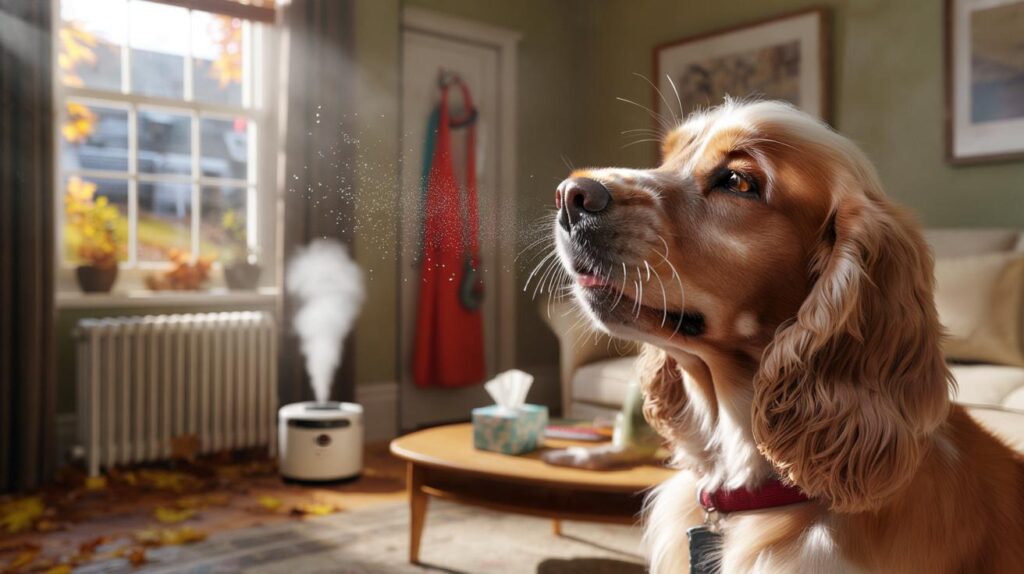
Cold mornings, radiators humming, and a chorus of snorts from the sofa raise quiet doubts in countless British homes.
As temperatures dip and central heating dries the air, clinics report a seasonal surge in sneezing dogs. The triggers range from dusty carpets to infections that need swift care. Knowing which signs demand action saves money, time and stress for you and your pet.
Why sneezing surges now
Autumn brings damp walks, mould spores and leaf litter. These irritants swirl into curious noses. Indoors, heaters lift dust from rugs and skirting boards. Dry air tickles the nasal lining. Cold air on early walks can also spark reflex sneezes in sensitive breeds.
Many dogs sneeze during play or excitement. That response clears minor irritants. It usually settles within minutes. Repeated “sneeze bursts” over days signal a different story. Patterns across the week help separate the trivial from the troubling.
Every atchoo has a trigger: decode the pattern
- Sneezing after walks suggests pollen, mould or a grass awn caught in a nostril.
- Sneezing around bedtime points to dust mites and dry indoor air.
- Sneezing when you spray polish or perfume points to chemical irritation.
- Sneezing with a honking cough hints at kennel cough or tracheal irritation.
- Sneezing with face rubbing hints at allergy or nasal mites.
One sneeze is theatre. Clusters for 48 hours, thick discharge, blood or breath effort are a medical problem.
Five red flags you shouldn’t wait on
- Blood from one or both nostrils after sneezing, even small streaks.
- Thick yellow, green or foul‑smelling nasal discharge.
- Breathing difficulty, noisy inhalation, or flared nostrils at rest.
- Pawing at the face, head shaking, or pain when you touch the muzzle.
- Lethargy, fever, loss of appetite, or sneezing that persists beyond 48 hours.
Book a prompt examination if any of these appear. Same‑day care is sensible when sneezing starts suddenly after a hedgerow dash. Grass awns and tiny sticks can lodge deep and move towards the sinuses.
Record a 20‑second video of the episode. Vets make faster decisions when they can see and hear the pattern.
Likely culprits and what they look like
| Cause | Typical clues | Risk level | Next step |
|---|---|---|---|
| Allergy (pollen, dust, mould) | Watery discharge, itchiness, seasonal pattern, face rubbing | Low to moderate | Clean environment, discuss trials such as antihistamines with your vet |
| Viral or bacterial infection (kennel cough, flu) | Cough, gagging, lethargy, exposure to other dogs | Moderate | Isolate, book exam, supportive care; antibiotics only if indicated |
| Foreign body (grass awn, seed) | Sudden onset, violent sneezing, one‑sided discharge, possible blood | High until removed | Same‑day vet visit; likely sedation and removal |
| Fungal rhinitis | Chronic discharge, pigment loss on the nose, pain | Moderate to high | Imaging and targeted antifungal treatment |
| Dental disease or oronasal fistula | Older small breeds, foul breath, sneezing when eating | Moderate | Dental exam and imaging; surgical repair if needed |
| Nasal mites | Intense sneezing, snuffling, reverse sneezing | Low to moderate | Parasiticide prescribed by your vet |
| Polyps or tumours | Older dogs, facial asymmetry, chronic one‑sided discharge | Variable | Imaging, biopsy, and tailored therapy |
What you can do today
- Air rooms for 10 minutes morning and evening to cut moisture and stale dust.
- Vacuum under sofas and along edges where fluff gathers. Wash bedding at 60°C weekly.
- Retire plug‑in fragrances and strong sprays. Choose unscented cleaning products.
- Brush your dog after walks to strip pollen and seeds from coat and whiskers.
- Wipe the muzzle and nostrils with a damp cotton pad after muddy outings.
- Run a cool‑mist humidifier to keep indoor humidity near 45–50%.
- Swap a tight collar for a harness to reduce pressure on the throat.
- Keep a sneeze log: date, time, number of sneezes, triggers, discharge colour.
- Check temperature if your dog seems off‑colour. Normal sits around 38.0–39.2°C.
- Film episodes so your vet can assess reverse sneezing versus coughing.
Never give human cold medicines or decongestants. Several common ingredients can poison dogs at tiny doses.
Reverse sneezing: odd sound, often harmless
Reverse sneezing looks dramatic. The dog stands still, neck extended, and makes snorting, snorking sounds while sucking air in. Episodes last seconds to a minute. Triggers include dust, excitement, pulling on the lead or sudden temperature changes. Small breeds and flat‑faced dogs show it more.
Stay calm and let the bout pass. Offer fresh air and gentle reassurance. You can briefly cover the nostrils for a second to prompt a swallow, or massage the throat lightly. Seek advice if episodes grow longer, occur daily, or come with nasal discharge or fatigue.
What your vet may do and likely costs
A standard consultation typically costs £45–£70. The vet will examine the nose, mouth, throat and lungs. They will check gum colour, lymph nodes and temperature. They may stain discharges and look under the microscope (£30–£60). Swabs for PCR testing run higher (£80–£150) when infection needs confirmation.
Imaging helps when signs persist or red flags appear. Skull radiographs offer a first look. CT scans reveal sinuses and hidden foreign bodies (£300–£1,200 depending on region and size). Rhinoscopy lets the team inspect the nasal cavity and remove seeds or polyps under anaesthesia (£600–£1,200). Many dogs go home the same day.
Treatments range from saline rinses and anti‑inflammatories to targeted antibiotics, antifungals or antiparasitics. Allergy care often uses a layered plan: avoidance, fatty acids, prescription antihistamines, and in some cases immunotherapy. Insurance can soften costs, but most policies require prior authorisation for advanced imaging.
Seasonal tactics that spare the nose
Time walks when grass cutters finish and spores settle. Mid‑morning tends to be kinder than dawn in cold snaps. Choose routes with short turf and fewer seed heads. Rinse paws and the lower muzzle after rambling through bracken or long verges. Keep the boot area of the car clean and hair‑free to limit back‑seat sneezing on the way home.
Consider a kennel cough vaccination if your dog meets others at classes, day care or parks. The vaccine reduces severity and shedding, which limits community spread. Senior dogs and those with heart or airway disease gain particular benefit because they tire quickly when inflamed airways work harder.
Extra insights that help you judge risk
Age and skull shape guide suspicion. Young, curious dogs collect foreign bodies. Middle‑aged allergic dogs show seasonal snuffles with itchy skin. Older dogs deserve a thorough dental check and careful imaging if discharge sticks to one side. Flat‑faced breeds manage narrow nasal passages, so even mild swelling sounds loud and strains their breathing.
Use a simple home rule: three checks in 60 seconds. Count breaths at rest (10–30 per minute is typical), look for belly effort, and note discharge colour. If two items worry you, call your practice. If breathing looks hard or blood appears, you have your answer already.



Nine sneezes? My terrier does that before I’ve buttered the toast.
Helpful guide. Quick question: how long should I log sneezing episodes before booking, if there are no red flags but it keeps happening every evening with the radiator on? Also, do cheap hygrometers actually work or are they uselss?