
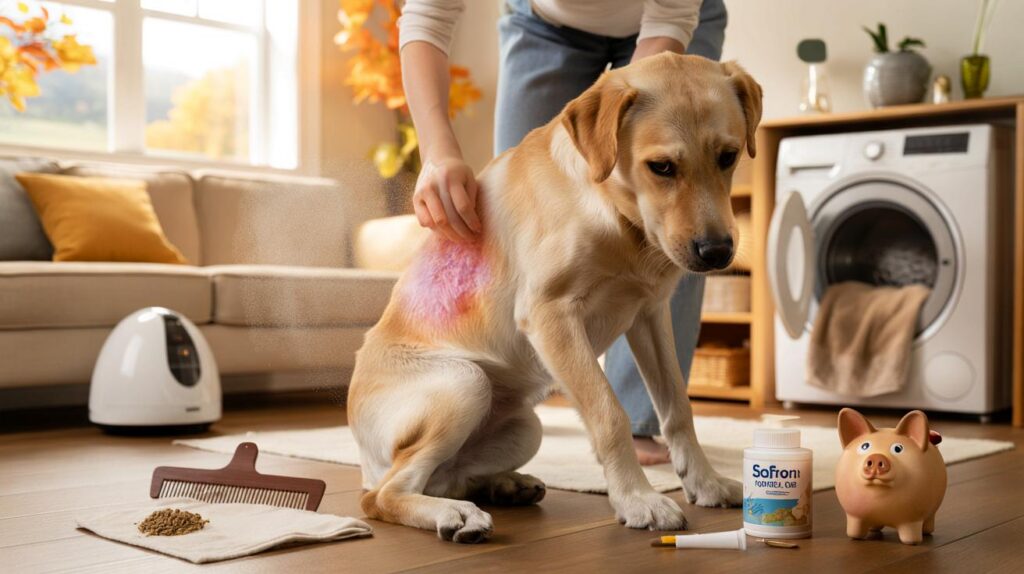
Sleepless nights, frantic scratching, red patches on the sofa. Autumn brings itchy surprises for dogs—and tricky choices for owners.
As temperatures dip and rooms dry out, three culprits surge: allergies, parasites and irritated skin. Quick, simple steps can calm the storm.
Spot the cause: where the itch hides
Relentless scratching is a signal, not a quirk. Dogs paw, nibble or chew because something hurts or itches. Look for red skin, thinning hair, scabs, dark flakes or a musky odour. Check the tail base, armpits, groin, ears and between toes. Patterns help you narrow the cause.
| Pattern | Likely cause | What to do today |
|---|---|---|
| Chewing the base of the tail | Fleas or flea allergy | Start a vet-approved flea treatment; wash bedding at 60°C; vacuum daily for a week |
| Itchy paws, face rubbing, seasonal flares | Environmental allergy | Wipe paws after walks; use a gentle, moisturising shampoo; manage indoor dust |
| Dry flakes, dull coat, worse with heating on | Dry skin or overbathing | Shorten baths; add omega-3s in food; run a humidifier to 40–55% |
| Head shaking, ear scratching, odour | Ear yeast or mites | Book a vet check; keep ears dry; avoid cotton buds deep in the canal |
Allergies surge in autumn. Dust mites thrive in warm homes. Late pollens linger. Food reactions can overlap with these, which blurs the picture. Parasites love the seasonal bounce too. Fleas hatch faster in mild weather and settle even in spotless flats. Dry indoor air then cracks the skin barrier, which invites infection.
Fast diagnosis beats trial and error. Left unchecked, fleas, infections or hot spots can escalate in days.
Fast relief at home: calm the flare without harm
Start gentle. Clean skin helps, but over-washing strips oils. Use a mild, dog-safe shampoo labelled for sensitive skin. Rinse for twice as long as you think. Dry the coat fully, especially in thick fur, to prevent damp rashes.
Simple soothing can make a difference. Run a lukewarm, short bath with a veterinary colloidal oatmeal wash. Between baths, wipe the coat with a clean, damp glove to lift dust and pollen. Skip human creams, antiseptics and essential oils. Tea tree, zinc oxide and many pain gels harm dogs.
Feed the skin from within. Choose a complete diet with balanced omega-3 and omega-6 fatty acids. EPA and DHA support the skin barrier. Many owners see calmer skin after 6–8 weeks of consistent feeding. Do not swap foods every few days, as that clouds the picture.
Tune the home. Keep rooms warm but not hot. Aim for indoor humidity around 40–55%. Air rooms daily. Wash bedding and soft toys weekly at 60°C. Vacuum carpets, sofa gaps and skirting boards, where flea eggs hide.
- Rinse thoroughly and dry completely after every bath.
- Wipe paws after walks to remove pollen and grit.
- Wash bedding weekly at 60°C and tumble dry hot if possible.
- Vacuum edges and cracks where flea eggs collect.
- Do not use human steroid creams or painkillers on dogs.
- Do not bathe daily; aim for every 2–4 weeks unless told otherwise.
- Do not stop parasite prevention because it’s cold outside.
Scratching with sores is a skin problem, not “bad behaviour”. Treat the cause, and the compulsion eases.
When to phone the vet
Some signs warrant professional care quickly. Book a same-week slot if you notice any of these triggers.
Red flags that need attention
- Relentless scratching for more than 48 hours despite basic care.
- Broken skin, hot spots, pus, foul odour or sticky discharge.
- Head shaking, painful ears or brown debris in the ear canal.
- Visible fleas, flea dirt or rice-like tapeworm segments near the tail.
- Lethargy, loss of appetite, fast breathing or swollen skin.
- Rashes that spread or worsen rapidly.
Your vet can skin-scrape for mites, check for yeast or bacteria, and confirm fleas even when you cannot find them. Targeted treatment prevents spirals of itching, self-trauma and infection.
Prevent the next flare: routines that protect skin
Brush little and often. A quick daily brush lifts dander, spreads natural oils and exposes hidden trouble early. For double coats, brush down to the undercoat to stop matting that traps moisture.
Keep parasites on the back foot. Use a vet-recommended product matched to your dog’s weight and age. Set reminders. Treat every pet in the household. Remember the lifecycle: about 95% of fleas live in the environment, not on the animal. Wash fabrics and vacuum regularly during the first month of control.
Support the barrier. Use moisturising shampoos and leave-on conditioners designed for dogs. Space out baths to keep natural oils intact. If your dog swims, rinse with fresh water and dry the coat before bed.
Stress and the itch cycle
Anxious dogs lick and scratch more. Routine lowers arousal. Keep mealtimes predictable. Add two short, sniff-led walks daily. Offer puzzle feeders, chew-safe items and calm rest spots away from busy rooms. Teach a simple “settle” on a mat with quiet rewards. Many itchy dogs relax when given more choice and mental work.
Food, trials and next steps
If your vet suspects a food component, an elimination diet may follow. This usually runs 6–8 weeks with a novel protein or a hydrolysed formula. Avoid every treat and table scrap not listed in the plan. A clean trial prevents false results. Improvement points toward a dietary trigger; re-challenge then confirms it.
Allergy testing and desensitisation can help atopic dogs. Blood or skin tests identify relevant allergens. Custom immunotherapy then trains the immune system to react less over time. It takes months, but many dogs gain steady relief with fewer flare-ups.
Money matters: why prevention pays
UK owners routinely spend £40–£70 on monthly parasite control for two pets. A single infected hot spot can cost £120–£200 once you add a consult, meds and a cone. Regular prevention, clean bedding and a humidifier often cost less than one emergency visit. Track outgoings for three months and you will see the pattern.
A simple seven-day plan you can start tonight
- Day 1: Check skin head to tail; start or restart flea control; wash bedding at 60°C.
- Day 2: Gentle oatmeal bath; full dry; record itch score morning and night on a scale of 1–10.
- Day 3: Wipe paws after walks; brush for five minutes; vacuum sofa and skirting boards.
- Day 4: Add an omega-3 rich diet or supplement as advised by your vet; set phone reminders.
- Day 5: Maintain humidity at 40–55%; reduce room heating peaks.
- Day 6: Ear check with a torch; note any redness or debris; keep ears dry after rain.
- Day 7: Review the itch log; if the score stays high or sores appear, book a vet appointment.
Extra angles owners often miss
Seasonal stacking matters. A dog can carry a mild dust mite sensitivity all year and tip into chaos when fleas arrive or the boiler dries the air. Remove one layer and the whole flare softens. Focus on layers you can control today: parasites, humidity, bedding hygiene and gentle skin care.
Beware well-meant shortcuts. Overbathing, switching foods too fast and using human creams often extend the itch cycle. Pick a plan, track results for two weeks, and adjust with clear notes. Clarity beats constant change when your dog’s skin is on the line.



Brilliant breakdown—spotting patterns (tail base vs itchy paws) finally clicked. I was over-bathing without knowing and drying the skin out; will switch to a sensitive shampoo and rinse longer. This will definately help—thanks!