
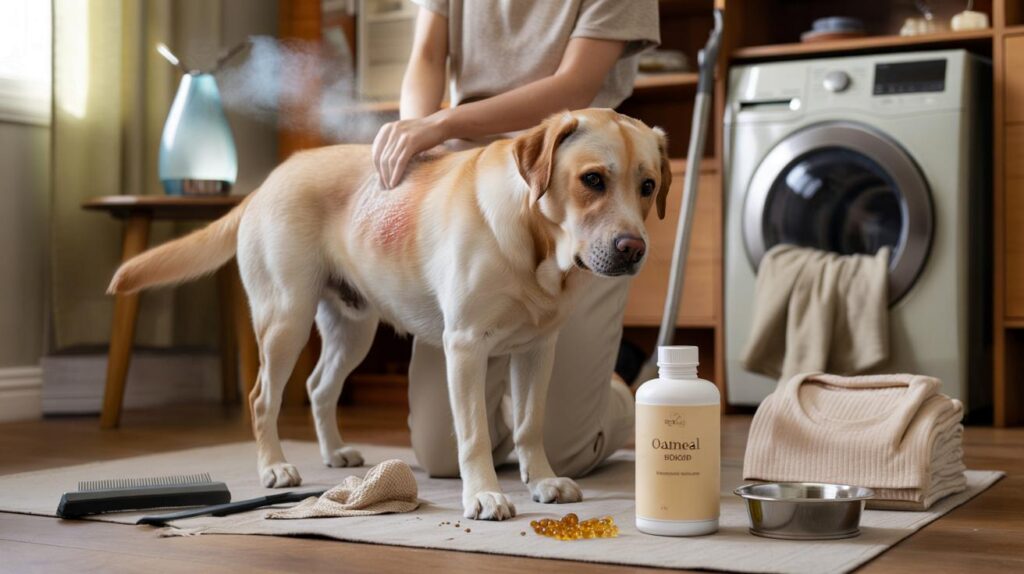
Autumn is itchy season for many dogs and sleepless for you. Start with small checks that save skin and sanity.
Scratchy nights often begin with a simple trigger. Pollen tails off, heating clicks on, fleas surge, and dry air tightens skin. Act early, spot patterns, and you can spare your dog’s coat while keeping your evenings quiet.
Why the scratching starts
Itch is not a quirk. It’s a message. Red patches, thinning fur, constant licking, or sudden head shaking all point to a cause. In autumn, three culprits lead the pack: allergies, parasites and dry or infected skin.
House dust mites thrive in warm rooms. Fleas rebound as temperatures mellow. Dry air from radiators saps moisture from the skin barrier. Food reactions simmer year-round and can flare when routines change. Each leaves clues on the body.
Spot the pattern before it spreads
- Base of tail, rump and back: think fleas or flea allergy.
- Paws, armpits, belly and inside thighs: common with environmental allergy.
- Ears with brown debris, odour, head shaking: ear infection needs vet care.
- White flakes and dull coat: dry skin or poor grooming routine.
- Rapid, moist lesions that appear overnight: hot spots from self-trauma.
Use the 48‑hour rule: if the itch doesn’t settle within two days or breaks the skin, ring your vet.
Seven quick home fixes you can start today
- Gentle wipe-down: run a damp microfibre cloth along the coat after walks to lift pollen and dust.
- Lukewarm rinse: a short rinse calms skin; dry fully, especially between toes and under the collar.
- Oat-based veterinary shampoo: once a week, massage for five minutes, then rinse until water runs clear.
- Humidify the room: aim for 40–50% indoor humidity to ease dry, tight skin.
- Omega-3 boost: pick a dog-safe product; many vets suggest 50–100 mg/kg/day EPA+DHA.
- Clean the habitat: wash bedding at 60°C, vacuum skirting boards and sofas, empty the bin immediately.
- Barrier gear: a soft recovery collar or a cotton T‑shirt stops licking long enough for skin to settle.
Never apply human creams, essential oils or pills to a dog’s skin without veterinary advice.
Match signs to likely causes
| Pattern | Likely cause | What to try now |
|---|---|---|
| Intense rump scratching, black specks in coat | Fleas or flea allergy | Start a vet-grade flea product; wash bedding; vacuum daily for a week |
| Paw chewing, red belly, worse after walks | Environmental allergy | Rinse paws, wipe coat, consider antihistamines only with vet guidance |
| Head shaking, dark wax, bad odour | Ear infection | Book a vet; skip cotton buds; keep ears dry after baths |
| Flakes, dull coat, mild general itch | Dry skin | Humidify, add omega-3, use gentle shampoo and thorough rinsing |
| Round bald patches with scabs | Mites or ringworm | Vet diagnosis; handle with gloves; clean surfaces |
Three vet red flags you should not wait on
- Broken skin, bleeding or oozing hot spots that spread within hours.
- Ear redness with pain, strong odour or head tilting.
- Widespread hair loss with flea dirt or pale gums from possible flea anaemia.
Other urgent signs include hives, facial swelling, lethargy, fever, or refusal to eat. Night-time restlessness and constant pacing mean the itch is severe enough to warrant a call.
For fleas, treat the pet and the home for at least three consecutive months for full control.
Prevention that sticks through autumn
Groom little and often. A five‑minute brush lifts dead hair, spreads natural oils and lets you spot trouble. Keep nails short so scratching does less damage. Rotate collars and wash them weekly.
Parasites need a plan. Use a prescription‑strength flea and tick product at the right interval for your dog’s weight and age. Remember that 95% of the flea life cycle happens off the dog. Vacuum under furniture, along skirting boards and the car boot. Empty the vacuum outside. A flea comb catches stragglers and shows progress.
The 30–30 approach for flea season
Expect a visible drop in adult fleas after 30 days on a proper product. Keep going for another 30 to catch newly emerged adults. Many homes need a full three months of consistent treatment to break the cycle.
Food, mood and the itch–scratch loop
Diet supports the skin’s barrier. Feed complete recipes with adequate protein and essential fatty acids. If a food reaction is suspected, your vet may suggest an eight‑week elimination plan using a hydrolysed or novel protein diet. Snacking outside that plan resets the clock.
Stress amplifies licking and chewing. Keep a steady routine. Add two short “sniff walks” where your dog leads with their nose. Use puzzle feeders to shift focus. Teach a calm mat settle with short sessions. Pheromone diffusers and predictable bedtimes help sensitive dogs settle.
When allergies are likely
Atopic dermatitis often starts between one and three years of age and runs in families. French Bulldogs, Westies, Labradors and Retrievers feature often in waiting rooms for this reason. Seasonal flares around autumn and spring are common. Expect recurring ear infections and paw chewing. Long‑term plans might include prescription anti‑itch medicines, medicated shampoos, and, in some cases, allergy testing with immunotherapy.
Hidden causes you can miss
Hormonal shifts can mimic allergy. Hypothyroidism brings dull fur, weight gain and recurrent skin infections. Cushing’s disease can give thin skin, pot belly and hair loss. Your vet can screen with blood tests if the story doesn’t fit the usual patterns.
Some mites, like sarcoptic mange, spread to people and other pets. Intense ear‑edge and elbow itch with crusts should ring alarm bells. Handle bedding with gloves and wash at high heat until a vet confirms the cause.
Practical add‑ons that pay off
- Set humidity with a small hygrometer so you can keep rooms at 40–50% RH.
- Use a calendar reminder for parasite doses; late dosing gives fleas a window back in.
- Train a two‑minute “leave it” to interrupt paw chewing without shouting.
- Do the flea dirt test: rub black specks on damp kitchen paper; red smears point to fleas.
If you want to gauge severity, track “itch events” for two days. Each time your dog scratches for more than five seconds, mark it. Over 20 events in a day, waking at night, or any skin damage meets the 48‑hour rule. Call the practice and share the log. That data speeds decisions.
Thinking longer term, budget for prevention rather than flare care. A monthly parasite plan, a humidifier filter, and a quality omega‑3 supplement often cost less than repeat consults and antibiotics. Add one change at a time, note the results, and you’ll learn which levers keep your dog comfortable when the leaves fall.



Brilliant breakdown. The 48‑hour rule is the kind of clear line I needed—no more guessing if I’m overreacting. The “wipe‑down after walks” tip was simple and it worked; itch events dropped by half in two days. Definately bookmarking for autumn.