
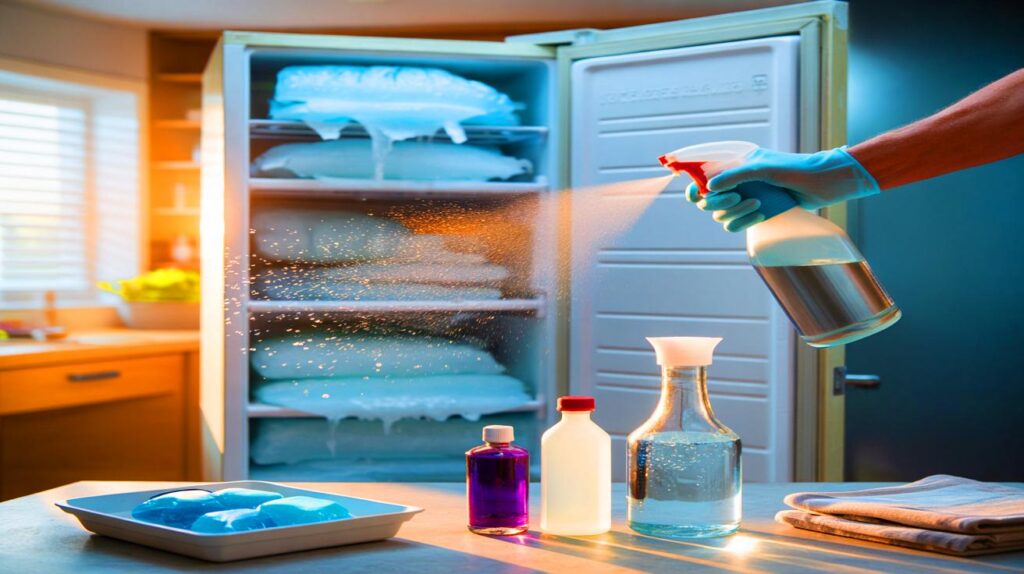
Bills climb, drawers snag and food gets buried when frost creeps across your fridge-freezer. A quick fix restores space, calm and control.
Across the country, households are swapping hacks for clearing ice without hours of scraping. One simple, three-part mix uses cupboard staples, speeds the thaw and leaves the cabinet fresher. Here is how to do it safely, what to use if you lack a spray, and how to stop frost roaring back.
Why small layers of frost cost you big
Frost looks harmless, yet it steals storage volume and blocks airflow. Compressors work harder. Temperatures fluctuate. Food quality suffers. Your bill rises.
The numbers behind the ice
Energy advisors warn that even a thin layer of ice adds drag to the system. That drag means more electricity, more heat, more wear.
A 3 mm film of frost can drive electricity use up by roughly 30–40%, with no extra cooling to show for it.
Clearing frost protects the motor and keeps temperatures steadier. It also gives you back the drawers and shelves you paid for.
Get set before you start
Preparation makes the job swift and safe. Work calmly and you will finish in under an hour for light frost.
- Unplug the appliance and open the door.
- Move food into cool boxes with ice blocks. Keep frozen and chilled items separate.
- Lay towels inside and on the floor to catch meltwater.
- Use a plastic spatula only. Never use knives or screwdrivers.
- Check you have ventilation. Keep flames and sparks away.
Do not chip. Puncturing a cooling line can kill the appliance instantly and may release refrigerant.
The 3-ingredient spray you can mix in 60 seconds
This is the classic “grandparent” shortcut that relies on simple chemistry and a bit of patience. It works in fridges and freezers alike.
What to mix
- One third methylated spirits (denatured alcohol).
- One third water.
- One third white vinegar.
Pour the three parts into a clean spray bottle. Cap it and shake. The alcohol lowers the freezing point and evaporates quickly. Vinegar helps lift residue and freshens the interior. Water moderates the mix so it spreads well without harsh fumes.
How to use it
- Spray generously onto frosted walls, shelves and rails.
- Wait a minute or two. Ice will start to crack and release.
- Ease off loose sheets with the plastic spatula. Wipe as you go.
- Repeat on stubborn patches and mop up meltwater quickly.
Keep the appliance unplugged. Avoid naked flames. Ventilate the room. Do not spray food directly.
No spray? These methods also work
Several low-tech options help the thaw along. Pick the one that suits your space and time.
| Method | Typical time | Good for | Watch out for |
|---|---|---|---|
| Pan of boiling water inside, door shut | 10–15 minutes | Light to moderate frost | Refill with fresh hot water as steam cools |
| Fan facing open cabinet | 15–30 minutes | Dry rooms, safe around pets and kids | Water drips; lay extra towels |
| Hairdryer at least 30 cm away | 15–30 minutes | Targeting thick spots | Keep moving to protect plastic; appliance unplugged only |
| Light sprinkle of table salt | Varies | Thin frost films | Rinse well afterwards to prevent corrosion |
| Commercial de‑icer spray | 15–30 minutes | In a rush, heavy frost | Never spray food; follow safety instructions |
| Power off and wait | Several hours to 24 hours | Very thick ice build-up | Keep food very cold in coolers; change ice packs |
Clean and stop frost coming straight back
Once the ice is gone, clean the cabinet to remove film and odours. This helps new frost stick less readily.
- Wipe all surfaces with a 50:50 mix of white vinegar and warm water. Include door seals.
- Rinse with clean water and dry with a soft cloth.
- For smells, use a spoon of bicarbonate in a bowl of warm water.
Then think prevention. Moist air is the enemy. Close doors promptly. Avoid overstuffing. Cool hot leftovers before storing. Check seals for gaps by closing a paper strip in the door; if it pulls free easily, the seal may need replacing.
Plan a quick defrost every three months, or sooner if you see a thin film forming again.
What you actually save in cash
Here is a simple way to picture the gain. Many fridge-freezers use around 300 kWh a year. If a 3 mm frost layer pushes consumption up by 40%, that adds roughly 120 kWh. At 28p per kWh, that is about £33.60 a year. Clear the frost and you keep that money, while extending the life of a machine that costs hundreds to replace.
Food safety while you work
Keep chilled items cold with ice blocks and lids shut. Group frozen food together in the coolest box. Aim to finish within an hour for light frost. If any frozen items soften, cook them the same day. Never refreeze thawed meat or fish without cooking it first. Label anything you move so it goes back to the right shelf quickly.
When rapid re‑icing hints at a fault
If frost returns within days, look for telltales. Torn door gaskets leak warm, moist air. A cluttered interior blocks airflow around the evaporator. A mis‑set thermostat can invite condensation. Correct these first. If you still see quick icing, the defrost drain may be blocked, or the defrost system on a frost‑free model may have failed. That calls for a technician.
Extra tips seasoned owners swear by
Small habits that make a big dent
- Keep a small squeegee in the kitchen and swipe the cabinet dry after large shops.
- Decant bulky packaging to sealed boxes, which trap less air and stack tightly.
- Note the date of your last defrost on a sticky label inside the door.
- Store a bowl of bicarbonate inside to help absorb odours between cleans.
Safety notes for heat-based methods
- Unplug first, every time, before you add heat or steam.
- Keep electrical devices and plugs away from pooled water.
- Never pour boiling water directly on plastic liners; use steam or hot water in a pan.
- Open a window if you use alcohol-based products, and keep children away.
If you want to go further
For households that defrost often, consider a basic energy monitor plug. It shows live wattage and helps you spot when frost begins to bite. You can also run a quick comparison: record daily kWh with clean walls, then again when frost returns. The difference helps you plan your next defrost before waste creeps in.
If your appliance is nearing the end of its life, compare labels carefully. A modern A‑rated fridge‑freezer can draw under 200 kWh a year in typical homes. Combine that with a quarterly defrost routine and you shrink running costs again, while keeping food in better shape for longer.



Just tried the 1/3 alcohol, 1/3 water, 1/3 vinegar mix and WOW—ice sheets slid off in minutes. Took under an hour including cleanup and my drawers don’t snag anymore. I also wiped the seals with 50:50 vinegar/water after. The bill savings might be modest, but the extra space and calm are worth it 🙂