
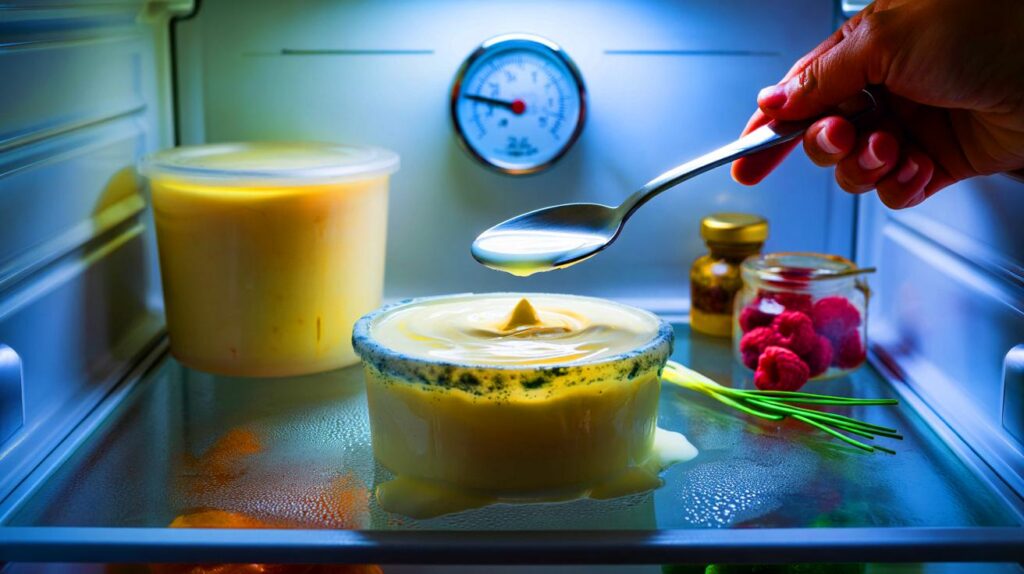
A forgotten tub at the back of the fridge can turn tonight’s supper into a gamble. Here’s how to judge wisely.
You’ve clocked the date, you’ve sniffed the lid, and dinner won’t wait. Before you stir that creamy spoonful into a sauce or dollop it on pudding, weigh the timing, the temperature, and the tell‑tale signs that separate a harmless indulgence from a nasty night of cramps.
What the date on the pot really means
Most chilled crème fraîche carries a use-by date. That is about safety, not flavour. Once it has passed, the risk creeps up as microbes multiply even in the cold. Long-life tubs treated at ultra-high temperature sit in a different category and often show a best-before date. That is about quality, provided the seal stays intact.
Use-by means eat it by that date. Best-before means quality may fade. The fridge does not pause all bacteria.
Typical shelf life by style
Labels vary by brand, but these ranges help you plan your shop and your weeknight cooking.
| Product | Unopened, typical | After opening | Notes |
|---|---|---|---|
| Raw cream (unpasteurised) | About 7 days, keep at 0–4 °C | 3–4 days in the coldest fridge zone | Higher microbial load; handle with strict hygiene |
| Pasteurised crème fraîche | About 30 days in the chill chain | 3–4 days once unsealed | Check the use-by; do not stretch it |
| UHT/long-life crème fraîche | Up to 4 months (often best-before) | 3–4 days after opening in the fridge | Quality holds well unopened; texture can change after freezing |
After you break the seal
Once air and utensils meet the surface, the clock speeds up. Aim to use an opened tub within 3–4 days. Keep it on the back, lowest shelf where temperatures stay steady at 0–4 °C, not in the door. Reseal firmly or transfer to a clean, lidded container. Mark the opening date with a pen.
Cold, clean, closed: 0–4 °C, a clean spoon every time, and a tight lid between uses.
Small habits that keep crème fraîche safer
- Wash hands before you dip a spoon.
- Use a fresh, dry utensil; no double-dipping.
- Scrape down the sides; wipe the rim before sealing.
- Store the pot upright or briefly upside down to limit air exposure, but guard against leaks.
- Keep away from raw meat, juices and salad drawers.
Spot the danger signs before dinner
Fresh crème fraîche looks bright white, smooth and softly tangy. It should smell clean and lactic, not sharp or cheesy. Separation can happen, but a gentle stir should bring it back together.
Red flags that mean you bin it
- Sharp or pungent odour that hits as you lift the lid.
- Yellowing, beige streaks or discolouration.
- Dots, islands or a film of mould on the surface or around the rim.
- Persistent curdling, graininess or a split that won’t blend when stirred.
- Gas build‑up under the lid, swelling, or weeping liquid with a sour whiff.
If mould spreads, or a strong smell jumps out, do not scrape and save. Throw the whole pot away.
What can go wrong if you push your luck
Dairy gives bacteria food and moisture. Some, like Listeria, can grow at fridge temperatures. Others, including staphylococci, may leave toxins that simmering won’t fully neutralise. The result can be stomach cramps, vomiting or diarrhoea within hours. Vulnerable people bear a heavier risk: pregnant women, older adults, and anyone with a weakened immune system.
Can you rescue it by cooking or freezing?
Heat helps texture, not safety after the use-by date
Cooking a fresh, in-date tub in a sauce to 75 °C improves safety for that meal. It does not make out‑of‑date cream safe again. Heating will not fix toxins or heavy contamination. If the date’s gone or the signs look wrong, cooking is not a shortcut.
Freezer facts for crème fraîche
- You can freeze portions for cooking, but expect separation and a grainy finish.
- Defrost overnight in the fridge, then whisk before adding to hot dishes.
- Do not freeze to extend the life of a tub that already smells off or shows mould.
- Forget whipping after freezing; it won’t hold air properly.
Real-life calls you’ll make this week
- Sealed tub, 2 days past use-by, looks and smells normal: risk still rises. Play safe and bin it.
- Opened 5 days ago, kept at 0–4 °C, smells fine, no discolouration: quality may dip; for a cooked sauce only, you may accept the risk, but the safer window is 3–4 days.
- UHT unopened, two months before best-before: fine for the cupboard. Chill before serving for the best texture.
- Mild surface mould, everything else normal: do not scoop the top and carry on. Discard the whole pot.
When in doubt, the bin is cheaper than a night on the bathroom floor.
Smarter shopping and kitchen tactics
Buy smaller tubs if you cook for one or two. Portion into ice-cube trays for sauces you’ll cook through. Rotate stock: oldest at the front, newest at the back. Plan two dishes in the same week that use crème fraîche, such as a stroganoff and a baked potato topping, to avoid a lingering half‑pot.
Consider long‑life options for standby nights. UHT crème fraîche will wait in the cupboard for months and deliver reliable results in cooking. For cold toppings, open it on the day, keep it chilled, and finish the pot quickly. If you want tang without the clock ticking as fast, strained yoghurt can step in for many recipes, as long as you add it off the heat to prevent splitting.



So if I opened a pasteurised crème fraîche 5 days ago, kept at 2–3 °C, still smells clean, is it safe in a cooked stroganoff, or would you bin it regardles? The 3–4 day window feels harsh but maybe sensible.