
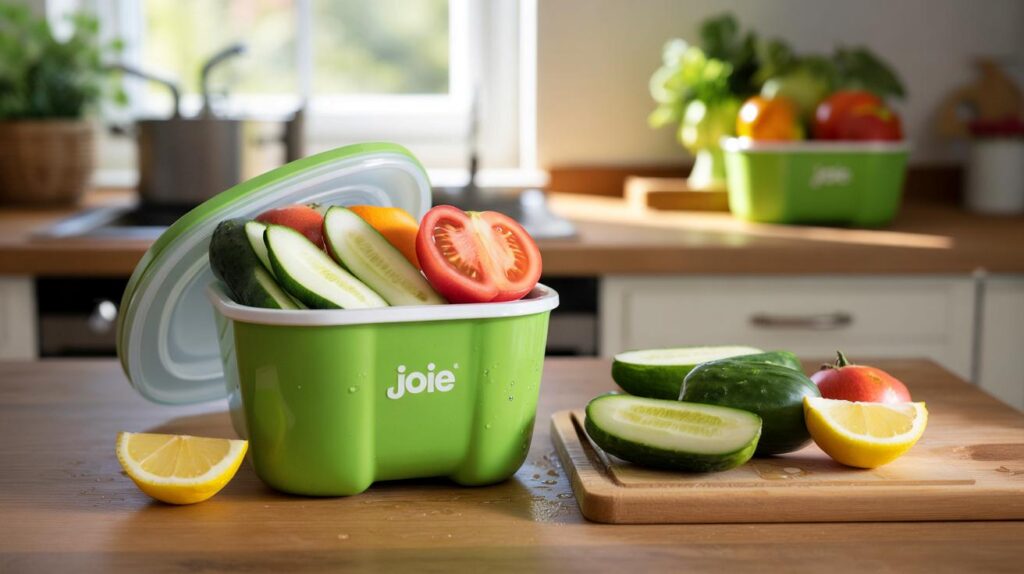
Cold nights, rising shop bills, and a bin full of browning fruit: your kitchen routine may be costlier than expected.
Across Europe, families slice apples for lunchboxes, halve avocados for salads, and then wince as perfectly edible pieces wilt away by the next day. A bright plastic pot from Joie, sold at Action for just €1.72, is quietly changing that routine by keeping cut produce protected for longer, with no cling film and no faff.
A tiny fix that tackles big waste
Food waste stings twice. You lose money and you lose taste. Cut fruit and veg spoil fast because air, light and stray moisture set off a chain of reactions. Enzymes trigger browning. Oxygen dries edges and dulls flavour. Fridge drafts worsen dehydration. Seal those threats out, and you buy yourself time.
That is the simple promise of the Joie fruit and veg pot now stacked on Action’s kitchen shelves. It is small, cheerful and cheap. It looks like a toy, yet it behaves like a tight lid on a fresh problem: half-used produce turning soft or brown within 24 to 48 hours.
Price at till: €1.72. Aim: slow oxidation and moisture loss by shielding cut produce from air and light.
what this €1.72 pot actually does
The container pairs a rigid body with a click-on lid. The fit cuts contact with oxygen. That slows browning on apples, pears and bananas. It keeps cucumber edges crisp and tomato halves juicy. The plastic is sturdy, odour-neutral and dishwasher safe, so you can rinse and reuse without lingering smells. Colours vary—yellow, green or red—so you can code contents at a glance in a crowded fridge.
- Helps keep cut fruit and veg fresher for a few days
- Reduces need for single-use film or foil
- Stacks easily in lunch bags and office fridges
- Dishwasher safe for quick turnaround
- Bright colours make leftovers easy to spot
Does it really delay browning?
Try a simple kitchen test. Place two apple wedges side by side. Pop one into the Joie pot and shut the lid. Leave the other uncovered in the fridge. After several hours, the sealed slice looks paler and feels less leathery. The same goes for kiwi, melon and carrot sticks. You are not stopping time. You are reducing the pace of oxidation and moisture loss, which buys you those precious extra days before the compost caddy calls.
Results vary by produce. Highly perishable pieces like avocado benefit most when you add a squeeze of lemon before sealing. Tomatoes like a cool, not icy environment. Leafy herbs prefer a quick wrap in kitchen paper to catch condensation inside any pot. Use the container as the final barrier, and the rest is simple kitchen sense.
how to use it for best results
- Chill quickly: put cut pieces into the pot and into the fridge within 30 minutes.
- Pat dry: remove surface water before sealing to limit condensation.
- Do not cram: leave a little space to avoid bruising and trapped humidity.
- Acid for browning-prone fruit: brush apple or avocado with lemon or lime juice.
- Label and rotate: note the day and move the oldest to the front.
Cool, dry, sealed and visible: that simple routine adds days to your cut fruit and veg.
How it compares with other low-cost tricks
There is no single fix for every ingredient. Pair tools and habits for the best payoff. Here is a quick look at popular options and where they shine.
| Method | Typical cost | Best for | Downsides |
|---|---|---|---|
| Joie pot (Action) | €1.72 | Cut fruit, veg sticks, tomato halves | One compartment; size may limit large pieces |
| Lemon or lime juice | €0.20–€0.40 per use | Apples, pears, avocado | Can add a citrus note; needs container as well |
| Airtight glass jar | €3–€8 | Herbs, carrot sticks in water | Heavier; breakable; higher upfront cost |
| Beeswax wrap | €5–€10 | Sandwiches, cheese, whole fruit | Not fully airtight; needs careful cleaning |
| Water bath method | Few cents | Celery, carrot, radish | Not ideal for soft fruit; can dilute flavour |
Where to get it and what to expect
Action stocks the Joie fruit and veg pot in store, typically in the kitchen aisle. The price on the label sits at €1.72, with colour options depending on delivery. Stock turns fast in discount chains, so availability can vary by location and week. The pot is small enough for lunch bags and school snacks, and sturdy enough for daily fridge duty without cracked lids or warped rims after a dishwasher cycle.
If you plan to prep several snacks at once, pick up two or three. Use one for sweet pieces like mango or grapes, another for savoury items like cucumber or peppers. That keeps aromas separate and makes snack-time choices clear for children and busy office days.
Practical tips for tricky produce
avocado halves
Leave the stone in the unused half, brush the cut face with lemon, then seal in the pot. Store near the fridge door where it is slightly warmer to avoid chilling damage.
bananas and pears
These ripen with ethylene. Keep them sealed away from leafy greens. If softness creeps in, shift to a smoothie or quick crumble rather than waiting another day.
tomatoes and cucumbers
They prefer gentle chilling. Line the base with a piece of kitchen paper to catch moisture, then close the lid. That keeps flavours bright and textures firm.
Why this tiny tub matters for your budget
Fruit and veg prices rarely move down in winter. Stretching life by even one extra day means fewer top-up trips and fewer emergency snacks from the corner shop. Keep tally for a week. If you save two apples, half a cucumber and an avocado from the bin, you likely recover the €1.72 outlay in days. Repeat that across a month, and the tub stops a steady leak in your food budget.
Small habit, solid payoff: prevent two or three items from spoiling each week and the savings add up fast.
Beyond the tub: smarter storage that stacks benefits
Pair the Joie pot with simple habits. Keep a “use next” shelf in your fridge so half-used pieces do not disappear behind yoghurt pots. Prep snacks after dinner when the chopping board is already out. Slice, seal, and move the tubs to the front. For batch cooking, store garnishes—coriander, spring onion, pomegranate seeds—separately to keep water-rich salads from turning soggy.
If you love data, set a one-week trial. Note what you usually throw away by day two. Then use the pot and the acid trick where needed. Check waste at the end of the week. Most households see fewer last-minute dashes to the shop and less fridge shame. The result is calmer meal planning and more colourful plates.



Picked up two at Action today after reading this, and my apple slices actually survived lunch for once. Thanks for the €1.72 tip 🙂
Be honest: does a simple click-on lid realy slow oxidisation, or is this just any old containter with a cute color? How’s it different from regular Tupperware?