
A familiar kitchen job leaves a stubborn trace on skin, and many people wash again and again with little relief.
You slice, crush and cook. Then the scent lingers. A simple routine, trending again in chef clips, claims to cut that odour fast and without chemicals. We tested the method, spoke to food scientists, and pulled together reliable fallbacks for tough days at the chopping board.
The 30-second trick causing a stir
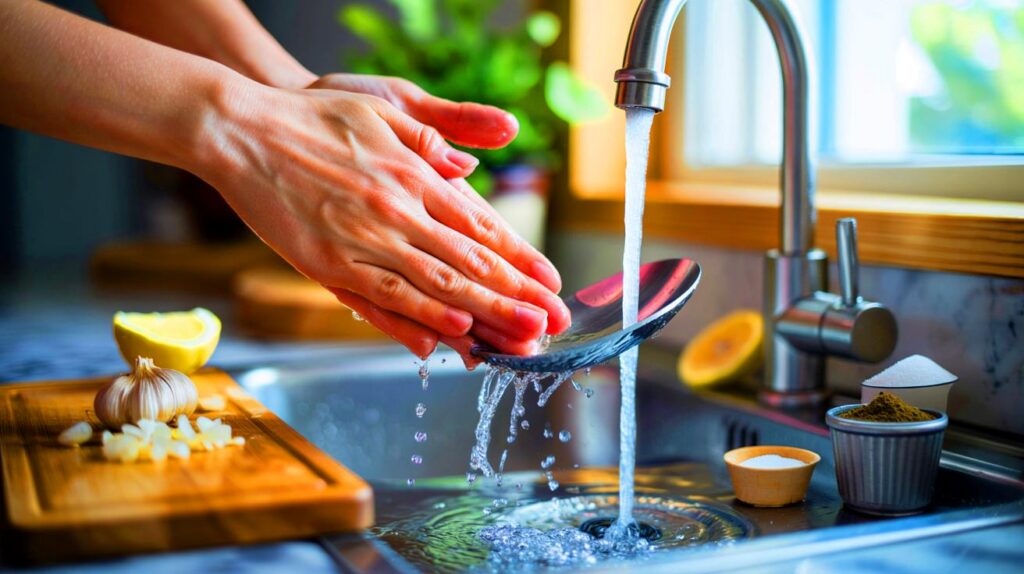
The method is bluntly practical. You run your hands under cold water. You rub your fingers, palms and nail beds on stainless steel. You rinse and dry. Most people need no soap, no lemon and no scrubbing pad. A plain spoon or the back of a non-serrated knife from your drawer often does the job.
Rub your fingers on stainless steel under cold running water for 30 seconds, then rinse and dry.
Cold water matters. Warm water can open pores and push odours deeper into skin lines. A chilly rinse keeps things tidy while the steel gets to work. The timing helps too. Do it right after chopping, before the smell migrates into micro‑cracks in the skin.
Step-by-step for consistent results
- Rinse with cold water to remove loose particles of garlic.
- Rub both hands over a stainless spoon or the back of a knife for 20–30 seconds, including under nails.
- Rinse again with cold water and pat dry with a clean towel.
- Repeat once if any trace remains; most users report a clear improvement after the first pass.
The science: why steel blunts sulphur odours
Garlic releases sulphur compounds when you crush it. Allicin forms first, then breaks into several smaller molecules that bind to skin oils and keratin. Those molecules carry the punchy odour. Food chemists point to redox reactions at the steel surface as the likely fix. The chromium-rich surface of stainless steel can help transform volatile sulphur molecules into forms that rinse away more readily.
Cold water helps in a second way. It flushes loose compounds without driving scent deeper. You do not need a specialist gadget. Any stainless steel — spoon, ladle, the inside of a sink — brings the same effect.
Cold first, steel second, rinse last: the simple sequence reduces garlic on skin while using nothing but tap water.
Evidence from controlled lab trials remains limited, but kitchen tests by home cooks and chefs show a repeatable drop in odour intensity. You can smell the difference on a tissue rub before and after the routine. That makes it useful enough for everyday cooking, even if the underlying chemistry still invites deeper study.
What to try when a faint smell hangs on
Heavy prep sessions, or long contact with crushed cloves, can leave a trace. Several cupboard standbys help clear the final whiff. Choose one based on what your skin tolerates.
| Method | Typical time | Cost per use | Skin notes | Best for |
|---|---|---|---|---|
| Stainless steel + cold water | 30–60 sec | ~0p | Gentle on most skin | Fresh garlic, onion, fish prep |
| Bicarbonate paste | 30 sec | ~2–3p | Slightly abrasive; avoid open cuts | Stubborn odours after long prep |
| Coffee grounds | 30 sec | ~1p | Grains exfoliate; moisturise after | Garlic, fishy notes |
| Toothpaste | 20 sec | ~3–5p | Can dry skin; rinse well | Strong kitchen smells |
| Lemon juice | 20 sec + rinse | ~5–10p | Stings on cuts; avoid sun right after | Rapid freshening; bright citrus note |
| “Steel soap” pebble | 30 sec | One-off £5–£10 | Same mechanism as a spoon | Dedicated tool if you prefer |
Quick cupboard fixes with care
- Bicarbonate: make a thin paste with water, rub for 20–30 seconds, rinse. It lifts residue and reduces cling.
- Coffee grounds: rub gently to dislodge smelly films; the aroma masks any faint trace left.
- Toothpaste: a pea-sized amount breaks down film; use sparingly and moisturise after.
- Lemon: swipe, count to ten, rinse cold. The acid cuts grease; wash off to avoid skin irritation in sunlight.
Keep a spoon by the sink. Use it first. Reach for abrasives or acids only if you still notice a trace.
Safety, skin and kitchen hygiene
Check for nicks before using acids or gritty options. Acid stings, and gritty particles can inflame raw skin. If you have dermatitis, stick to the steel-and-water routine. Moisturise after repeated washes; garlic prep often pairs with hot water and detergent, which can strip oils.
Clean the spoon before rubbing. You do not want to transfer raw meat residue or soap film to your hands. Dry the spoon after you finish to avoid spots and to keep it ready for next time. Keep the blade edge of any knife away from your skin; use the spine only.
Beyond garlic: odours you can tackle fast
The same approach works on fish, shellfish and onion notes. Give the knife blade a quick dip in water before chopping onions to ease eye sting. Stop a cutting board from skating by tucking a damp towel under it. Roll soft herbs in a sheet of kitchen paper for cleaner slicing. Add a pinch of bicarbonate to simmering pulses to trim cooking time; taste and adjust salt later.
For persistent fish smells on boards, wash with hot soapy water, rinse, then rub the board in the sink’s stainless surface under cold water. Dry upright. The steel contact helps tame traces that cling to plastic and wood.
What it costs, what it saves
A stainless spoon costs pennies and lives in your drawer already. Specialty “steel soap” pebbles run £5–£10. Both perform the same trick, so you can keep your money in your pocket. Over a year of regular cooking, swapping from repeated soap washes to a 30‑second steel rub reduces water, saves time, and spares skin from harsh detergents.
Want a quick home check? Rub a fingertip on a clove, wait one minute, then smell a plain tissue. Do the steel routine. Smell a fresh tissue. Most people notice a sharp drop. If your nose still catches something, finish with ten seconds of bicarbonate paste and rinse cold.
Where this trick shines — and where it struggles
The steel method shines when you act early and the odour sits at the surface. It struggles if garlic oil has soaked into micro‑cuts or if you handled crushed cloves for a long time. In those cases, repeat the routine, then reach for a mild abrasive. Give it a minute. Retest with a tissue. If you cook professionally, keep a spoon at every sink to make the habit automatic.
One more angle worth noting: different garlic varieties carry different sulphur profiles. Younger, milder bulbs often fade faster from skin, while older, hotter cloves can cling. Chilling the clove for a few minutes before chopping reduces juice flow, which can limit the initial transfer to your hands.



Worked in 30 seconds for me—no soap needed. Thanks!