
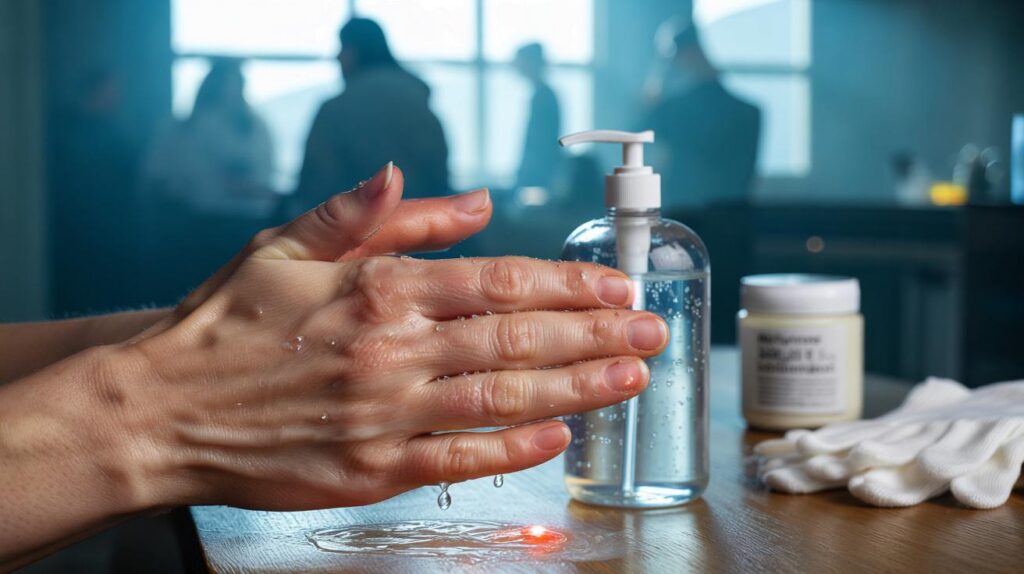
As winter bugs return, hand gel is back on every commute. Yet your skin may be telling a quieter story.
That cool, quick-dry rub feels reassuring, especially in busy trains and shared offices. But frequent use reshapes your skin’s surface, alters moisture balance, and can invite problems you were trying to avoid. Here is how to stay protected without shredding your hands.
The feel‑good illusion of clean hands
Freshness that masks what your skin cannot say
Alcohol gels deliver speed and convenience. No tap. No towel. A light scent that signals cleanliness. That sensory package can trick you into thinking your skin is thriving. It is not always so.
Most hand sanitisers rely on alcohol levels around 60–80%. That strength helps deactivate many germs on intact skin. It also dissolves protective lipids, the natural oils that keep water inside and irritants out. You do not feel the loss at first. Your barrier feels it with every rub.
What you do not feel when alcohol does its work
Healthy skin sits at a slightly acidic pH and is coated by a thin hydrolipid film. Repeated alcohol exposure disrupts both. Evaporation cools the skin and gives that crisp finish. At the same time, water escapes faster, micro‑gaps widen, and the surface becomes more reactive to soap, heat, and friction.
Clean is not always equal to healthy. If your hands sting after washing, your barrier is already sounding the alarm.
Your skin’s barrier under pressure
How alcohol lifts away the protective oils
The outer layer of your skin works like brick and mortar. Cells are the bricks. Lipids are the mortar. Alcohol loosens that mortar. With each application, the mortar thins, and microscopic cracks appear. Those cracks speed up moisture loss and allow irritants to slip in.
Once the barrier thins, even normal tasks—typing, handling paper, cycling against cold wind—can feel abrasive. Add central heating and low humidity, and dryness accelerates.
Dryness, itch, and a loop of irritation
It starts with tightness. Then come rough patches and flaking. Itch invites scratching, which creates further damage. Many people respond by using even more gel, chasing that clean feeling. That often deepens the problem and sets a loop that is hard to break without a reset.
More gel on broken skin means more sting, more cracks, and a higher chance of local infection.
Who is hit first
Children, older adults, and atopic skin
Children’s skin is thinner and loses water faster. Older adults produce less oil and repair damage more slowly. People with eczema, psoriasis, or allergic tendencies carry a baseline barrier weakness. In these groups, frequent sanitiser use can tip manageable dryness into painful fissures within days.
Early warning signs you can spot in a day
- Tightness after washing or rubbing, easing only after thick cream.
- Redness around knuckles and between fingers.
- Flakes or peeling at the sides of nails.
- Stinging when using gel, soap, or hot water.
- Fine cracks that catch on fabric or sting with citrus juice.
Cracks, stings and the infection risk you did not bargain for
Tiny splits that become open doors
When skin cracks, the surface no longer acts as a sealed shield. Microfissures create entry points for germs you are trying to avoid. Redness that becomes warm, tender, or weepy signals local infection. Deep, painful splits can limit hand function and take weeks to settle.
Opportunists that alcohol does not clear
Sanitiser is not a cure‑all. Some microbes survive in the shelter of damaged skin or organic dirt. Dryness changes the local environment in ways that help opportunists linger. The paradox is simple: over‑sanitising can make hands more welcoming to the wrong guests.
If your skin barrier fails, hygiene gets harder, not easier. Barrier care is part of hand hygiene, not a luxury.
Smarter hygiene: when to wash, when to rub
Use the right method at the right time. That single choice spares your skin and still cuts transmission risk.
| Situation | Best option | Reason |
|---|---|---|
| Before eating or touching your face | Soap and water (20 seconds) | Removes dirt, oils, and microbes in one step |
| After using public transport | Alcohol gel (≥60% v/v) | Fast, practical when no sink is available |
| Hands visibly soiled, greasy, or sticky | Soap and water | Alcohol works poorly through grime |
| Between patient or customer contacts | Alcohol gel if hands are not soiled | Quick turnover with broad antimicrobial action |
| After using the loo | Soap and water | Reliable removal of faecal organisms |
The repair plan your hands need
After every sanitiser use, add back what the rub removed
Replace lipids and bind water. Thick, fragrance‑free creams rich in glycerin, ceramides, or urea (up to 5%) help. Petrolatum or a simple occlusive ointment at night locks moisture in and supports healing. Apply within two minutes of washing or sanitising to trap water.
Focus on hot spots. Work product between fingers, across knuckles, and around cuticles. Keep a pocket‑size tube where you keep your gel. Pair the two as one action.
Small routine changes that stop the damage
- Swap blasting hand dryers for paper towels; heat and airflow worsen evaporation.
- Use lukewarm water; hot water strips oils faster.
- Pat dry thoroughly before applying gel; wet hands dilute alcohol and reduce efficacy.
- Choose unscented products; perfume compounds can irritate compromised skin.
- At bedtime, apply a thick layer and wear cotton gloves for 30 minutes to boost absorption.
- Trim hangnails and avoid cuticle cutting; ragged edges tear skin and invite infection.
Buying a better bottle
Labels and ingredients that actually help
Look for clear alcohol content at or above 60% v/v. Prefer gels with humectants such as glycerin or propylene glycol. Avoid strong fragrances and dyes. Pumps reduce overuse compared with squeeze bottles. A pea‑sized amount is enough for one pair of hands—too much leaves residue and more sting.
Questions people ask right now
Can you stay hygienic without rubbing 20 times a day?
Yes. Anchor your day to key moments. Sanitise after the commute, after handling high‑touch surfaces, and before eating. Wash with soap when a sink is nearby. Treat your barrier as part of the protocol by moisturising after each clean.
Should children use adult‑strength gels?
Supervise. Use a small amount and rub until fully dry, including fingertips. Prefer soap and water at home and school where sinks are available. Avoid perfumed gels that tempt licking and can irritate sensitive skin.
Are home‑made gels a fix?
They are risky. Getting the alcohol concentration wrong leaves you with a sticky mix that neither protects nor respects the skin. Commercial products balance alcohol with humectants in tested ratios. That balance is hard to copy in a kitchen.
What if you already have eczema?
Carry an emollient and use it as often as you use gel. Choose soap substitutes for at‑home washing. If splits persist or sleep is affected, seek advice from a pharmacist or GP. Short courses of appropriate treatment can calm flares while you maintain hygiene.
A seven‑day reset that fits the working week
Day 1–2: switch to soap for meals and after the loo; sanitiser only on the go. Moisturise after every clean. Day 3–4: add a night‑time ointment layer to knuckles and fingertips. Day 5: trim hangnails and stop picking. Day 6: review your gel; replace perfumed formulas. Day 7: keep one cream at your desk, one in your bag, one at the sink.
Seasonal variables you can control
Cold air, low humidity, and indoor heating
Winter air holds less moisture. Central heating dries it further. Place a small humidifier in work areas or keep a cup of water near radiators to nudge humidity up. Wear gloves outdoors to protect against wind and friction. These tweaks reduce the number of times you feel the urge to reapply gel just to stop discomfort.



Great breakdown—pairing sanitizer with moisturizer changed my winter hands. Thanks for the clear, practical steps! 🙂