
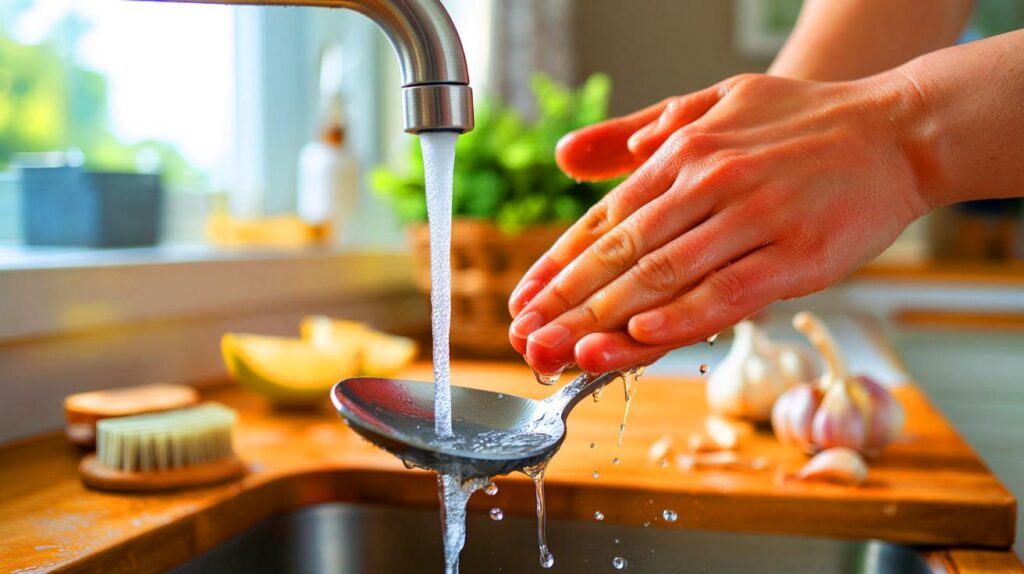
Kitchen smells linger on fingers long after supper. Tired of scrubbing? A humble utensil is suddenly the star of cookery feeds.
Across Britain this week, home cooks and chefs are reviving a decades-old trick. They claim a stainless steel spoon under cold running water strips garlic odour from skin in half a minute. The method spreads fast because it costs nothing, uses what you already own and, for many, works on the first attempt.
How a quiet kitchen habit became a viral fix
The spoon hack has done the rounds in professional kitchens for years. Now short videos and step-by-step clips have pushed it back into the spotlight. The appeal is straightforward. No soap. No chemicals. No new gadget. Just steel and a tap.
Cold water and stainless steel form a quick, low-cost duo that many cooks use to cut garlic odour in about 30 seconds.
People share before-and-after tests. They chop garlic. They rub hands on a spoon. They sniff. Reactions range from relieved smiles to frank surprise. Not everyone gets the same result at the first go, but the method takes only moments to try again.
The three-step method you can follow tonight
Consistency matters more than force. Use cool water, not hot. Cover every inch of skin that touched garlic.
- Rinse your hands under cold water to remove loose garlic particles.
- Rub palms, fingers and nail beds across a stainless steel spoon or any stainless utensil for 20–30 seconds.
- Rinse again with clean water, then dry gently with a towel.
Do not use the sharp edge of a knife. Use a spoon, the back of a butter knife or a fork handle for safety.
Why stainless steel helps with garlic odour
Garlic’s punch comes from sulphur-rich compounds released when you crush or chop a clove. These molecules cling to skin and nails. Stainless steel has a surface that can interact with sulphur compounds during contact with water. Many chemists describe it as a small redox effect at the metal surface that changes odour-active molecules into less noticeable forms. It will not perfume your hands. It simply reduces what your nose detects.
Cold water plays a role. Warmer water opens pores and may spread odour. Cool water helps wash away loose compounds while steel contact reduces what remains. Any stainless steel works: a spoon, a pan rim, a tap spout or a purpose-made “soap” bar.
When the smell is stubborn
Long prep sessions can leave odour deep around cuticles. A second round with the spoon often helps. Some household stand-ins add gentle abrasion or acidity, which can lift residues from the skin’s surface. Use them with care if you have sensitive skin.
| Method | Best used for | How to use | Skin notes |
|---|---|---|---|
| Stainless steel + cold water | Fresh garlic odour after chopping | Rub for 20–30 seconds, rinse | Gentle, no product needed |
| Bicarbonate of soda | Odour lodged around nails | Make a paste on damp skin, rub lightly, rinse | Mildly abrasive; avoid broken skin |
| Coffee grounds | Persistent kitchen smells | Massage a pinch into hands, rinse | Granular; can be drying |
| Toothpaste | Strong fish or shellfish odours | Pea-sized amount, rub, rinse well | Use sparingly; fragrance can mask, not remove |
| Lemon or orange | Final freshening after steel rub | Swipe juice over fingers, rinse with cold water | Avoid on cuts; citrus can sting |
| Stainless “soap” bar | Frequent cooks | Use like soap under running water | Durable and reusable |
Real-world tips that make the trick work better
Work soon after chopping. The longer odour sits, the deeper it settles into tiny skin creases. Clean under nails with a soft brush before rubbing on steel. Keep water flowing so loosened molecules rinse away instead of moving around your skin.
- Use a spoon straight from the drawer. No heating, no detergent.
- Rotate the spoon to contact every finger pad and the webbing between fingers.
- If you wear rings while cooking, remove them and clean the skin beneath.
No soap, no cost, no waste: the spoon you already own can be the quickest fix for garlicky hands.
Beyond garlic: what else the spoon trick can tame
The same approach often helps with onion, leek and fish odours, which also feature sulphur or amine compounds. It will not fix chilli burn, which stems from capsaicin binding to nerve receptors. For chillies, oil followed by a proper wash or a dairy soak works better than steel.
Safety, skin care and smart prevention
Fragrance-heavy products can just mask odour. The goal here is removal. If your skin is dry or cracked, use a fragrance-free moisturiser after washing. Avoid harsh scouring pads. If you have a nickel sensitivity, stainless steel is usually low in release, but stop if irritation appears.
- Gloves cut odour transfer, but many cooks dislike the feel. Try a food-safe, powder-free pair for long prep jobs.
- A bench scraper lifts chopped garlic without finger contact. Less contact means less odour to remove.
- Keep a small nail brush by the sink to clear the cuticle area before the steel rub.
- Use cool water first. Switch to warm soapy water afterwards if you still feel oily residues.
Why this matters for everyday cooking
Garlic boosts flavour while you cook, but its lingering aroma can be awkward at work, on public transport or at the gym. A repeatable, zero-cost method helps people cook boldly and head out without worrying about their hands. It also reduces reliance on heavily perfumed soaps that can irritate skin over time.
What to try if results vary
Some people report near-total removal on the first rub. Others see a partial drop and need a second pass. Try these tweaks: spend the full 30 seconds on nail beds; use a larger steel surface such as the side of a saucepan; combine a brief bicarbonate paste with the steel rub for a one-two clean. Keep motions gentle to avoid skin stress.
A quick checklist you can screenshot
- Cold water first, then stainless steel, then rinse.
- Target palms, fingertips, nails, and finger webbing.
- Repeat once if you can still smell garlic.
- Add a mild abrasive or citrus only if needed.
- Moisturise if your hands feel dry.
If you cook for a crowd, set up a small “de-odour” station by the sink: a spoon, a nail brush and a lemon wedge. You will move guests through quickly without perfumed soaps or disposable wipes. For meal-prep days, a stainless “soap” bar can live permanently by the tap, ready for rapid, waste-free use.
Curious to test the limits? Try timing the effect across different ingredients. Compare garlic crushed with a press versus minced with a knife; presses release more odour-active compounds, so you may need a longer steel rub. Check how water temperature shifts results for you. Small trials help tailor the method to your kitchen routine.



Just tried the 30-second spoon trick—worked like a charm! No more garlicky gym handshake. Thanks for the clear, simple steps.