
Tides shift quickly on the south coast, and so do fortunes for people, wildlife and the councils trying to keep order.
The picture in Langstone Harbour shows how fragile that balance can be. Officials have spent years tackling derelict vessels, social pressures and tight budgets while guarding a nationally important stretch of intertidal mudflats and saltmarsh.
A long clean-up and a harbour under pressure
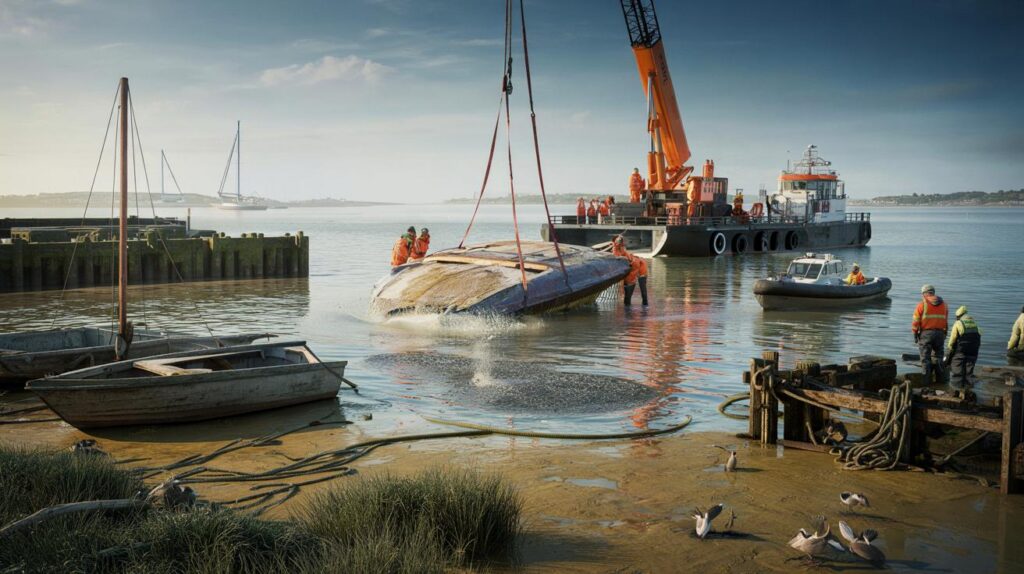
Harbour authorities say they have removed about 120 abandoned or sunken boats since 2022, working alongside Portsmouth City Council. Some hulls sheltered rough sleepers. Others threatened to leak fuel, paint and plastics into the water. The operation paused the issuing of new licences for tidal moorings while crews hauled wrecks from creeks and the Eastney foreshore.
About 120 derelict or sunken vessels have been lifted, broken up or disposed of since 2022, with the two-year bill topping £60,000.
Deputy harbour-master Rob Dunford built a reputation for the pace and scale of removals. Harbour-master Billy Johnson says only a small number of end‑of‑life craft remain on moorings or beached. The work is grim, often confrontational and rarely cheap. Bargain boats bought for a few pounds can cost thousands a year to keep afloat once mooring fees, insurance and maintenance bite.
Why so many derelicts wash up
Harbour teams see the same cycle. Owners overestimate their skills and underestimate costs. Engines fail. Insurance lapses. Fees mount. Hulls sink on their moorings. A boat abandoned in a tidal creek quickly turns into a hazard to navigation and a magnet for litter. It also sheds toxic antifouling and microfibres into a wetland used by internationally important populations of waders and wildfowl.
Disposal adds its own headache. Most older leisure boats are fibreglass. Britain has little capacity to recycle glass‑reinforced plastic at scale, so many hulls end up in landfill after stripping oil, batteries and recoverable metal.
Without a nationwide take‑back scheme, many end‑of‑life leisure boats face the skip rather than a second life in materials recovery.
Money, moorings and a delicate ecology
Langstone Harbour sits between Portsmouth and Hayling Island and is recognised by Natural England as one of Britain’s most valuable intertidal areas for waders. The authority’s finances are unusual. Much of its income hinges on one sand and gravel dredger — AI Avocet, operated by the Kendall Group — which lands marine aggregates at the harbour.
In 2024/25, a record year for aggregate tonnages, the accounts showed an operating surplus of £7,500. That figure sat on top of £222,000 in council subsidy from Havant and Portsmouth, and a £162,000 government grant to bolster commercial fishing. Looking ahead, Johnson expects the harbour to rely on roughly £250,000 a year from the two councils over the next five years after a self‑funding run from 2015 to 2023. The authority is developing marine services to lift its own revenues, targeting up to £100,000 a year.
| Key figure | Detail |
|---|---|
| Boats cleared since 2022 | ≈120 |
| Clear-up cost (two years) | £60,000+ |
| 2024/25 operating surplus | £7,500 |
| Council subsidy (2024/25) | £222,000 |
| Government grant (fishing) | £162,000 |
| Expected annual council support | ~£250,000 (next five years) |
| Marine services target income | Up to £100,000 a year |
Recent bills include rebuilding the Hayling slipway, renewing pontoon piles and buying a quayside crane. Those investments support safer access and more resilient berthing, but they also lock in maintenance obligations just as climate pressures, public spending constraints and shifting patterns in small‑boat ownership collide.
What this means for you if you live, walk or sail here
Residents will notice fewer hulks on the mud and cleaner tidal creeks. Birders may see less disturbance from drifting wrecks. Boaters will find less snagging risk and a clearer channel. There may be a wait for new tidal moorings while licensing restarts, and fees could reflect rising infrastructure costs.
- If you own an ageing boat, plan for end‑of‑life early: get quotes for lifting, transport and disposal.
- Keep mooring and insurance current to avoid seizure or removal costs.
- Report pollutant leaks from abandoned craft to the harbour office promptly.
- Consider shared ownership or club storage to spread maintenance outlay.
- Ask your yard about dismantling options that maximise metal recovery and minimise landfill.
People at the margins
Several derelicts had become makeshift shelters. That complicates clearance and raises welfare and safety concerns. Removing those boats reduces risk during storms and tidal surges, but it also exposes gaps in housing and support services around the Solent. Harbours cannot carry that load alone; they can only secure navigation, manage pollution risk and refer people to the right agencies.
Wildlife stakes and sediment reality
Derelict boats press into soft sediments, crushing invertebrate beds that feed dunlin, redshank and other waders. Leaking fuel and peeling antifoul contaminate mud that functions as a larder. Lifting wrecks reduces those pressures and makes it easier to police litter, net fragments and plastic foam blowing off exposed hulls. The benefits may take time to show, as tides redistribute silt and vegetation recovers.
The recycling roadblock
Fibreglass recycling remains limited in the UK, which is why many boats end up cut into sections and sent to landfill after stripping contaminants. Some European countries operate national take‑back schemes for end‑of‑life leisure craft, funded by levies on new boats. The absence of a similar system here leaves harbours, councils and owners juggling disposal costs case by case. Trials in composites recycling exist, but sustained capacity and stable funding are needed before they dent the landfill problem.
What’s next for Langstone Harbour
A handful of end‑of‑life vessels still sit on moorings and along Eastney’s shore. Once they go, the authority can lift its pause on new tidal‑mooring licences. The income picture still looks tight. Reliance on a single dredger concentrates risk in one industrial customer; a mechanical fault or market downturn would bite instantly. That is why the harbour is pushing marine services, alongside core safety and conservation work.
For boat buyers tempted by a bargain: run the numbers first. Storage, lifting, repairs, fuel and compliance can eclipse the purchase price within months. A modest budget set aside for predictable upkeep — rigging checks, engine servicing, hull care — avoids the slippery slope to abandonment. For the harbour, fewer ghost boats means safer channels, healthier mudflats and public money going further where it counts.



Impressive work by Dunford and Johnson to clear ~120 wrecks while minding the mudflats. But disposal is the elephant: with almost no UK fibreglass recycling, aren’t we just landfilling tomorrow’s microplastics? Are you lobbying DEFRA for a national take‑back scheme (like France’s), with producer responsibility funding? Could port dues or new‑boat levies seed it? Would RYA/British Marine back that? This feels essential if we don’t want the same mess in 5–10 years.
£60k over two years for 120 boats is ~£500 each — is that all‑in? Who’s covering storage, landfill, crane ammortisation, legal fees? If the “surplus” is £7,500 only after £222k council subsidy + £162k grant, aren’t we just shifting costs? A clearer breakdown would help.