
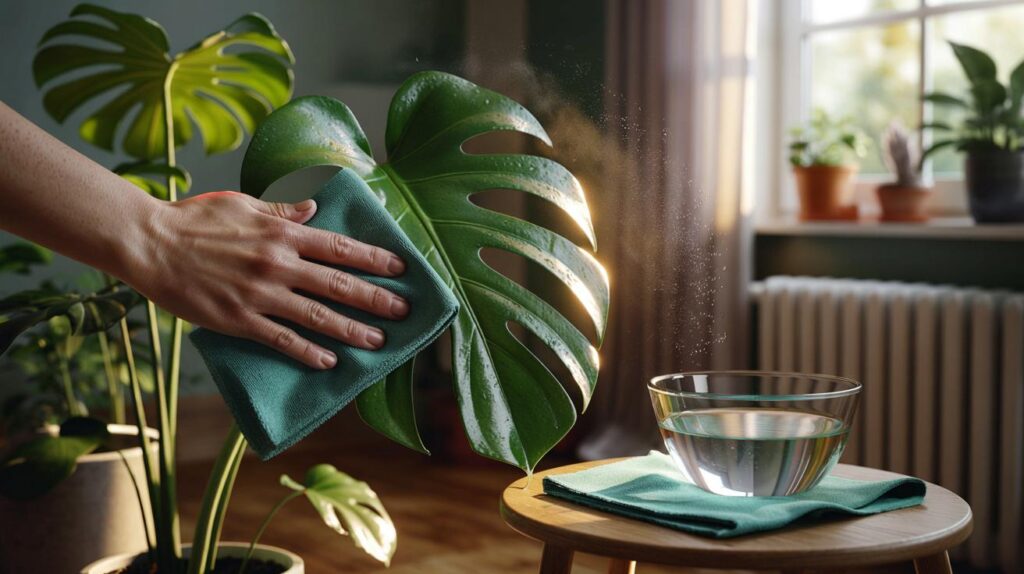
With radiators humming and daylight fading, your beloved houseplants may look oddly tired, their once-glossy leaves dulled by the season.
As indoor air dries and windows stay shut, dust clings to foliage, lowering light and vitality. A low-cost, low-effort routine is bringing leaves back to life just when homes need a lift most.
Why leaves turn dull as autumn creeps in
Central heating strips moisture from rooms. Fabric-heavy spaces trap airborne particles. Open-window hours shrink. The outcome is predictable: a fine film settles on leaves, scattering light and slowing photosynthesis. That grey veil also holds onto indoor pollutants and allergens, weakening growth at the very time plants face shorter, dimmer days.
Dust on foliage is not cosmetic fuss. It blocks light, clogs pores, and puts plants on a slow energy diet.
The problem builds quickest in living rooms with rugs, curtains and soft furnishings, in homes with pets, and on species with broad, glossy leaves that behave like dust magnets. South-facing windows add glare, making the haze more obvious, while hard water marks can leave pale spots after casual spritzing.
The two-minute, zero-chemical wipe
The quickest fix costs nothing and works immediately: a damp microfibre wipe. One pass lifts dust, restores lustre and opens leaf pores, with no residues and no perfumed sprays.
- Use a clean microfibre cloth, lightly moistened with cool, soft or filtered water.
- Support each leaf from beneath with one hand; wipe with the other from base to tip.
- Rinse the cloth as it greys so you do not smear grime between plants.
- Finish with a dry microfibre to buff, reducing water spots in hard-water areas.
- Aim for a gentle, regular wipe rather than a heavy polish session once in a blue moon.
One cloth, two minutes, zero chemicals — a small habit that brings back the deep green you remember from summer.
A small tweak helps in limescale-prone zones: use rainwater, deionised water or cooled, boiled kettle water to prevent pale speckling. Some readers rub the underside and midrib too, where mites and dust gather first. Keep pressure light to protect thin leaf tissue.
What to use — and what to avoid
Microfibre picks up fine dust without scratching. A soft make‑up brush or artists’ brush suits delicate foliage. For spiky cacti, a soft toothbrush frees fluff between areoles. Skip oily polishes, milk or olive oil; shiny for a day, sticky for a week. They can trap dust, block pores and invite pests. If you try the banana-skin trick for a gentle sheen, buff thoroughly with a dry cloth to remove sugars that may attract insects.
Match the method to the plant
| Plant type | Best method | Notes |
|---|---|---|
| Monstera, rubber plant, peace lily | Damp microfibre wipe | Support large leaves; avoid bending petioles. |
| Calathea, maranta, ferns | Soft dry brush | Leaves bruise easily; damp only if truly grimy. |
| Succulents and cacti | Soft toothbrush or small paintbrush | Keep water off rosettes; clean between spines. |
| Fuzzy leaves (African violet, peperomia caperata) | Dry brush only | Water marks stain; avoid sprays and wipes. |
| String-of-pearls, trailing hoya | Lukewarm shower, gentle flow | Drain well; shake off water; strong light to dry. |
When a gentle shower helps
For heavily soiled foliage, a soft shower does the heavy lifting. Use lukewarm water, lowest pressure, and shield the soil with foil or cling film to stop compost splashing. Let plants drip-dry out of direct sun to avoid spotting. Skip showers for furry leaves and succulents; blotters, brushes and patience suit them better.
Health benefits you can see — and breathe
Clean leaves capture light efficiently. That means steadier growth, stronger colour and better recovery after pruning or repotting. Wiping time doubles as a health check. You will spot spider mite webbing, scale bumps or thrips flecks sooner, and you can remove the first offenders on sight. Fewer pests equals fewer chemical interventions.
Cleaner foliage helps plants work harder and helps your rooms feel fresher, with less dust sitting on every surface.
Removing dust from your green canopy also lowers the particle load in the room. For allergy-prone households, that simple routine can reduce irritation from trapped fluff and pet dander. Plants are not air purifiers in the industrial sense, yet a tidy leaf surface complements ordinary cleaning, hoovering and ventilation.
How to fit it into your week
Little and often beats a quarterly scrub. Make leaf care part of regular dusting and watering.
- Frequency: every 1–2 weeks for big-leaf plants; monthly for slow growers and low‑dust rooms.
- Timing: mornings, so leaves dry as light improves.
- Zone it: do one shelf or windowsill at a time to keep sessions short.
- Routine: wipe, inspect, rotate the pot a quarter turn for even light, then water if needed.
- Record: note pest sightings or yellowing so patterns are easier to spot.
Costs, time and small gains that add up
A decent microfibre costs a couple of pounds and can last years if washed without fabric softener. Compare that to two bottles of leaf “shine” spray at £7–£10 each across a season. The wipe takes roughly two minutes per large plant; five plants mean a 10‑minute reset for the room. You save on products, packaging and shelf space while steering clear of residues.
Extra tips for a brighter, calmer plant corner
Water quality matters for the finish. Hard water leaves specks, so save rainwater in a covered can or use filtered water for final buffs. Keep wipes for plants separate from household cloths to avoid detergent traces. Rotate plants weekly to prevent lopsided growth that shading dust exaggerates. If leaves repeatedly look grim, check airflow and consider a small, quiet fan on a low setting to keep particles from settling.
Mind the pitfalls. Do not soak compost before a shower, as splashing soil encourages fungus gnat outbreaks. Avoid wiping newly unfurled leaves; let them toughen before handling. Resist the lure of mirror-like polish on every species: satin, not gloss, is a natural finish for many. Above all, treat the wipe as care, not just cleaning — a moment to notice new growth, adjust light and keep your indoor jungle steady through the darker months.



Brilliant guide—switching to a damp microfibre + dry buff made my monstera gleam again. The rainwater tip fixed those chalky specks from hard water. Also loved the “wipe, inspect, rotate” routine; caught early scale on a peace lily today. Thanks! 🙂
Genuine question: won’t frequent wiping damage the cuticle or cause micro‑tears over time? I’ve seen folks recommend a tiny bit of oil as a “protective layer”—is that myth? Any sourses on long‑term effects vs dust left in place?