
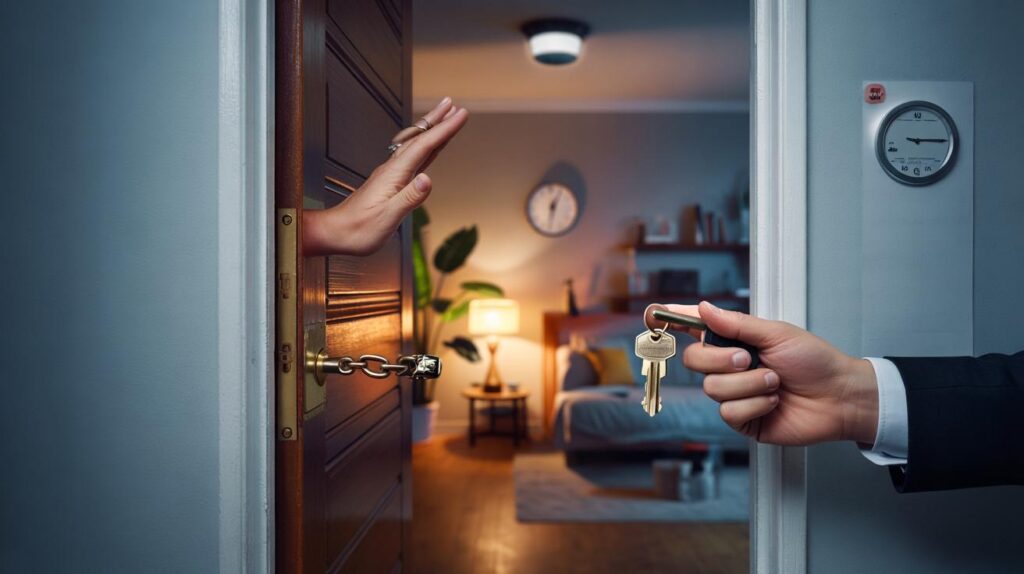
A neighbour’s whisper, a misplaced mug, a window ajar. Small clues spark big fears about who holds your front-door power.
A tenant returned from a quiet weekend away and found drawers nudged, papers shifted, and no sign of a break-in. Many renters share that jolt. The spare key sits at the heart of a problem that touches privacy, trust and the law. Here is what the rules actually say, what counts as an emergency, and how you can act today without escalating conflict.
What the spare key really means
A spare key exists in thousands of tenancies. It can speed up repairs and help during leaks or fires. It does not grant open access. In legal terms, tenants enjoy the right to a private home and peaceful occupation from day one of the tenancy. Landlords own the bricks. Tenants control the doorway.
Ownership does not override occupation. No access without the tenant’s clear permission, except for genuine emergencies.
In France, the home is inviolable. Using a key without consent can amount to a criminal violation de domicile. In England and Wales, contracts include a covenant of quiet enjoyment and laws protect against harassment or unlawful eviction. In both systems, emergencies sit in a narrow box. Everything else needs notice and agreement.
When can a landlord access the property
Emergencies justify immediate action: a burst pipe, a fire, the smell of gas, or an active leak threatening flats below. In these limited cases, speed protects people and property. Outside emergencies, the rule shifts firmly to consent and notice.
- Repairs and safety checks: request a slot, give at least 24 hours’ notice, and secure the tenant’s agreement.
- Viewings before re-letting or sale: propose times, note preferences, and confirm permission for each visit.
- Meter readings or routine inspections: schedule in writing, with reasonable notice and a clear purpose.
Many disputes start with convenience dressed up as urgency. A cold snap does not justify a surprise visit. Nor does a contractor’s diary. If it can wait for a message and an agreed time, it is not an emergency.
The grey areas that spark disputes
Keys left “for safety”, weekly drop-ins “just to check”, and unannounced viewings cause the most friction. Small acts erode trust. Repeat behaviour can become harassment. Clear messages and written confirmation help. So does a simple rule: if in doubt, ask and wait.
“Urgency” means immediate risk to people or property. Anything else needs notice and the tenant’s yes.
If someone crosses the line
Document what you find. Photograph moved items, note dates and times, and store messages. Speak first if you feel comfortable. A calm, firm reminder of the rules often resets the relationship. If not, write.
- Send a recorded letter that states the dates of suspected access and withdraws consent for unnotified visits.
- Propose a simple booking process for all future entries and keep communication in writing.
- Retain evidence: photos, emails, texts, witness notes.
- Seek support from a tenants’ advice service or housing charity if the behaviour continues.
Sanctions exist. In France, unlawful access can lead to up to one year in prison and a €15,000 fine under article 226‑4 of the Penal Code. In England and Wales, repeated or intimidating access can amount to harassment under the Protection from Eviction Act 1977, with the possibility of prosecution, fines and even imprisonment for serious cases. Civil claims for damages also remain on the table.
Your landlord owning a key does not create a right to let themselves in. Consent remains the gatekeeper.
Changing locks: what tenants can do
Some tenants choose to change the cylinder for peace of mind. In France, you may change the lock at your expense and restore the original at the end of the tenancy if requested. In England and Wales, your agreement may restrict alterations. Many tenants still fit a new cylinder but provide access on request for repairs and inspections. Always read your contract and weigh risks before acting.
- Pick a reversible cylinder change to avoid damage to the door.
- Inform the landlord once you have concerns and offer a clear process for access by appointment.
- If you withhold a spare key, respond promptly to repair requests and provide timed slots.
A quick comparison: France and the UK
| Topic | France | England & Wales |
|---|---|---|
| Core right | Inviolability of the home; tenant controls access | Quiet enjoyment; reasonable access for specific purposes |
| Notice for non-urgent access | Prior consent required; practical norm of at least 24 hours | At least 24 hours’ notice in writing for repairs/inspections |
| Emergencies | Immediate action allowed to protect people or property | Immediate action allowed for urgent repairs or safety risks |
| Sanctions for unlawful access | Up to 1 year prison and €15,000 fine (article 226‑4) | Harassment/unlawful eviction offences; fines and possible imprisonment |
| Changing locks | Permitted at tenant’s expense; restore at end if asked | Check contract; often allowed, but do not block agreed access |
Five real-world scenarios and how to respond
The “just checking the radiators” visit
Reply by message and propose two time slots within the week. Ask for the contractor’s name and expected duration. Do not hand over consent for “any time”.
A water leak reported by the downstairs flat
Ask for a quick video or photo if safe. If water pours through the ceiling, grant immediate access or call a plumber yourself and notify the landlord at once.
Repeated drop-ins while you are at work
Send a recorded letter. State that all access requires written notice and an agreed appointment. Mention legal protections and keep copies.
Viewings during the notice period
Agree limited hours per week, such as Tuesdays and Thursdays 17:30–19:00, and cap the number of visitors per slot. Confirm in writing.
A request for a spare key “for emergencies”
Offer a sealed key in a lockbox with your code control, or refuse politely and commit to fast responses for emergency calls.
Practical template: a firm, calm message you can send today
Subject: Access to the flat
Hello [Name],
Please arrange any visits by messaging me in advance. I require at least 24 hours’ notice and a confirmed time for repairs, inspections or viewings. Access without my consent is not permitted unless there is a genuine emergency that risks damage or injury.
Thank you for coordinating visits in this way.
Best regards,
[Your name]
Extra tips that save stress and money
- Use a shared calendar invite for agreed appointments. It creates a timestamped record without tension.
- Photograph the condition of rooms before and after contractor visits. Store images in a dedicated folder.
- Keep a simple log: date, time, purpose, names present, and any issues spotted.
- Test your smoke and carbon monoxide alarms after any access. Small checks prevent big losses.
- Add a door viewer and a secondary chain for peace of mind, provided your contract allows it.
Why this matters now
Shorter days push many of us to spend more time at home. That makes boundaries feel sharper. Clear rules protect both sides. Landlords get orderly access for repairs. Tenants keep control of their space. A spare key can stay helpful, not harmful, when everyone follows the same playbook.
For shared homes and house-shares, agree a single point of contact for access requests. Rotas help. For furnished lets, photograph inventory items in place at check-in and repeat after any visit. In student housing, set quiet hours when no visits can take place, then share those hours well ahead of exam periods.
If you plan a long trip, write a short access note that lists trusted contacts, alarm codes for emergencies only, and your preferred contractor. Seal a spare key in a labelled envelope and update the note when you return. You stay in control while still preparing for the rare moment when speed matters.



In England, can I change just the cylinder on my AST without breaching the agreement? My agent says they must hold a key “for insurance”—is that actually a legal requirement or just their policy?