
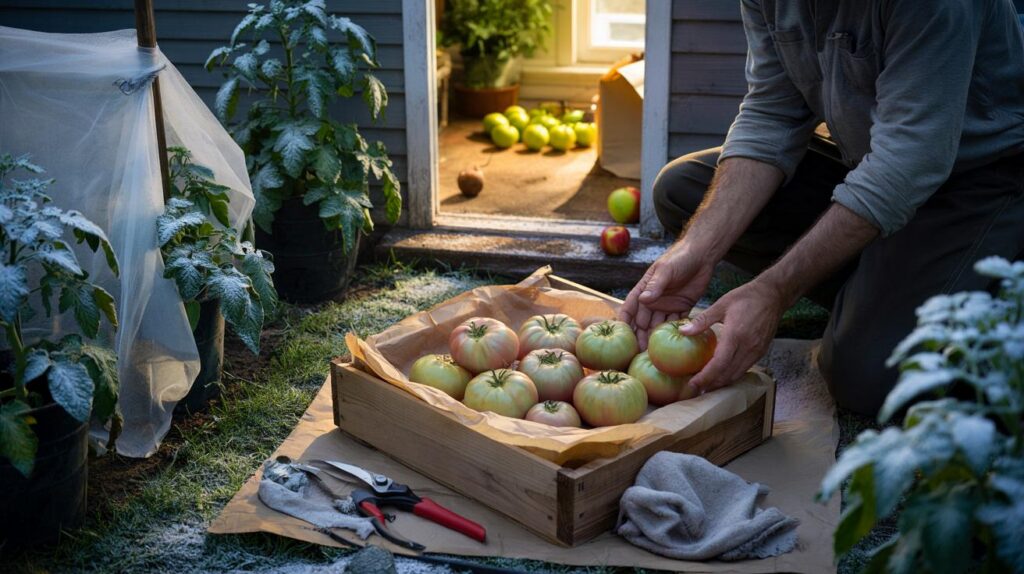
A cold snap can erase months of care. Autumn drifts in, and green fruit hang outside, undecided, exposed overnight.
Forecasters flag sub-10°C nights across the country. You still have a window to act before frost burns your crop. The old ways still work, and they demand sharp observation, quick hands and patience once the fruit comes indoors.
Why the first cold snap is your final warning
Tomato plants stall below 10°C. A clear night after rain invites a ground frost that scorches leaves and turns green fruit mealy. The change often comes fast, between a mild afternoon and a biting dawn. A short checklist keeps you ahead of it.
- Watch for two consecutive nights forecast at 10–12°C or lower.
- Walk the plot at dusk. Feel the air. Check low spots where cold pools.
- Stage trays, paper, scissors and a soft cloth before you pick.
- Keep fleece, an old sheet or a breathable cover by the back door.
When nights slip to 10–12°C, pick firm, unblemished fruit with a short stem stub and bring them under cover.
What to pick and when to cover
Choose tomatoes that feel firm and show a pale blush rather than a deep bottle green. Leave 1–2 cm of stem to slow dehydration. Wipe off surface damp. Reject split or mould-specked fruit to protect the rest. If frost threatens tonight and you cannot finish picking, drape plants with fleece or a sheet at dusk and secure it at the base. This buys a few hours. Return early next day to harvest the lot.
Three moves that save green tomatoes
Move 1: harvest in the temperature window
There is a sweet spot for picking. Do it after the day warms but before evening chill creeps in. Mid-afternoon suits most plots. Warm fruit handle better and bruise less. Use shallow trays. Avoid piles. Air must move between fruit. Label trays by date so you rotate stock first in, first out.
Handle green tomatoes like eggs: single layers, dry hands, no stacking, and out of the wind straight away.
Move 2: ripen indoors with light or ethylene
Once inside, you have two reliable paths. The first uses light and steady warmth. Space tomatoes on newspaper or cardboard near a bright window, but not in direct sun behind glass, which can overheat and wrinkle skins. Aim for 18–22°C. Check every 48 hours. Turn fruit lightly. Remove any that soften or spot.
The second path uses ethylene, the natural ripening gas shed by ripe fruit. Slip tomatoes into a paper bag or lidded cardboard box with a ripe apple or banana. Close it so it breathes but holds the gas. Keep at room temperature. Many batches colour in 5–8 days. Replace the apple as it browns.
Newspaper between layers absorbs excess moisture and prevents contact bruises. Do not use plastic bags. Trapped condensation invites rot. Never put green tomatoes in the fridge. Chilling below 12°C can damage cells and lock in a dull flavour that no ripening fixes.
| Method | Temperature | Typical time | Main risk | Best for |
|---|---|---|---|---|
| Bright windowsill | 18–22°C | 10–15 days | Wrinkling in hot sun | Mixed sizes, steady batches |
| Paper bag + ripe apple | 18–22°C | 5–8 days | Condensation and mould | Small, quick-turn lots |
| Whole vine hung in shed | 12–18°C, airy | 10–20 days | Stem rot if damp | Clusters that blush together |
Move 3: sort by colour and use each batch well
Triage makes or breaks the result. Split fruit into three groups: blushing, mid-green, and deep green. Keep the blushing ones where you can see them. They will ripen first and power your weeknight meals. Mid-green fruit take longer, so park them in the most stable, warm location. Deep green fruit may colour slowly or not at all. They still earn their keep in the kitchen.
Use near-ripe fruit in salads, pastas and toast toppers within three to five days. Cook mid-green fruit in stews and tray bakes for a gently tart note. Turn the stubborn dark greens into preserves. A simple pan method works.
- Green tomato chutney: 1 kg green tomatoes, 250 g onion, 200 g brown sugar, 250 ml cider vinegar, mustard seeds, chilli.
- Soft jam: 500 g green tomatoes, 250 g sugar, zest and juice of 1 lemon, simmer to set on a cold plate test.
- Savoury fritters: salt sliced green tomatoes, dip in seasoned flour, fry in hot oil, serve with yoghurt and herbs.
Mistakes people make and how to dodge them
- Leaving fruit on the plant after a frost. The texture collapses, even if skins look fine.
- Stacking trays deep. One bad tomato can ruin twenty hidden underneath.
- Using sealed plastic boxes. Moisture build-up breeds mould within days.
- Forgetting to separate damaged fruit. Micro-tears invite rot that moves through a batch.
- Refrigerating green tomatoes. Flavour and aroma suffer due to chilling injury.
Keep tomatoes above 12°C from harvest to plate. Chilling injury flattens flavour and shortens storage life.
What this old know‑how means for your kitchen and your bills
These simple moves cut waste and stretch the season. Households report salvaging most of their crop when they act within a two‑day window ahead of frost. A covered plant and a quick pick can save nine out of ten tomatoes that might otherwise be lost. That means more fresh food and fewer emergency trips to the shops.
The approach suits small urban spaces as well as large plots. A windowsill, a box and a few sheets of paper are the only tools. Neighbours can swap apples for ethylene and share fleece on cold nights. Community gardens can line up a ripening station with labelled trays to keep batches flowing to local tables.
Extra pointers to widen your margin of safety
Plan a 48‑hour countdown
Two days before a forecast frost, stop watering. The night before, cover plants and collect trays and bags indoors. On the day itself, harvest by mid‑afternoon, sort at the kitchen table, and set up your chosen ripening method. Set calendar alerts for your checks every two days.
Watch for blight and manage hygiene
If leaves show brown, greasy patches with pale halos, suspect late blight. Do not ripen those fruit with healthy ones. Wipe clean tools and trays with a mild bleach solution. Ventilate rooms where you ripen to keep humidity steady. Discard any tomato that smells sour or leaks.
Use simple protection outside
A low tunnel, a cloche or a double layer of horticultural fleece can add 2–3°C to the microclimate. That buffer often bridges a single cold night. Weigh down covers at the edges and lift them on bright mornings to prevent condensation. Mulch at the base to keep soil warmth in for a little longer.
If you have space, lift whole vines with roots attached and hang them upside down in a dry shed. The plant continues to feed the fruit for a short time, which can deepen flavour. Shake off soil, clip excess leaves, and ensure good airflow to avoid stem rot.
If you are short on time, focus on these numbers
- Pick when nights hit 10–12°C and days stay above 15°C.
- Keep ripening rooms at 18–22°C with gentle light or a paper bag and a ripe apple.
- Check every 48 hours, remove any soft fruit, and rotate trays first in, first out.
- Aim to harvest and sort within a single afternoon to lock in quality.
A season often ends with regret. It does not need to. Watch the forecast, move fast, and turn patience into flavour. Those three moves—timely harvest, controlled ripening, and smart sorting—turn a threatened crop into weeks of red, saucy dinners and jars that brighten winter plates.



Fantastic guide—staged trays, short stem stubs, and the paper-bag-with-apple trick finally explained. I pulled my lot at 3 p.m., kept room at 20°C, and rotated “first in, first out.” Lost only two to mould last year; hoping to hit that 9-out-of-10 save this time. Also appreciate the no-fridge rule. Cheers!
92% sounds oddly precise. Do you have data beyond anecdotes—sample size, region, temps? Also, is the 10–12°C trigger based on tissue damage thresholds or just frost risk? Genuinly curious.