
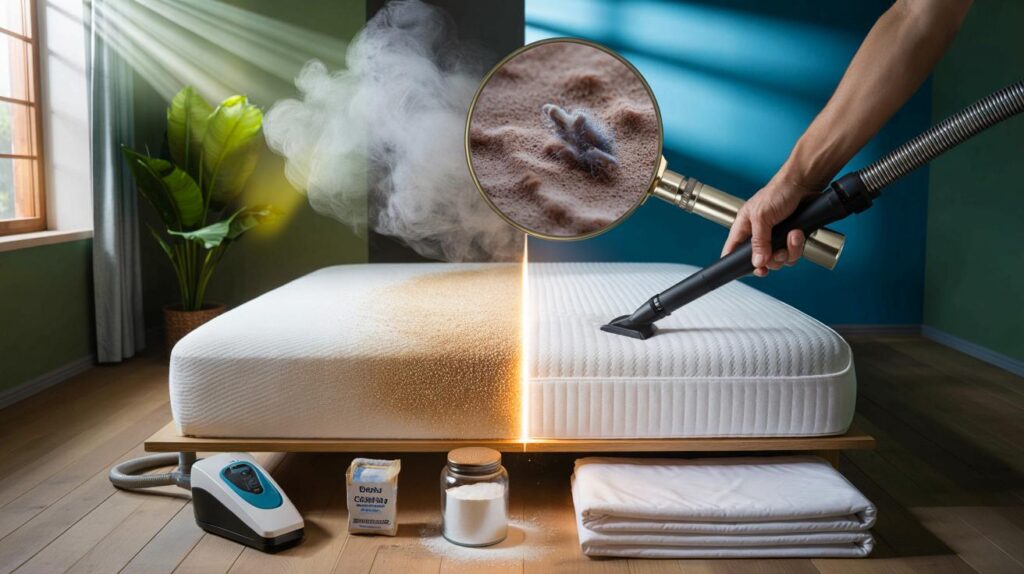
As nights draw in, a hidden problem lurks under your sheets, quietly trading comfort for sneezes, stale smells and sleeplessness.
Most households change sheets on cue yet ignore what lies beneath. The mattress traps heat, moisture and microscopic debris night after night. That mix fuels odours, stains and tickly throats. A light-touch routine, done regularly and without harsh products, restores freshness and helps you sleep better.
What’s really hiding in your mattress
Your body adds warmth and moisture to a mattress every night. Skin flakes, hair and dust settle into the fabric and seams. Dust mites thrive in that microclimate and feed on those flakes. Their droppings irritate noses and eyes. Humidity also lets musty odours bloom. The longer you wait, the deeper it all settles.
Warmth + moisture + skin flakes = a perfect habitat for mites, stale odours and lingering allergens.
Washing sheets helps, but it does not seal the mattress away from what you shed in your sleep. A bare mattress acts like a sponge. It absorbs vapour and traps fine particles that a quick tidy-up will never reach. You need a routine that removes the build-up and dries the core.
Why autumn makes matters worse
Cooler weather tempts you to close windows. Indoor humidity rises. Radiators heat rooms without drying trapped moisture in deep layers. Air becomes still, and mites spread. A few simple actions, repeated through the season, cut that risk and keep the bed feeling crisp.
The chemical-free routine that actually works
Skip perfumed sprays. You can clear odours and reduce allergens with air, suction, heat and a common mineral powder. Set a reminder. Block out 20 minutes a month for maintenance, plus two seasonal deep cleans.
Your 20‑minute monthly plan
- Strip the bed and open the window wide for 10–20 minutes to lower indoor humidity.
- Vacuum slowly with the upholstery tool. Make two passes across the surface, then along it. Focus on seams and tufts.
- Flip or rotate if the manufacturer allows. Rotation spreads wear and exposes fresh sides to air.
- Let the mattress breathe for another 10 minutes before remaking the bed.
Go slow with the vacuum. Speed misses the fine particles that trigger sniffles.
Deep clean twice a year: choose steam or bicarbonate
Pick one of the two methods below in spring and autumn. Both avoid harsh chemicals and aim to dry the mattress thoroughly.
- Steam clean on low moisture: Use short bursts. Keep the head moving. Do not soak foam or latex cores. Leave the mattress upright by an open window until fully dry.
- Bicarbonate method: Sprinkle a thin, even layer over the surface. Leave for 2–8 hours with the window open. Vacuum thoroughly. Bicarbonate absorbs moisture and neutralises lingering odours.
Never dress the bed until the mattress feels dry to the touch, edge to edge and on both sides.
Habits that make the freshness last
Small changes add up. They cut odours, reduce mite populations and protect the structure of your mattress.
- Use a washable protector. Wash it monthly at 60°C if the fabric allows.
- Aim for bedroom humidity between 40% and 60%. Crack a window for 10 minutes every morning.
- Rotate the mattress head-to-toe every one to three months unless the label says no.
- Do not bend or fold the mattress. Creases create hollows where dust settles.
- Let bedding cool before making the bed after a late shower. Trapped steam feeds mustiness.
Quick reference: what to do and when
| Task | Frequency | Time needed |
|---|---|---|
| Air the mattress | Weekly | 10–20 minutes |
| Vacuum seams and surface | Monthly | 15–20 minutes |
| Rotate mattress | Every 1–3 months | 5 minutes |
| Steam or bicarbonate deep clean | Twice a year | Half day including drying |
| Wash protector | Monthly | 1 wash cycle |
Common mistakes that keep odours lingering
Mistakes usually come from speed or excess moisture. Avoid these traps and your fabric will stay fresher for longer.
- Over-wetting with steam cleaners. Foam cores hold water and dry slowly.
- Spraying perfumes to mask smells. Fragrances stick to fibres and mix with stale odours.
- Skipping the protector. Spills, sweat and skin flakes hit the ticking directly.
- Using the bed too soon after cleaning. Moist warmth is precisely what mites want.
Water is the enemy after cleaning. Prioritise airflow, warmth and time to finish the job properly.
If someone in your home wheezes or sneezes
People with dust sensitivity feel the difference first. A tight-weave encasement can block mite allergens from escaping the mattress. Wash pillows at 60°C if the label allows, or replace synthetic pillows every two years. Choose breathable bedding and keep stuffed toys off the bed if they trap dust.
What about winter and sunlight?
Bright winter sun is rare in the UK, but dry, cold air still helps. Prop the mattress by an open window on a breezy day. Short bursts of cross-ventilation shift moisture fast. In summer, a few hours in indirect daylight add extra drying power without fading fabric.
Make it stick with a simple schedule
Set one monthly calendar alert called “mattress 20”. Use the same day you change the sheets. Open the window, vacuum, rotate, and re-dress once dry. Schedule deep cleans for the first sunny weekend of April and the first crisp weekend of October. Small, repeatable steps cut faff and cost.
For families, assign roles. One person vacuums, another manages windows and bedding, a third checks drying. Keep bicarbonate in a labelled jar with a mesh shaker. Store the upholstery tool where you store sheets to remove friction from the routine.
Extra tips for tricky stains and smells
- Fresh spills: Blot with a clean towel. Do not rub. Add a light sprinkle of bicarbonate. Vacuum once dry.
- Persistent odours: Repeat the bicarbonate step over several hours. Air longer between passes.
- Edge care: Stand the mattress on its side during airing to let the border breathe.
- Bed base: Vacuum slats and the top of the divan. Dust there migrates back into the mattress.
Air, vacuum, dry, protect. Repeat those four moves and your mattress will smell neutral, not perfumed.
Think of the mattress as part of your health kit. Better air, fewer irritants and a calm nose help you fall asleep faster. The routine costs little, takes minutes each month and lets you skip aggressive products. If you track your sleep, note whether snoring, morning stuffiness or night-time coughing ease after a few cycles.
Curious about humidity? Buy a simple hygrometer and run a two-week test. Aim for 40–60% most nights. If numbers creep higher, open the window before bed for ten minutes or shift furniture to improve airflow behind the headboard. These small tweaks cut the source of the problem rather than covering it up.



Bookmarked—trying the bicarbonate method this weekend. Fingers crossed!