
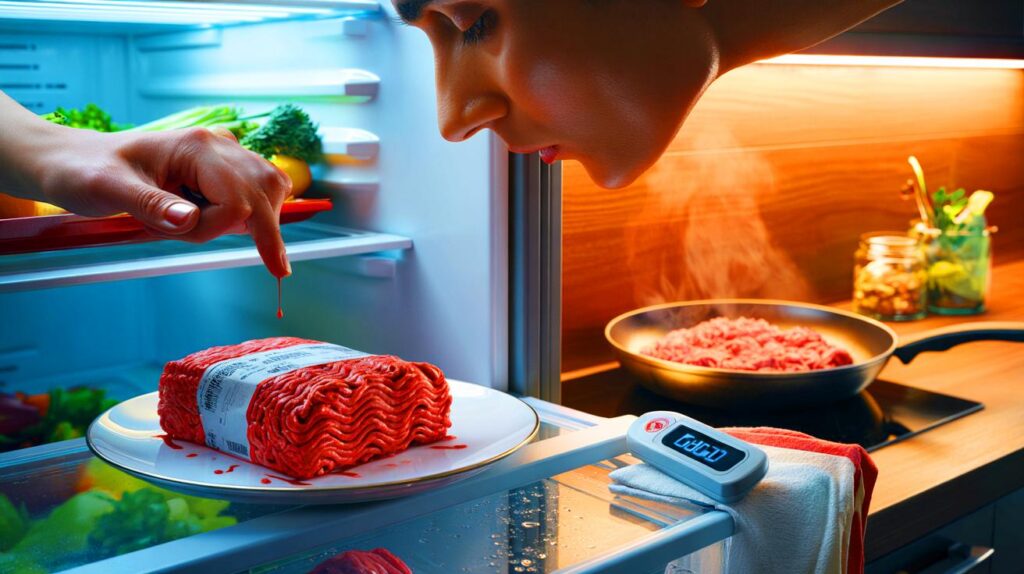
A grey tinge on tonight’s mince can unsettle any kitchen, even when the pack looks sealed and the date seems fine.
Here’s how to tell oxidation from spoilage, what to bin, what to cook, and how to store mince safely.
Why mince turns grey
Fresh mince looks cherry red when oxygen meets a meat pigment called myoglobin. That oxygen contact forms oxymyoglobin, the colour shoppers expect. Inside a tightly packed heap, oxygen can’t reach the centre, so the colour shifts towards purplish-red or grey-brown. That change often signals oxidation, not rot.
Leave mince in the fridge and oxygen continues to react with the surface. The red can dull to brown or grey over time, even when the meat stays wholesome. Air, light, temperature and time nudge the colour along that spectrum.
Colour on its own does not tell you if mince is safe. Check odour, texture and the use-by date as a set.
Food safety advisers, including the USDA and UK bodies, agree on that principle. If the meat smells sour, feels slimy, or sits beyond its use-by date, the risk rises fast. If the only change is a mild grey tone and the pack remains within date, you probably see oxidation rather than spoilage.
What the colours often mean
- Bright red surface, purple interior: normal exposure on the outside, low oxygen inside.
- Dull red to brown at the edges: typical ageing in the fridge if date and smell are fine.
- Uniform brown-grey with off odour or tacky feel: likely spoilage—bin it.
The seven checks in 60 seconds
Stand at the fridge and run this quick test before you cook:
- Use-by date: past the date? Don’t negotiate—throw it away.
- Smell: open the pack; a sour, ammonia-like or sweetly putrid whiff means risk.
- Texture: squeeze gently; slime, stickiness or stringy strands point to growth of spoilage bacteria.
- Colour in context: centre grey alone can be normal if the rest passes the checks.
- Pack condition: swollen, torn or leaking packs suggest gas buildup or contamination.
- Storage history: did the mince sit warm on the counter or in a hot car? The cold chain broke.
- Time since purchase: fresh mince keeps 1–2 days in the fridge at 0–5°C. Longer than that, cook or freeze.
When your senses disagree, trust the strictest sign. Doubt on smell or texture beats a “looks fine” colour.
Storage that keeps flavour and safety
Chill mince on the coldest shelf, usually the back of the bottom shelf. Keep it below 5°C. Slip the pack onto a plate to catch drips and prevent cross-contamination. If you’ve opened it, rewrap tightly or place it in a clean, sealed container. Aim to cook within 24–48 hours. For longer storage, freeze at −18°C as soon as you change your mind about tonight’s menu.
Freeze in thin, flat portions so the centre freezes fast. Label with the date and weight. Thaw in the fridge—never on the counter. A microwave defrost cycle works if you cook immediately afterwards. Once defrosted in the fridge, cook within 24 hours and don’t refreeze raw mince.
Keep your fridge between 0–5°C. Small degrees matter: warmer shelves speed up bacterial growth and colour changes.
Cooking temperatures that do the job
Heat knocks out most microbes when you reach a safe core temperature. Use a clean digital probe and check the thickest point of the burger or the centre of the pan of mince.
| Target internal temperature | Minimum time at temperature |
|---|---|
| 70°C | 2 minutes |
| 75°C | 30 seconds |
At home, many cooks go simpler: cook until there’s no pink left, juices run clear, and the mince steams throughout. Stir and break up clumps so heat reaches every part.
Can cooking fix iffy mince?
Cooking reduces risk when the meat was sound to begin with. Heat still can’t undo toxins already made by some bacteria. If the meat started out spoiled, the pan won’t make it safe. Off odour during cooking counts just as much as before—stop, bin it, scrub the kit, and wash your hands.
What to do right now if your pack looks grey
Open the pack and sniff. If the smell checks out, touch a small piece with clean fingers. If it feels springy, not tacky, proceed. Spread the mince on a plate and look for patches that show greenish sheen or black spots; throw it away if you see them. If everything else seems fine, cook it the same day. Go for a fast, hot recipe—tacos, keema, sloppy joes, or a quick ragu—so the meat spends less time in the danger zone.
Safety extras you’ll thank yourself for
Use-by versus best-before
“Use-by” means time limits for safety. Don’t stretch them. “Best-before” speaks to quality; dry goods can pass that date with less risk. Mince carries a use-by date, so treat it strictly.
Prevent cross-contamination
- Keep raw mince below ready-to-eat foods in the fridge.
- Assign one chopping board to raw meat and another to veg and bread.
- Wash hands, taps and handles after touching raw meat or its packaging.
- Clean probes between checks; a quick alcohol wipe works well.
Budget without gambling
If you bought a family pack to save £2, split it into meal-sized freezer bags the day you shop. That move cuts waste and reduces the “shall I risk it?” moment later in the week. Cooking straight from fresh and freezing the cooked mince is another smart route; bolognese or chilli reheat beautifully and dodge raw storage risks.
Why grey still spooks us
We judge food by sight first, and red equals fresh in most minds. Meat science tells a different story: oxygen paints the surface red, but lack of oxygen darkens it without turning it unsafe. The trick is learning what your nose and fingertips add to the picture.
Grey alone doesn’t doom your dinner. Sour smell, slimy feel or a missed use-by date do.
Handy rule of thumb
Plan to buy mince no more than two days before you cook. Keep it cold from the shop to the fridge by using a cool bag on hot days. If plans change, freeze it the same day. That routine prevents the grey dilemma from landing in your fridge in the first place.



Genuinely useful—ran the 60‑second checks and saved a pack I was about to bin. The oxidation vs spoilage explanation finally clicked, esp. the myoglobin bit. Also love the “trust the strictest sign” rule. Bookmarked for future grey-mince panics in my frigde. Thanks!
Quick question: if mince is vacuum-packed and uniformly brown on opening but smells clean, is that still just low oxygen? Or should I treat uniform brown as a red flag regardless of odour?