
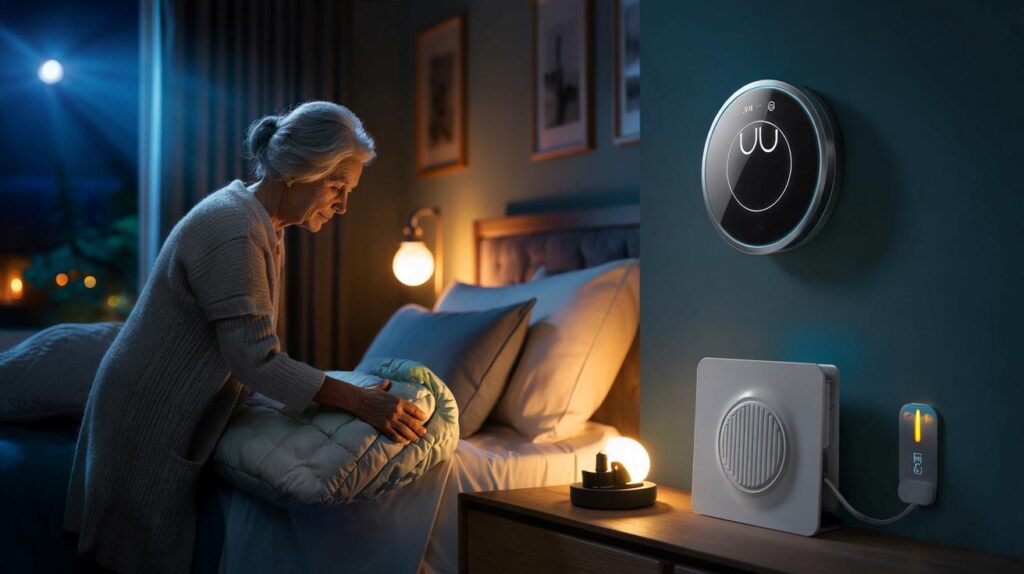
Colder nights are back, and a homely evening routine—tidied up with affordable tech—now promises calmer sleep and slimmer bills.
Across the country, people are setting their bedrooms a notch cooler and letting automation do the heavy lifting. The pitch is simple: a night-time temperature dip, scheduled once, saves energy while you rest, then gently warms the home before you wake.
Why a bedtime routine beats constant heating
Bodies rest better in a cooler room than in a toasty lounge. Heating systems also draw less energy when you trim the set point overnight. That mix—comfort plus a small, smart setback—adds up to real money.
Rule of thumb: shaving 1°C from your set point can trim heating use by roughly 7%.
Setbacks work because your boiler or electric heater runs shorter cycles to maintain a lower target. Over eight hours, that reduction compounds. Across a season, well-tuned schedules land in the 10–25% saving bracket, depending on insulation, system type and habits.
The sweet spot for sleep
Sleep labs and health bodies converge on cool bedrooms. Aim for 16–17°C where you sleep. Keep living spaces warmer when occupied, then drop them again once you turn in. That rhythm supports deeper sleep and trims waste while nobody needs a balmy 21°C at 2am.
Set the bedroom to 16–17°C overnight, then bring living areas back to 19–20°C shortly before you get up.
How to automate it tonight
You don’t need a refit to start. A smart plug or a basic timer can orchestrate the change. Thermostatic controls make it neater, but even a simple schedule delivers most of the gain.
Smart plug, timer or thermostat: pick your route
- Use a smart plug on a compatible electric heater or fan. Schedule on at 9.30pm, off at 6.30am.
- Set the bedroom target at 16–17°C. Keep hallways and living areas slightly higher in the evening.
- Add a pre‑warm for mornings: start heat 60–90 minutes before you rise so living spaces reach 19–20°C.
- No smart kit? A simple mechanical timer switches devices reliably at fixed times.
- Have thermostatic radiator valves? Switch them to eco overnight, then back to comfort before breakfast.
Set and forget: consistent automation beats nightly fiddling and avoids waste from overheated rooms.
Cut or lower overnight: which works best?
Well-insulated homes lose heat slowly, so a 2–3°C setback is usually enough. Leaky or older properties tend to benefit from lowering rather than switching off, because a full restart can gulp energy and leave you chilly at dawn.
Schedule a gentle relaunch 60–120 minutes before your alarm. That gives the fabric time to warm up, so radiators don’t run flat out when you step into the kitchen.
Target temperatures and likely savings
These figures are indicative. Your outcome varies with insulation, system efficiency and how long spaces are occupied.
| Zone | Overnight target | Daytime (occupied) | Notes |
|---|---|---|---|
| Bedroom | 16–17°C | — | Cool promotes deeper sleep and steady savings. |
| Living areas | Eco mode or −2 to −3°C | 19–20°C | Warm from eco 60–90 minutes before wake‑up. |
| Hallways/landing | Low, frost‑safe only | 17–18°C | Avoid turning these spaces into heat sinks. |
As a quick guide, each degree you lower tends to save around 7% while the system is running. A two or three‑degree night setback can therefore deliver a significant chunk of the 10–25% seasonal range reported by energy advisers.
The five‑minute evening ritual
Pair your wind‑down with your home’s. Make the routine automatic so you never think about it after lights out.
- 9.00pm: close curtains or blinds, block draughts, shut doors on unused rooms.
- 9.15pm: start your wind‑down—reading, herbal tea, gentle stretch.
- 9.30pm: scheduled heat begins a slow ramp in the bedroom; living areas ease into eco.
- 6.00am: gentle relaunch in living spaces; bedroom holds cool.
- 6.30am: bedroom heat off; living areas reach comfort by your first coffee.
Safety and practicality checkpoints
- Match ratings: most UK smart plugs are 13A/3kW. Check the heater’s label and stay within limits.
- Avoid multiway adaptors for heaters. Plug directly into a wall socket.
- Keep heaters clear of fabric and furniture. Maintain manufacturer clearances.
- Place thermostats away from radiators and direct sunlight for accurate readings.
- At night, shut curtains and internal doors. In the morning, ventilate briskly for 5–10 minutes.
A quick back‑of‑the‑envelope
Imagine your winter heating costs £150 per month. A well‑tuned night setback that cuts usage by 12% would shave about £18 off that month. Push closer to a 23% reduction with better insulation and tighter control, and the saving rises to roughly £34. Across a four‑month heating peak, that’s £72–£136 back in your pocket for a routine you set once.
When not to go too low
Very cold bedrooms can risk condensation on cold surfaces. Aim for 40–60% relative humidity if you can measure it. If windows mist inside each morning, lift the night target by 1°C and add short, sharp ventilation on waking. Trickle vents open and a door kept ajar can also help balance air without losing too much heat.
Fine‑tuning for different systems
Gas boiler with radiators
Use the boiler’s programmer for time blocks and thermostatic radiator valves for room‑by‑room control. A weather‑compensated controller adds smoother ramps and fewer peaks.
Electric panel or oil‑filled radiators
Pair with a smart plug or built‑in timer. Choose eco mode overnight, comfort by day. Keep power within the plug’s rating.
Heat pump
Favour smaller setbacks, often 1–2°C, because large swings reduce efficiency. Schedule earlier pre‑heats to let low‑flow systems catch up gently.
Extra ways to stack the gains
- Draught‑proof letterboxes, keyholes and gaps under doors. A simple seal can lift comfort fast.
- Bleed radiators that gurgle or feel cool at the top. Better circulation means less run time.
- Add a heavy curtain over the front door. It traps warmth where you need it.
- Zone your home: close doors to rooms you don’t use at night.
Summer twist: the same routine, flipped
Swap heat for airflow. A smart plug can run a quiet fan from 9.30pm to 6.30am for a cooler bedroom. Cross‑vent once the outside air dips below indoor temperature. Keep blinds shut on sunny days to block gain, then purge heat late evening when the air turns fresh.
One small change, scheduled once, can calm your nights and slim your bills—without lifting a finger after lights out.



Just tried a 2°C setback last week and woke up cosy, bill estimate trending down 10–12% already. Love the step-by-step with 9:30pm ramp and morning pre‑warm. Any tips for pairing TRVs with a dumb boiler without overshooting? 🙂
Sounds optimistic. In a leaky 1930s terrace, dropping to 16°C means the boiler hammers at 6am to catch up. Where’s the data source for the 23% claim, and does it apply to heat pumps? Might be less efficent with big swings.