
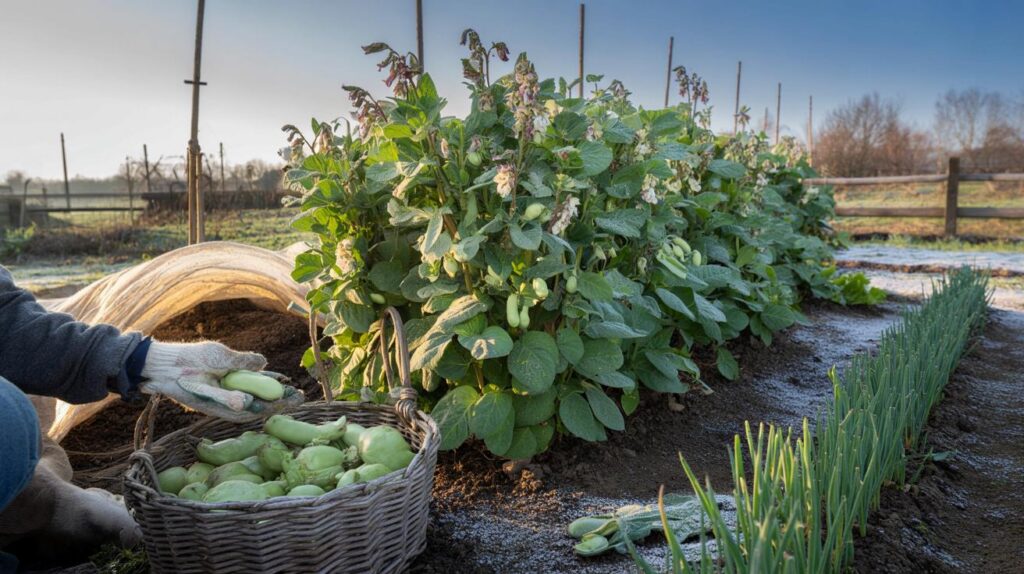
While gardens fade into russet and gold, a small autumn habit can tip the balance of spring suppers and pride.
Set your plot up now and your plates change in April. The trick costs pennies, needs minutes, and turns winter into runway time for a crop that feeds the soil and your table.
Meet the crop hiding in plain sight
A hardy legume with soil-boosting clout
The broad bean, also known as fava bean, rarely tops seed lists. It should. This cool-season legume shrugs off rough weather, fixes atmospheric nitrogen through its root nodules, and leaves the bed richer for whatever follows. Bees flock to its black-and-white flowers in late winter. Young pods taste sweet and green, while mature beans carry a buttery depth that loves lemon, mint and olive oil.
Why gardeners miss the trick
Most people sow in spring and wait. That delay costs you weeks. Autumn sowing lets roots establish while top growth idles through winter. Daylength returns, soil warms, and plants surge. In coastal or southern districts with gentle winters, this leap puts you well ahead. In frost-prone spots, you still win by using fleece or a cloche for the worst nights, or by waiting until late winter.
Sow broad beans from late October to mid-November in mild areas. Expect flowers in March and pods in April or May, often 6–8 weeks before spring sowings.
Sow smart in October
Timing, soil and spacing that work
Hit the window when soil still feels workable. Aim for late October into mid-November where winters stay moderate. On colder ground, slide the date to early November or protect with fleece. Choose a sunny, wind-sheltered bed with drainage. Heavy clay holds water and rots seed, so build a raised ridge or add sharp sand and compost.
Plant seeds 5 cm deep. Space 15–20 cm between plants. Keep rows 40–45 cm apart. Many growers run double rows 20–25 cm apart and string a low twine for support. Water in once. Then let nature handle the rest, unless the surface dries hard.
Varieties that sprint in spring
Go for autumn-hardy and early types. ‘Aquadulce Claudia’ and ‘Super Aquadulce’ stand up to cold and set pods fast. ‘Express’ lives up to its name on mild plots. Smaller seeds usually cope best with winter. Save the big exhibition types for spring.
- Rake in 2–3 cm of mature compost before sowing for steady nutrition.
- Set a low windbreak if your site is exposed; beans hate buffeting.
- Lay a light mulch after emergence to steady soil temperature and moisture.
- Mark rows clearly; winter weeds creep and need swift hoeing.
Beat the calendar to the first plate
How the winter pause gives you a head start
Autumn-sown plants spend cold months building roots. They catch early light and switch to rapid growth as soon as February brightens. Spring-sown beans must germinate, root, and leaf before they even think of flowering. That gap across March and April is your advantage.
Weather working for you
Cool, moist soil through winter reduces watering. Early flowers set well in stable, mild spells. Blackfly pressure often arrives later than your first pods, especially if you pinch tops at the right time.
| Approach | Autumn sowing | Spring sowing |
|---|---|---|
| Sowing window | Late Oct–mid Nov (mild areas) | Late Feb–April |
| First harvest | April–May | May–June |
| Water use early on | Low, rainfall-led | Moderate, needs top-ups |
| Pest pressure | Lower blackfly risk early | Higher blackfly risk |
| Frost risk | Manage with fleece/ mulches | Low after sowing |
Pinch out the soft tips at six to eight true leaves when the first pods set. This diverts energy into pod fill and reduces blackfly attraction.
Common pitfalls and easy fixes
Cold snaps, wet clays and wind
Young plants shrug off –6 to –8°C if soil drains well. A sudden freeze after mild weather can nip tops. Lay fleece on threatened nights and remove by mid-morning to let bees in later. On saturated clay, sow on a slight ridge or in modules under cover, then plant out when roots bind the compost. Use twine runs between canes to steady stems in gusts.
Pests and diseases without chemicals
Blackfly target tender tops. Pinching works. Encourage ladybirds and hoverflies with early flowers such as calendula. A strong cold water jet dislodges colonies. For stubborn patches, a mild soap solution on the backs of leaves helps. Chocolate spot, a fungal blotch, thrives in damp shade; widen spacing, avoid overhead watering, and clear spent debris fast.
Feeding and watering for pod lift-off
Broad beans hate heavy nitrogen feeds; they make their own. Compost before sowing and a light top-up in late winter is enough. Keep watering modest. Focus on even moisture during flowering and early pod fill. Dry spells at this point cause misshapen beans. Hoe between rows after rain to break caps and lock in moisture.
Under good conditions, expect 2–4 kg of pods per square metre. Pick small and often for the best flavour and steady yields.
Extra gains most neighbours overlook
Stacked harvests and space hacks
Autumn beans free the calendar for smart pairings. Slide garlic or spring onions down the row edges in November. Tuck winter spinach at the ends. In March, underplant with quick lettuces that enjoy the dapple. When beans finish, chop the stems at soil level and leave roots to rot in place. Drop in courgettes, French beans, or salads straight after; the bed already holds usable nitrogen.
Kitchen, nutrition and safety
Young pods eat whole, sliced and tossed in a pan with oil and lemon zest. Mature beans need a brief blanch and a slip of the outer skin for a velvet finish. They bring fibre, folate, and plant protein. People with G6PD deficiency can react to fava beans; avoid eating them if you have this condition. Freeze surplus by blanching for two minutes, chilling fast, and packing flat.
What to do this week
A 10-minute plan for a flying start
- Pick a sunny, wind-sheltered bed that drains well.
- Fork in a bucket of compost per square metre.
- Snap a soil clod in your hand; if it crumbles, you can sow.
- Lay two rows 25 cm apart; drop seeds every 18 cm at 5 cm deep.
- Water once, label the row, and keep fleece handy for cold snaps.
Sow now in mild regions and circle a date in your calendar: 180 days to first pods, 210 to peak, weather allowing.
Numbers to guide your choices
Dates, yields and a quick timeline
Example, south-west coast: sow 5 November; first flowers mid-March; first pickings mid-April; main crop early May; clear bed by early June. East-facing urban plot: sow 20 November with fleece; first pickings late April; main crop mid-May. Watering across winter: near zero. Watering in April–May: one deep soak per week in dry spells.
Seed rate sits around 40–50 seeds per 10 m of row. Expect 6–10 meals for four from that run if you pick young. Stagger two sowings two weeks apart for continuity. If your site frosts hard, start in 7 cm modules under a cold frame in November and set out rooted plugs in late February.



Whoa, sowing in November and picking in April sounds wild. I’ve only ever spring-sown broad beans. Love the tip about pinching tops to dodge blackfly—never tried that. Would ‘Super Aquadulce’ handle a windy, coastal plot if I add a low windbreak?
I’m in heavy clay that stays wet till Christmas. Honest question: aren’t seeds just going to rot? Raised ridge + sharp sand sounds nice on paper, but is it really enough, or should I start in modules under a cold frame?