
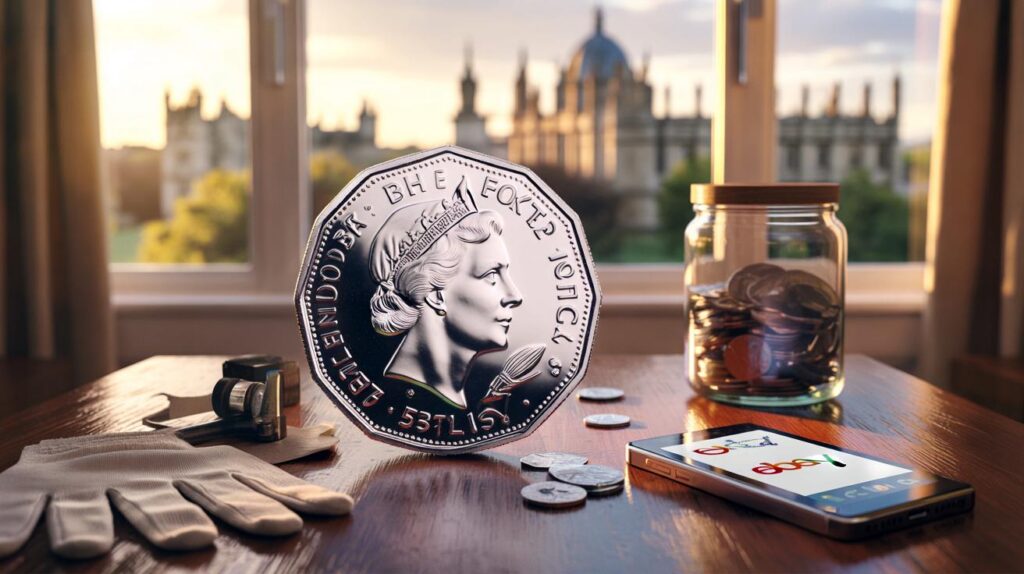
Collectors are circling as a humble piece of pocket change suddenly grabs headlines, sparking questions about value, rarity and hype.
A 1997 50p featuring Queen Elizabeth II and Britannia has appeared on eBay with an eye-watering price tag, igniting hopes that forgotten jars of change might hide a windfall. The listing, based in Oxford and marked collection only, sets a headline figure of £15,086.68, with similar coins elsewhere pitched as high as £50,000.
What’s actually on offer
The coin in question is a 1997 United Kingdom 50p. Queen Elizabeth II appears on the obverse, while the reverse shows Britannia with shield and trident, a design used on 50p pieces for decades. The seller describes the coin as uncertified and open to offers, while requiring in-person collection in Oxford.
The eBay listing asks more than 30,000 times the coin’s face value, with collection only and no posted delivery.
| Detail | What the listing says |
|---|---|
| Denomination | 50 pence |
| Year | 1997 |
| Obverse | Queen Elizabeth II |
| Reverse | Britannia |
| Price | £15,086.68 (or best offer) |
| Certification | Uncertified |
| Delivery | Collection only |
| Location | Oxford |
| Comparable asks | Listings seen up to roughly £50,000 |
Is a 1997 Britannia 50p rare
Most 1997 Britannia 50p coins in circulated condition do not count as scarce. The year marked the first of the reduced-size 50p after the Royal Mint shrank the coin, and millions entered circulation. That volume means a typical example with everyday wear normally attracts only modest collector interest.
Value can rise if a coin sits in exceptional condition, appears as a proof or brilliant uncirculated strike from a set, or shows a genuine mint error. Those cases represent a small fraction of all pieces. The listing here does not mention proof status, an error, or independent grading.
Asking prices on marketplaces often reflect ambition and attention rather than true market value. Focus on sold results, grade and rarity.
What really drives a 50p’s price
Condition and grade
Sharp detail, minimal marks and strong lustre make a difference. Grading by an independent service can give buyers confidence and often narrows the gap between asking and selling prices.
Proofs and sets
Proof coins, struck with polished dies and mirror fields, command more than ordinary circulation pieces. Packaging, certificates and untouched surfaces push values higher.
Errors and varieties
Authentic mint errors—off-centre strikes, die rotations, missing elements or wrong-planchet strikes—can produce sizeable premiums. Minor contact marks from circulation are not errors.
Demand and storytelling
Media buzz, nostalgia for Queen Elizabeth II, and the recognisable Britannia design can stimulate bidding. Yet demand must meet supply, and the 1997 run remains plentiful.
- Check if your coin has proof-like fields and frosted devices.
- Inspect for rotated dies by flipping the coin top-to-bottom to see if the reverse alignment is off.
- Look for crisp rims and no bag marks; heavy wear drags price down.
- Keep original Royal Mint packaging if your coin came from a set.
- Compare with recent sold listings rather than active asks.
How to tell if your 50p might fetch serious money
Start with evidence. Photograph both sides in good light, note any unusual features, and compare details with reputable catalogues. Then:
- Search recent sold results for the same date and type, matching condition as closely as possible.
- If you suspect an error or special finish, seek a professional opinion or third‑party grading.
- Avoid polishing or cleaning; it harms surfaces and cuts value.
- Decide on a sales route: auction house for rare pieces, online marketplace for routine coins, or numismatic dealer for quick sales.
- Price realistically and allow room for negotiation.
An authentic, high‑grade proof or error can justify hundreds or more. A circulated 1997 Britannia without a hook rarely does.
Why sky‑high eBay asks appear
Headline prices attract clicks and messages. A dramatic figure sets an anchor, nudging watchers to assume rarity. Some sellers cast a wide net, hoping one buyer bites. Others mirror inflated listings they have seen. That cycle feeds itself until buyers return to the numbers that matter: verified sales in comparable grade.
The Oxford factor
Collection only adds friction. Buyers need to travel, inspect and carry cash or agree secure payment. That narrows the pool. For anyone considering a purchase, meet in a public, well-lit place, bring a loupe, and confirm the coin matches photos and description before handing over funds.
What the 1997 50p represents
The 1997 redesign shrank the 50p’s size to make it lighter and more convenient. Britannia held the reverse until she ceded the spot to the Royal Shield design a decade later. Many households still have 1997 pieces in change. Their historic interest lies in the transition year rather than proven scarcity.
If you want to sell or keep
Consider a simple test. If an uncertified coin lists for five figures but similar pieces in sold results change hands for modest sums, the gap points to optimism, not hidden rarity. If your coin seems exceptional, request written opinions and keep any documentation with the piece. Patience helps; the right venue and timing can make a fair difference.
There is also the collector’s route. Building a date run of Britannia 50p coins from 1969 to the design change offers a satisfying project at reasonable cost. Add proof examples when your budget allows. Track grades, avoid cleaning, and store each coin in inert holders away from humidity. Over time you will assemble a set that tells a clear story of British coinage, with or without a single five‑figure star.



£15k for a common 1997 Britannia? Unles it’s a proof or crazy error, that’s wishful thinking.
Brb, raiding my coin jar to pay off my mortgage 🙂