
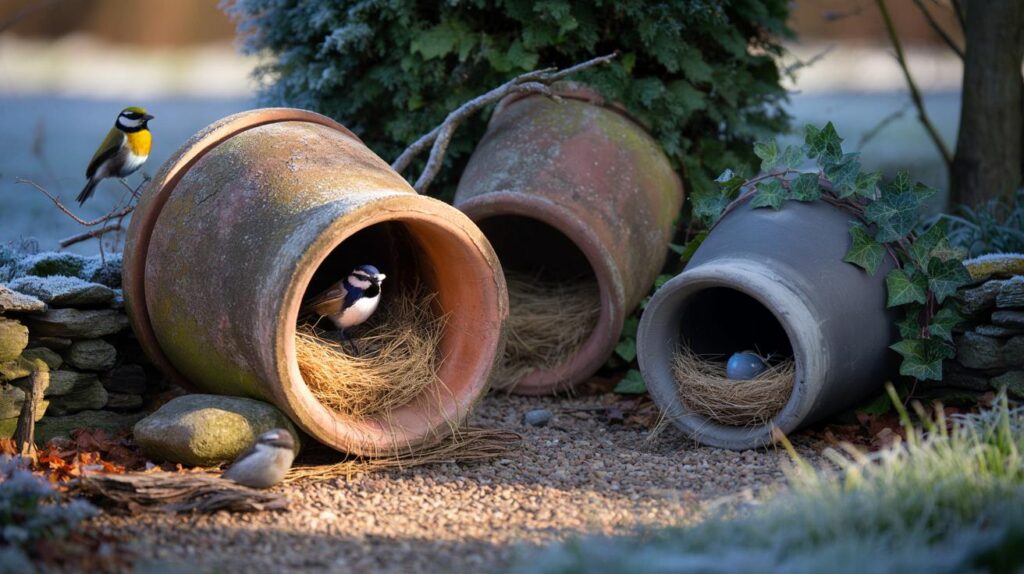
Cold mornings creep in, gardens quieten, and households eye their budgets. A humble object at home could change that picture.
Across Britain, a thrifty trend is gaining ground as gardeners repurpose cracked terracotta and plastic pots into snug roosts for small birds. What began as a crafty fix now looks like a seasonal lifeline, blending style, care for wildlife and near‑zero cost. The method is fast, the kit is basic, and the results can be seen from the kitchen window.
Why this thrifty hack is catching on
Waste cut, wildlife boosted
Old containers often end up stacked behind sheds. Turning them into shelters cuts clutter and supports urban biodiversity when insects thin out. Gardens link up as tiny corridors for wildlife, and that patchwork matters when the temperature slides.
Terracotta breathes, regulates humidity and weathers attractively. Plastic is easier to cut and fine for a first attempt. Both styles work as roosts, which birds use to rest and keep warm outside the nesting season.
One broken pot kept out of the skip can become a dry, wind‑shielded cavity that holds warmth through the night.
The budget maths
Most households already have a spare pot, so the outlay often stays under £3 for sand or straw. Build time averages seven to twelve minutes per unit, once you have the hang of it. Families can assemble three shelters in half an hour, which boosts the chance of visits.
How the pot‑to‑shelter build works
What you need
- Old pots in terracotta or plastic, from 10 to 25 cm diameter
- A small hacksaw or a hammer and a firm surface
- Fine sand or pea gravel for drainage and stability
- Dry straw, hay or clean moss for lining
- Work gloves and eye protection
- Non‑toxic pigment or a sprig of ivy for discreet decoration (optional)
Step by step in minutes
- Turn the pot upside down so the base becomes the roof.
- Use the existing hole as the doorway. Enlarge it to 30–35 mm for tits and sparrows.
- Score one small side notch if needed to improve access, then smooth the edges.
- Bed the pot on a shallow pad of sand so rain drains away.
- Add a loose handful of dry lining material. Keep it sparse to avoid damp.
- Tilt the entrance slightly downwards to shed water.
- Wedge the pot against a stone or branch so it cannot roll in wind.
Keep entrances between 25 and 35 mm to balance access for small birds and safety from larger predators.
Safety and hygiene
- Wear gloves and eye protection during cutting to reduce risk from shards.
- Avoid sharp edges. Rub with sandpaper or a stone until smooth.
- Do not disturb active nests in spring. Treat these builds as winter roosts.
- Rinse reused pots with hot water and dry fully before lining.
- Anchor securely to deter cats, and place away from regular pet routes.
Where to place them for real results
Microclimate drives success. Cold air pools in dips. Wind strips heat from exposed corners. Sun helps in the morning but can overheat a south‑facing cavity on rare bright days. Aim for a balance: light warmth at dawn, shade by noon, and cover from the prevailing wind.
| Spot | Orientation | Height | Notes |
|---|---|---|---|
| Hedge base | East or south‑east | Ground level, slightly raised on gravel | Good wind cover, easy access, natural camouflage |
| Shrub border | East | 5–30 cm above soil on a brick | Safe from pooling water, blend with mulch and stems |
| Wall foot | North‑east | Ground level, firm wedge | Stable microclimate, avoid dripping gutters |
| Small balcony | East | Planter height, cable‑tied | Use plastic pots, keep entrances away from rail gaps |
Design cues that help
- Group shelters in threes, at least 2 metres apart, to cut competition.
- Thread ivy or grasses around edges to soften outlines.
- Mix pot sizes to create varied cavities for different species.
- Avoid bright paint. Neutral pigments weather better and draw less attention.
What you might see this season
Likely visitors in British gardens
Blue tits, great tits and coal tits often test new roosts during cold snaps. Robins and wrens favour dense cover and will use low, sheltered cavities. Dunnocks, house sparrows and finches benefit from the extra structure nearby, using it as a safe pause point.
In upland and coastal areas, you might glimpse a black redstart or a wagtail exploring edges. Variation by postcode is normal. The more cover and water you provide, the richer the activity becomes.
Signs the shelter is working
- Fine feathers and droppings near the doorway after a frosty night.
- Short bursts of inspection at dusk and dawn.
- Quiet chattering as birds settle in groups on colder evenings.
Numbers you can track at home
- Three shelters per 50 m² of garden give a noticeable uplift in activity.
- Entrance diameters of 25–35 mm filter larger intruders.
- Seven to twelve minutes per build helps families scale quickly.
- Under £3 per shelter if you already own a pot and tools.
From single pots to a mini wildlife plan
Pair with planting that feeds and hides
Autumn perennials such as asters, sedums and salvias provide late nectar that supports insects. Grasses add cover that breaks wind and masks movement, which calms nervous birds. By spring, seed heads from rudbeckias and teasels turn into natural feeders.
Make it a street‑level project
Neighbours can pool offcuts of gravel, straw and paint pigment to set up a dozen shelters along a terrace. Kids can help smooth edges and arrange stones. A shared tally on a noticeboard keeps attention on results and builds routine care.
Risks and how to reduce them
- Predators: keep entrances small and hide lines of approach with twiggy cover.
- Damp: raise pots on gravel and tilt the entrance to drain water.
- Heat spikes: avoid full south in bright spells and give partial shade.
- Disturbance: place away from doors, bins and night‑time lights.
Beyond birds: extra gains you may not expect
Low cavities shelter beneficial insects such as ladybirds and lacewings, which police aphids in spring. Amphibians rest in the cool rim space under larger pots, cutting slugs without pellets. The whole set‑up reduces the urge to buy decor, which saves money and cuts waste.
If you want to go further, add a shallow water dish five paces from the nearest shelter and refresh it daily. A single washing‑up bowl sunk flush with the soil draws a steady stream of visitors. It pairs neatly with the quiet protection your upcycled pots already provide.



Brilliant walkthrough. I love the note about enlarging the drainage hole to 30–35 mm and tilting the entrance—those tiny details matter on freezing dawns. I tried terracota last year and it really does breathe better; no musty smell after weeks. For placements, east-facing under a shrub worked best here in Leeds, while south got too hot on rare bright days. Also second the gravel bed—stopped damp completely. Costs were under £3 using leftover straw. Going to group three shelters 2 m apart this weekend.