
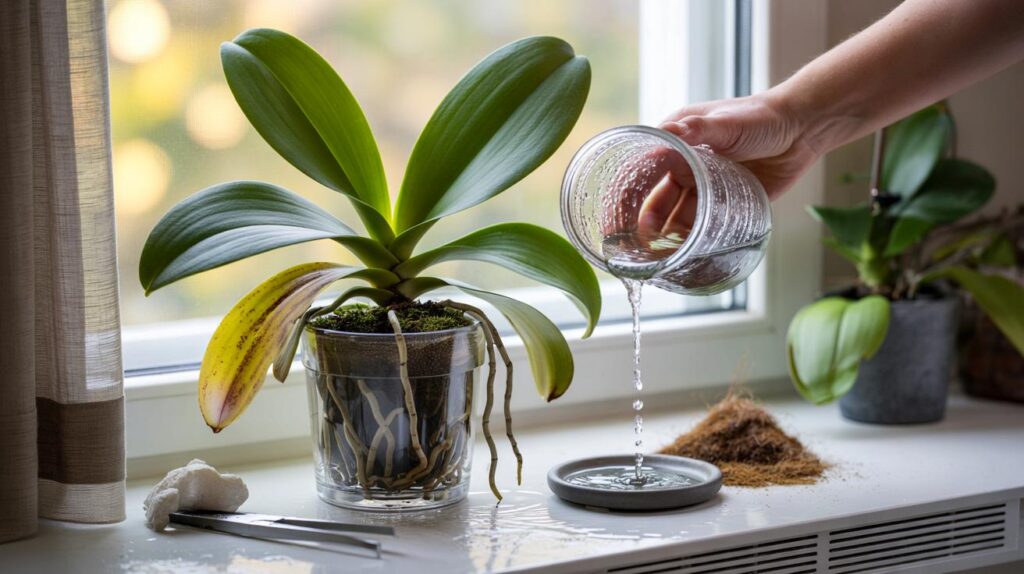
Across Britain, living rooms hide tired orchids as autumn sets in, and many owners misread the first quiet distress signals.
Yellowing leaves rarely arrive alone. They follow weeks of stress, often from roots sitting wet or leaves scorched by strong sun. The fix starts under the bark, not on the windowsill.
The mistake too many people make
Most people water on a fixed day. The plant does not keep the same schedule. Roots breathe, and soggy mix suffocates them. That mismatch causes rot, and the leaves turn lemon at the base, then blotchy, then limp. The usual trigger sits inside a decorative cachepot that holds a puddle after watering.
Yellow leaves often begin with drowned roots. Drain first. Then the colour returns.
Orchids in bark need thorough watering and full drainage. A quick splash leaves dry cores. A long soak without draining leaves a swamp. The sweet spot is simple: soak, then let the water go.
How to rescue a waterlogged orchid in 15 minutes
- Lift the plant from its pot. Check roots. Firm green or silvery roots live. Brown, mushy roots die.
- Trim dead roots with sterile scissors. Wipe blades with alcohol between cuts.
- Rinse healthy roots in tepid water, 20–25°C. Shake off excess.
- Repot in fresh, airy orchid bark. Use a clear pot with holes so light and air reach roots.
- Soak the new pot for 10 minutes. Drain for 15 minutes. Empty every drop from the outer cover.
- Hold fertiliser for two weeks. Let the plant regrow root tips first.
The telltale signs before leaves turn
A pale, matte sheen on the oldest leaves signals stress. Yellow begins near the crown when light scorches or feed builds up. Yellow begins at the tip when roots struggle. Wrinkled leaves suggest thirst. Soft leaves suggest rot. Each clue points to a different fix.
| Symptom | Likely cause | What to do |
|---|---|---|
| Lower leaves yellow one by one | Natural ageing or mild under-lighting | Increase bright, indirect light; remove only when crisp |
| Yellow with black soft spots | Fungal or bacterial issue | Cut leaf at base with sterile tool; improve airflow; isolate plant |
| Limp yellow leaves and a sour smell | Root rot from trapped water | Unpot, trim, repot into fresh bark; change watering routine |
| Yellow edges with brown crisping | Direct sun scorch or fertiliser burn | Move to filtered light; flush pot; reduce feed strength |
| Hard white deposits on bark or pot | Limescale and salt build-up | Flush monthly; use rainwater or filtered water |
Light and temperature: the quiet culprits
Orchids thrive in bright, indirect light. A sheer-curtained east or south-east window works. Midday sun scorches tissue in hours. Dappled light drives steady growth. Aim for daytime 18–24°C and nights 15–18°C. Drafts and radiators swing humidity and temperature. Swings stress leaves, and they show it fast.
Bright shade plus steady temperatures beats any new feed. Stability grows roots. Roots grow leaves.
Placement checklist for busy homes
- Keep 50–100 cm back from a sunny pane, behind a light curtain.
- Never park directly above a radiator or next to a heat vent.
- Use a humidity tray with pebbles and water below the pot base.
- Run a small fan on low for gentle airflow, not a draft.
- Bathrooms suit many orchids if light is strong and air moves.
Water, feed and the bark beneath
Water when the bark feels dry and the roots look silvery. For many homes, that means every 7 days in summer and 10–14 days in winter. Weight helps: lift the pot and learn the dry weight. Use rainwater or low-mineral water in hard-water regions. Minerals stain roots and slow uptake.
Fertilise lightly. Use a balanced orchid feed at quarter strength every second watering from March to September. Skip feed during dark midwinter weeks. Flush the pot with plain water once a month to clear salts. Avoid slow‑release pellets in bark; they clog air gaps and burn roots.
When yellow leaves are normal
Older basal leaves age out. One or two yellow leaves per year on a healthy phalaenopsis does not signal crisis. They feed the plant as they fade. Let them dry. Remove them when they crisp and detach with a gentle tug.
When to cut yellow or black leaves
Cut any leaf with black, spreading patches. Those marks often point to infection. Use a sterile blade and remove the whole leaf at the base. Dust the cut with ground cinnamon if you keep it dry for a day. Quarantine the plant for two weeks, and increase airflow to prevent a repeat.
Species matters
Phalaenopsis keeps leaves year-round and dislikes cold. Dendrobium nobile may yellow and drop older canes before fresh growth in spring. Oncidium likes brighter light and finer bark that dries faster. Match the mix to the plant: larger bark for thick roots, finer bark and a little sphagnum for thinner roots.
What not to do
- Do not use ice cubes. Cold shocks roots and stalls growth.
- Do not leave water in a cachepot for “humidity”. It drowns roots.
- Do not mist late in the day. Wet leaves and cool nights invite spots.
- Do not repot into standard houseplant compost. Orchids need air.
- Do not cut healthy green roots. They power recovery.
A simple weekly routine that prevents yellowing
Check moisture with a finger and by pot weight. Water fully, then drain fully. Empty the outer cover every time. Rotate the pot a quarter turn for even light. Wipe leaves with a damp cloth to clear dust and keep stomata open. Note dates of blooms, leaf drops and repots. Patterns guide care more than guesswork.
Costs, risks and small upgrades that pay off
A bag of orchid bark costs less than a replacement plant. Repot every 18–24 months before the mix turns to mush. A clear pot reveals root health at a glance and stops surprises. A £10 clip-on fan slashes fungal risk. A £5 digital thermometer tracks spikes that scorch leaves. These minor spends help avoid the £25 loss when a supermarket orchid fails after a month.
Hard-water homes face faster salt build-up and yellow edges. Switch to rainwater, or mix tap with distilled to reduce minerals. If fungus gnats appear, let the top layer dry, add a thin fresh bark cap, and use sticky traps. If mosaic patterns or distorted growth persist, isolate the plant and consider disposal to protect the rest of your collection.
Aim for 40–60% humidity, bright filtered light, and watering by need, not by calendar. Consistency wins.
Quick reference: a five-minute health check
- Roots: green/silver and firm mean good oxygen; brown and soft mean rot.
- Leaves: even green with a slight gloss signals balance; dull yellow rings alarm.
- Pot: fresh bark smells woody; sour smell signals breakdown.
- Light: a soft shadow at midday matches bright, indirect light.
- Drainage: no standing water in saucers or covers after 15 minutes.



This finally explains the lemon leaf fade at the base—my cachepot was hiding a puddle. Drained it and the smell disapeared. Cheers!
Isn’t one yellow leaf just ageing? The £25 angle feels a tad alarmist, ngl.