
That golden roll in your fridge could be dinner or danger; the tiny wording on the label tips the balance.
With budgets tight and food waste rising, many of you ask the same thing: can you still bake puff pastry that’s edged past its date? The answer depends on the exact wording, the storage history, and a quick sensory check that takes under a minute.
Use-by versus best-before: why the wording changes everything
Start with the label. A use-by date signals a safety limit for chilled foods. After that day, don’t eat it. A best-before date signals quality. Past that day, flavour and texture may fade, but the product can still be safe if it passes objective checks.
Never eat puff pastry past a use-by date. A best-before date allows a short margin if the pastry looks, smells and feels right.
Many bakers work with a narrow grace period for best-before puff pastry. If it has been kept consistently cold, unopened, and shows no spoilage, a window of up to four days can be acceptable. That is not a guarantee. It is a cautious upper limit that relies on correct storage and a clean bill of health from your senses.
Did you freeze the pastry before its date? Freezing pauses the clock. Once thawed in the fridge, you can use it, even if the printed date has passed, provided the pastry still looks normal and smells fresh. Thaw slowly in the refrigerator, never on the counter.
The 60-second safety check: look, smell, touch
Before opening: read the pack
- Swollen or tight packaging hints at gas from fermentation or spoilage. Do not risk it.
- Damaged seals reduce shelf life. Treat as more perishable and inspect closely.
- Visible moisture pooling inside the wrap suggests temperature abuse. Proceed with caution.
After unrolling: trust your senses
- Odour: a sour note or the tell-tale smell of rancid butter means bin it.
- Colour: grey patches, unusual dark specks or mottling point to oxidation or mould. Bin it.
- Texture: sticky film, slimy feel or tearing layers suggest breakdown. Bin it.
- All clear: pale cream colour, clean buttery aroma, pliable layers and no weeping. You can bake.
If anything smells off, looks odd or feels slimy, do not “bake and hope”. Throw it away.
Safe storage that buys you time
In the fridge
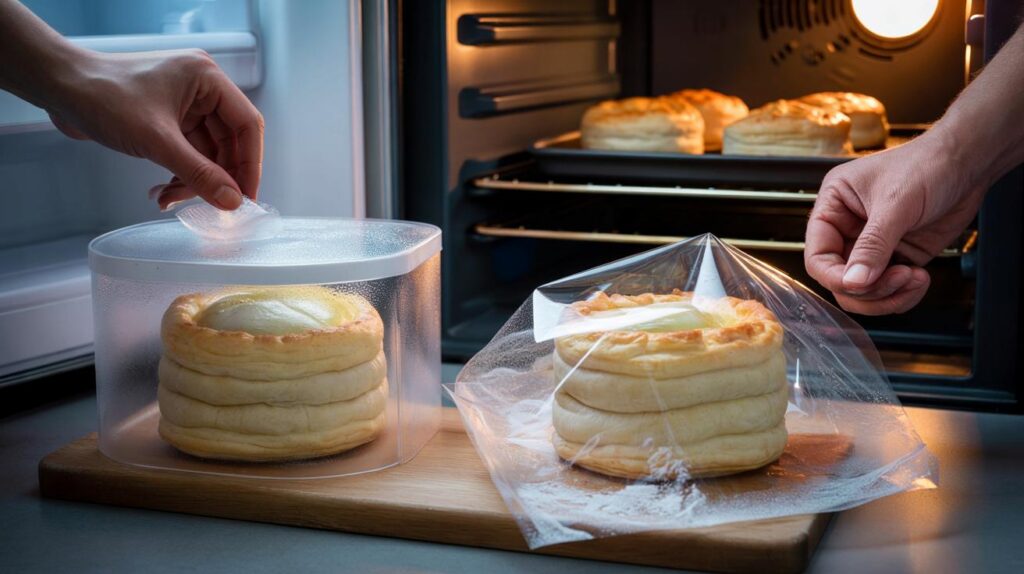
Keep pastry in the coldest part of the fridge, ideally at 0–5°C. Wrap it tightly, pressing film against the surface, then place it in an airtight box to limit oxygen and odours from other foods.
- Opened supermarket puff pastry: use within 2 days under refrigeration.
- Homemade uncooked puff pastry: 2–4 days when well wrapped and chilled.
- Cooked puff pastry: up to 7 days in the fridge in a sealed container, provided fillings are low in moisture.
- Cooked pastries at room temperature: about 3 days if dry-filled and covered; moist fillings shorten that window.
In the freezer
Freezing is your friend for planning. Label packs with the date, press out excess air, and freeze flat for fast, even thawing.
- Industrial puff pastry: stores well for 10–12 months at −18°C.
- Homemade puff pastry: best within 2–3 months for peak quality.
- Thaw overnight in the fridge. Do not thaw at room temperature.
- Do not refreeze raw dough that has been thawed. You can refreeze once it has been baked.
| Product | Fridge (0–5°C) | Freezer (−18°C) | Notes |
|---|---|---|---|
| Unopened, in date | Until printed date | 10–12 months (shop-bought) | Keep in coldest shelf |
| Opened, shop-bought | 2 days | Freeze same day | Wrap at contact + airtight box |
| Homemade, raw | 2–4 days | 2–3 months | Label butter/margarine used |
| Cooked pastry | Up to 7 days | 1–2 months | Quality drops faster with moist fillings |
| Best-before exceeded | Up to 4 days if pristine | Frozen before date | Use only if smell/colour/texture are normal |
Who should be extra cautious
Pregnant people, older adults and those with weakened immunity should avoid any out-of-date chilled pastry. Listeria can grow at fridge temperatures and does not always announce itself with dramatic smells. If you fall into a higher-risk group, treat best-before dates more strictly and skip the grace period.
Bake it right if you go ahead
- Preheat fully. A hot oven helps drive off moisture and crisp the layers.
- Work fast with cold dough to preserve lamination and reduce bacterial growth time.
- Bake until deep golden and fully puffed. For filled items, aim for a 75°C core temperature.
- Cool leftovers quickly, refrigerate within 2 hours, and eat within 2 days.
- Reheat cooked pastries to piping hot; do not rewarm limp pies twice.
Quick decision tool for your kitchen
A best-before date is not a free pass. Keep any “extra time” short, and only when everything looks and smells right.
Money, waste and smarter planning
Throwing away a £3–£5 roll hurts, yet a bout of food poisoning costs more in lost time, care and misery. Plan pastry-based meals within the date window. If plans change, freeze the roll the day you buy it. For small households, portion the pastry before freezing so you can defrost only what you need for a tart, pasties or cheese straws.
Butter-based pastry turns rancid faster than vegetable-fat versions if mishandled. Rancidity won’t always make you ill, but the flavour becomes waxy and bitter. Learn the scent of fresh butter so you notice the shift. Moist fillings, like stewed apples or creamy mushrooms, sog the base and shorten the safe fridge life once baked. Keep wet fillings separate until the last minute, or blind bake to build a drier barrier.
Extra tips you can use tonight
- If your best-before pastry passes checks but feels a touch dry, laminate a thin brush of cold water between layers to help it relax.
- Turn scraps into parmesan twists or seed crackers and freeze them ready-to-bake for up to 2 months.
- Note storage temperatures on a fridge magnet: 0–5°C for chilling, −18°C for freezing. Small habits prevent big errors.
For bakers who like rules of thumb, think 2-2-4-12: two days for opened pastry in the fridge, two to four days for homemade when chilled, up to four days past best-before if immaculate, and up to twelve months in the freezer for unopened supermarket rolls. Keep it cold, keep it sealed, and let your senses make the final call.



This just saved me £12, cheers.