
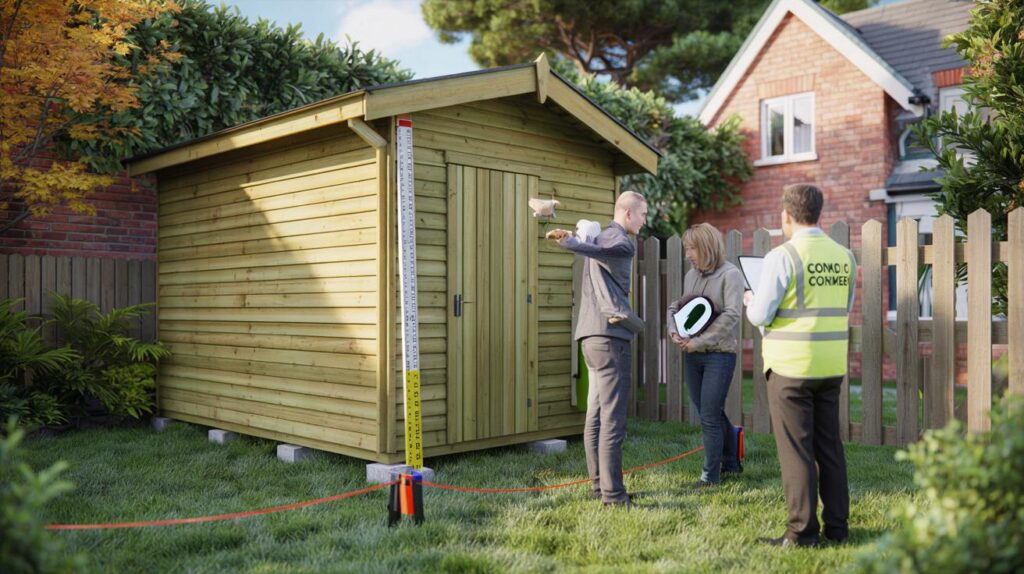
As gardens wind down after summer, thousands eye fresh storage, studios and home offices, with tape measures quietly deciding fortunes.
Across the UK, new sheds and prefabricated garden rooms look like fuss-free upgrades. Yet a few centimetres, a boundary line or a heritage label can flip a project from lawful to liable.
Why a shed could trigger a fine
Most ready-made garden rooms in England fall under permitted development, meaning no formal planning application is needed when they respect strict limits. Industry guidance often says nine in ten projects comply. The catch lies in the exceptions, and in the details of height, location and use.
Proceed without the right permission, then ignore an enforcement notice, and it becomes a criminal offence. A magistrates’ court can impose fines up to £20,000. A Crown Court can go higher with no upper limit.
Local authorities are reminding residents that outbuildings placed forward of a home’s principal elevation, within the grounds of a listed property, or on designated land such as conservation areas and national parks will usually need planning permission. Breaches can lead to orders to remove or modify the building, and legal costs can eclipse the cabin’s price.
The golden measurements you must respect
Under permitted development rights in England, outbuildings for incidental use to the dwelling must respect height and siting rules. In plain terms:
| Distance from boundary | Maximum eaves height | Maximum overall height | Roof type |
| More than 2 metres | 2.5 metres | 4.0 metres | Dual-pitched (apex) |
| More than 2 metres | 2.5 metres | 3.0 metres | Any other (pent/flat) |
| Within 2 metres | 2.5 metres | 2.5 metres | Any roof |
- One storey only; no raised platforms, verandas or balconies.
- The total area of outbuildings and other additions must not cover more than 50% of the curtilage around the original house.
- Nothing allowed forward of the principal elevation that faces a road.
- Use must be incidental to the dwelling (for example, storage, hobby room or home office) rather than a self-contained home.
If your shed sits within 2 metres of the boundary, the entire structure must not exceed 2.5 metres in height. A seemingly modest pent roof can break the rule by a few centimetres.
Where planning permission is needed by default
Some sites strip away permitted development rights entirely or make them much narrower. Expect to apply for permission if the outbuilding is:
- In front of the principal elevation of your property.
- Within the curtilage of a listed building.
- On designated land such as conservation areas, national parks, Areas of Outstanding Natural Beauty or the Broads.
Rules differ across the UK. Scotland, Wales and Northern Ireland have their own versions of permitted development. Check the specific guidance for your nation before ordering a kit.
September spotlight: why warnings are landing now
Late summer into early autumn is peak season for garden builds. Delivery slots open up, prices soften, and the weather still cooperates. Councils also see a spike in neighbour complaints after summer parties reveal new structures over a fence line. That combination brings more inspections and more enforcement.
Prefabricated suppliers promote “no planning needed” messaging, which is often true but not universal. Problems arise when homeowners move the unit closer to a boundary than advertised, raise it on a base that lifts eaves above 2.5 metres, or add a deck that counts as a raised platform.
Real-world example: will your plan pass?
Scenario 1: You want a 3.2m-high apex cabin 3 metres from any boundary. With eaves at or below 2.5 metres and overall height 4 metres or lower, it usually fits permitted development.
Scenario 2: You prefer a 2.6m-high pent roof 1.5 metres from the fence. That fails, because anything within 2 metres of the boundary must be 2.5 metres or lower overall. Lower the structure, move it further from the boundary, or apply for permission.
Scenario 3: Your “original” garden measures 160m² around the house. A previous single-storey rear extension built after 1948 occupies 20m² and counts towards the 50% cap. That leaves a combined 60m² for all outbuildings. A 6m × 4m cabin (24m²) leaves 36m² for any future sheds or greenhouses.
Planning enforcement and how costs can escalate
When a complaint lands, councils can investigate and issue a planning contravention notice requesting information. If a breach is confirmed, an enforcement notice follows, setting out what must change and by when. A stop notice can demand immediate cessation of works in serious cases.
Ignoring the notice brings prosecution. In a magistrates’ court, the maximum fine is £20,000. In a Crown Court, fines can be unlimited. Add demolition costs, site restoration and professional fees, and a £4,000 garden room can become a five-figure mistake.
Building regulations, fire and safety
Planning permission and building regulations are different tests. Many small outbuildings are exempt from building regulations, but not all:
- Under 15m² internal floor area and no sleeping accommodation: generally exempt.
- Between 15m² and 30m²: often exempt if built of non-combustible materials or sited at least 1 metre from any boundary, and not used for sleeping.
- Over 30m² or intended for sleeping: building regulations typically apply; expect structural, insulation, fire and electrical standards.
Electrical work in a garden room should be carried out by a competent person. Fire separation matters near boundaries, especially with timber cabins. If you plan water or foul drainage, factor in consents and correct connection points.
Five fast checks before you order a cabin
- Measure from the highest ground level next to the building; eaves must not exceed 2.5 metres.
- Map boundary distances. Within 2 metres of a boundary caps overall height at 2.5 metres.
- Confirm whether your home is listed or sits on designated land. If yes, assume you need permission.
- Define the use. Incidental uses are fine; self-contained accommodation generally needs full planning and building control.
- Speak to neighbours early. A friendly chat can prevent complaints later.
How to document compliance
Keep a simple pack: a site plan showing distances to boundaries and the house, elevation drawings with eaves and ridge heights, photos of the existing site, and the product specification. For peace of mind, you can apply for a lawful development certificate before building; it is not mandatory, but it gives formal confirmation that the project meets permitted development rules.
Extra pitfalls that catch people out
- Raising the base: a tall plinth can push eaves over 2.5 metres, breaching the limit.
- Decking: a deck over 30cm high counts as a raised platform and can invalidate permitted development.
- Home business use: light desk work is typically incidental, but regular client visits, staff or stock can change the planning status.
- Party walls: excavating within 3 metres of a neighbour’s foundations may trigger Party Wall Act procedures.
- Insurance: tell your home insurer about the new structure and any valuables stored inside.
If your design fails one rule, consider smart tweaks. A low-profile pent roof within 2 metres of the fence keeps the height under 2.5 metres. Move the building beyond 2 metres and you unlock up to 3.0 metres for a pent roof or 4.0 metres for an apex roof. Switching to non-combustible cladding and sitting more than a metre from the boundary can ease building-regs concerns on cabins between 15m² and 30m².
For larger or sensitive sites, a short pre-application chat with your local planning team can save time and money. If permission is needed, a modest, well-sited design with subdued materials, no light spill to neighbours and clear incidental use often stands a better chance of approval.



Does the 2.5m cap apply to the ridge height or the whole structure when you’re within 2m of a boundary? The piece says “entire structure,” but does a raised base count if the ground slops? Trying to get this right before ordering.