
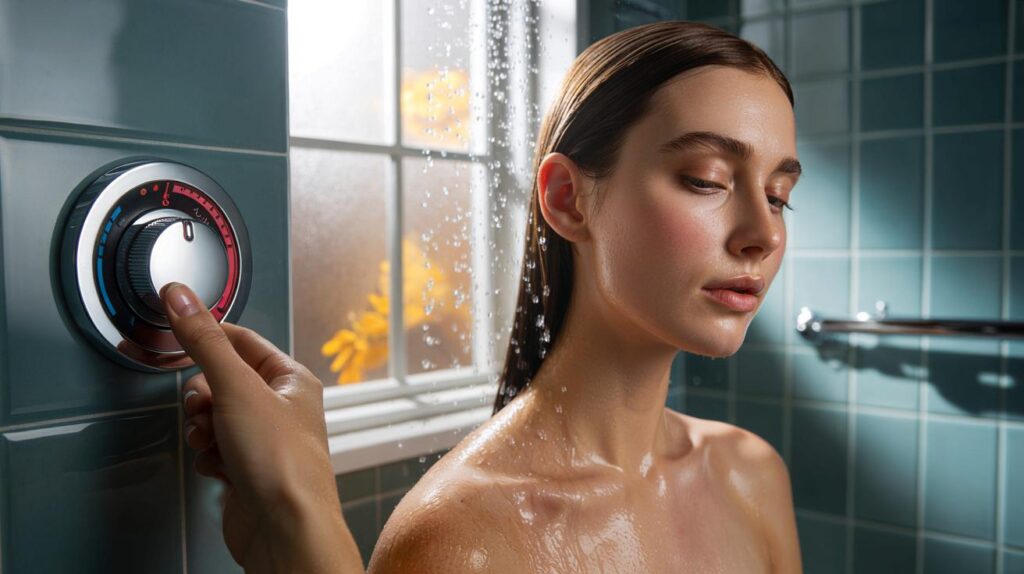
Colder mornings tempt you to twist the tap hotter. That cosy blast can quietly undo your skin’s defences before breakfast.
Britons are nudging their shower dials as October bites, yet the biggest beauty gain may cost nothing at all. A small tweak in water temperature can calm redness, stop tightness and even lift hair shine, without adding a single product to the caddy.
The autumn trap: when hot or cold water turns against your skin
Steam-fogged mirrors feel comforting. Skin does not agree. Very hot water strips protective lipids, leaving the face and body exposed to irritants. A freezing jet shocks blood vessels, cramps circulation and ramps up discomfort, especially on sensitive areas.
Hot dissolves lipids; cold constricts vessels. Both chip away at the barrier your skin relies on every day.
Signals appear fast. Red patches linger after towelling. Cheeks feel tight before the kettle boils. Shins flake under tights. None of this demands a fancy serum. It asks for a dial that sits near body heat rather than at extremes.
What your skin is telling you in the shower
- Persistent flushing or stinging after a hot rinse points to barrier stress.
- Tightness that eases only with heavy cream suggests lipid loss from heat.
- Itch on the scalp with more flakes may follow a very hot wash.
- Cold-induced prickling and lingering numbness hint at vessel constriction.
What the science says about temperature and the skin barrier
The outer skin layers form a fine lipid film. It locks in water and keeps irritants out. Heat melts and disperses those lipids. That raises transepidermal water loss and lowers comfort. Skin becomes more permeable to soaps and fragrances, so minor irritants hit harder.
The microbiome matters too. Skin hosts a community of helpful microbes. Ideal warmth protects this balance. Excess heat can disrupt it and invite dryness or breakouts. Cold hinders enzyme action involved in natural repair.
The sweet spot sits close to body temperature. It supports lipids, keeps microbes balanced and slows water loss.
Your scalp is skin too
Roots react to thermal swings. Very hot water can spur excess sebum on the scalp while drying the lengths, a combination that looks greasy at the roots and frizzy at the tips. Cold water constricts blood flow that nourishes follicles, which may dull growth over time.
The magic range: why 37–40°C changes the game
Body heat is roughly 37°C. A shower between 37 and 40°C feels comfortably warm without the sting. In this neutral zone, lipids soften but do not wash away wholesale. Circulation remains steady. The microbiome keeps working as intended.
| Water temperature | Immediate feel | Likely skin effect |
|---|---|---|
| Below 30°C | Chilly, bracing | Vessel constriction, slower repair |
| 37–40°C | Warm, comfortable | Supports barrier and microbiome |
| Above 42°C | Hot, steamy | Lipid loss, redness, dryness |
What to expect within a week
Most people see change within seven showers at the right heat. Redness settles. Tightness fades by mid-morning. Flaky zones soften. Hair gains lift because the scalp calms. Makeup sits better because the skin surface evens out. Fewer products feel necessary.
Seven days at 37–40°C often reduces dryness, itch and post-shower redness without adding a single new product.
Make the fix: five quick moves that cost £0
- Start the tap at neutral: no visible steam, and your skin should not redden within a minute.
- Keep showers under 10 minutes to limit water loss from the surface.
- Use a gentle, fragrance-light wash on sweaty areas; water alone suffices elsewhere.
- Pat dry. Do not rub. Friction damages the outer layer you’re trying to protect.
- Seal moisture on damp skin with a straightforward lotion or light oil within two minutes.
Signs your routine is working
Look for fewer white flakes on dark clothes. Fewer crease-lines on cheeks after drying. Less itch under jumpers. Hair that needs less dry shampoo between washes. These small shifts signal a calmer barrier and scalp.
Common pitfalls that undo the gains
Heat is not the only stressor. Over-washing strips the barrier even at perfect temperature. Scrubby mitts abrade skin. Strong foaming gels lift more than dirt. Aim for minimal lather and soft cloths. If you crave warmth on frosty days, choose a warmer room and keep the water within range rather than raising the dial.
Limit showers to about 10 minutes and swap rough tools for soft cloths to protect the barrier you’ve just saved.
Families, renters, students: simple ways to lock the temperature
A stick-on shower thermometer costs little and removes guesswork. Households can set a mixing valve, if available, to cap heat near 40°C for safer routines across ages. Students in shared houses can mark a comfortable dial position with a discreet dot. These tweaks prevent drift when mornings feel rushed.
Special cases: when to be extra careful
- Eczema-prone or rosacea-prone skin: stay closer to 37–38°C and keep products minimal.
- Dry, coily or colour-treated hair: warm, not hot washes preserve fibre integrity and reduce breakage.
- Babies and older adults: thinner skin needs steady warmth; test water on the inside of your wrist.
- Active gym users: rinse sweat promptly but keep heat moderate to avoid post-workout flare-ups.
Why your wallet may thank you as well
Lowering shower temperature trims energy use. For a typical household, dropping from 43°C to 38–39°C and shortening the session by two minutes can reduce hot-water demand noticeably over a month. The change feels small. The bills and the boiler notice.
How to dial it in without gadgets
Stand under the stream for 30 seconds. If your skin flushes or tingles, it is too hot. If you tense your shoulders and breathe shallowly, it is too cold. You want steady warmth, no stinging, and skin that looks its normal colour. Adjust in quarter turns and retest.
A two-step winter routine for comfort
- Morning: a warm 37–39°C rinse, light cleanser where needed, pat dry, basic moisturiser on damp skin.
- Evening: brief warm rinse or targeted wash, then a richer cream for shins, hands and any tight zones.
Neutral heat, short showers, gentle products, soft towels: four habits that build resilient skin through winter.
Thermal balance explains why this works. Lipids remain intact, enzymes that support renewal can run, and vessels stay relaxed enough to nourish the surface. The microbiome remains stable, which often reduces both spots and dryness. If issues persist despite the switch, consider fragrance-free products, check water hardness at home, and patch-test new items on the forearm before wider use.
For those tracking hair behaviour, try alternating a warm wash day with a cooler final rinse on the lengths only, not the scalp. This can add shine without stressing roots. Runners and cyclists might schedule a brief warm rinse within 20 minutes of training, then moisturise while the skin is still slightly damp to lock hydration that sweat can disturb.



I kept my shower around 38–39°C for a week and the tight, shiny forehead thing vanished. Redness down, scalp calmer, hair actually has lift. Didn’t buy a single new product—nice one.
37–40°C feels oddly precise. Without a thermometer, how do you hit that tempertaure reliably? The “no stinging, normal color” test sounds useful, but has anyone compared it to an actual reading?