
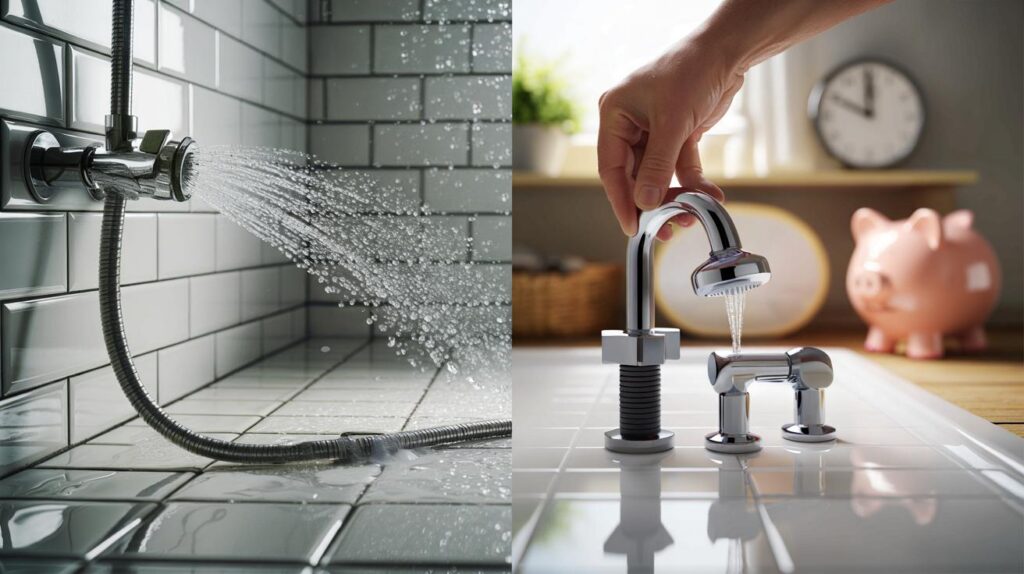
A tiny split in your shower hose can soak floors, chew through bills and patience. The fix costs pennies and takes minutes.
With call-out fees rising and water metering spreading, households need quick wins. Here’s how an everyday swap saves cash, time and waste—plus what to buy, what to avoid and when to call a pro.
Why this small failure hits your wallet and your week
A punctured hose does more than sting your ankles. It sends water where you don’t want it and inflates your costs. Typical UK shower flow sits around 8–12 litres per minute. That means a six‑minute spray from a split can send up to 48–72 litres across tiles and towels. Metered homes pay for that. Unmetered homes still feel it through damp, mould and a higher risk of damage.
One minute of mis‑spray can waste 8–12 litres. A week of “I’ll sort it later” adds up to a bathtub or two.
There is another pressure point. Many plumbers now charge £60–£120 to attend, before parts. Yet most hoses use simple 1/2‑inch BSP threads you can undo by hand. No adjustable spanner. No drama.
Spot the failure before the floor tells you
Little clues that point to a split
- Fine mist or side jets shooting from the hose when the water runs.
- White, crusty marks around the connectors—mineral buildup often precedes leaks.
- A whistling sound as water pushes through a pinhole.
- Puddles under the riser rail, even with the curtain or screen shut.
Aging, limescale and twisting shorten hose life. Some PVC models harden faster in cool, damp bathrooms. Metal‑clad versions resist knocks but still fail if over‑tightened or kinked.
The no‑tool change millions can manage
What to have to hand
You likely own everything needed. Switch off the tap at the mixer. Keep a small towel, a dry cloth for grip and a fresh pair of rubber washers. Many new hoses ship with washers in the bag; keep spares in a drawer for next time.
Hand‑tight is the goal. The washer makes the seal; brute force only damages threads.
Do the swap in nine minutes
- Turn the mixer off. If you have isolation valves, close them for peace of mind.
- Twist the hose anti‑clockwise at the tap end. Use a dry cloth for grip if it feels slick.
- Undo the showerhead end the same way and set the old hose aside.
- Press a new washer into each end of the replacement hose. They sit flat inside the female fittings.
- Offer the tap‑end fitting up to the thread. Turn it clockwise by hand. If it snags, back off and start again to avoid cross‑threading.
- Attach the showerhead end the same way. Stop when you feel resistance. No extra muscle needed.
- Run the water, check each joint with a fingertip and give a gentle final nip by hand if you spot moisture.
What to buy: materials, length and anti‑twist
Match features to how you shower
Length matters. A 1.5 m hose suits most enclosures; 1.75–2.0 m helps with rinsing hair or cleaning the tray. Flexible metal coils feel tough and handle heat well. Smooth PVC is lighter, easier to wipe and often cheaper. Look for anti‑twist or swivel ends if children or tall users spin the head a lot.
Limescale beats seals over time. Rubber washers cost pennies, yet stop weeps at first install and six months down the line. Keep a small bag of replacements with your spare bulbs and fuses.
| Item or outcome | Typical UK figure | Notes |
|---|---|---|
| New hose price | £7–£18 | PVC at the lower end, metal‑clad mid‑range; premium finishes higher |
| Plumber call‑out | £60–£120 | Before parts; evenings and weekends can cost more |
| Time to DIY | 5–10 minutes | No tools if threads are free and washers fit |
| Water wasted by split | 8–12 l/min | Based on common flow rates; aerated heads vary |
Safety, standards and those hidden pitfalls
Avoid burns and damaged threads
Run the tap cold first when you test. A split can redirect hot water onto hands. If your mixer is thermostatic, keep the setting low on the first run and lift it gradually.
Cross‑threading is the classic mistake. Start threads square and turn back a touch if you feel grit or a jump. If a connector looks crushed or oval, swap the tail before you try again.
When a simple job stops being simple
- Seized fittings or white crust across threads: wrap with a cloth and turn firmly by hand. If it still will not move, pause before you snap the tail.
- Brown water or flakes at the joint: corrosion on older fittings may call for a new tap end or a pro.
- Persistent leaks after fresh washers: check for a hairline crack in the showerhead or a split in the tap outlet.
Money and water: why acting today pays this week
Households on a meter pay for every litre. If a split sprays for just six minutes each morning, 48–72 litres drift away daily. That is over 300 litres by the weekend, before you mop up. In flats, stray jets creep behind panels and under vinyl. Insurers often treat slow leaks harshly, with higher excesses and strict evidence checks.
Swap a £12 hose, save a call‑out, and keep up to 350 litres from vanishing before Monday.
There is a side benefit. A fresh hose with smooth bore and clean washers helps the mixer deliver steadier pressure. That can trim shower time by a minute, which trims energy as well as water. With gas and electricity still pricey, those little gains stack up through winter.
Smarter choices that last longer
Build a small bathroom kit
One zip bag with four spare 1/2‑inch rubber washers, a microfibre cloth and a roll of PTFE tape solves many drips. Keep it next to the stop tap note on your fridge. When something weeps, you act within minutes, not months.
Make limescale less of a bully
If your area runs hard water, fit a head with rubber nozzles you can rub clean. Soak the head in warm vinegar for 30 minutes every few weeks. A clean head reduces back‑pressure that strains the hose and joints.
Questions people ask—and what actually helps
Do I need a wrench?
Not usually. The washer creates the seal. Tighten by hand until the fitting stops, then a small extra turn. If you reach for tools, cushion jaws with cloth to avoid bite marks.
Will any hose fit my mixer?
Most UK hoses use 1/2‑inch BSP threads on both ends, which match almost all mixers and heads. If your kit uses a proprietary quick‑release, choose a matching replacement or an adaptor.
What length should I pick?
Measure from the mixer to your highest comfortable head height and add a gentle curve. For bath‑mounted taps, lean longer; for compact cubicles, keep it neat to avoid tangles.
If you want to go further
A flow‑limited head (6–8 l/min) keeps spray comfortable while cutting water use by a third. Pair it with a new hose and you reduce waste and mist spray in one go. For households with children, a hose with built‑in swivel ends stops kinks that cause surprise torrents.
Keep a short log of small fixes: date, part, cost. Over a year you will see the trend—fewer leaks, lower bills, drier floors. Add smoke alarm battery checks and a winter stop‑tap test to the same list. Small routines make homes calmer, and bathrooms less eventful, even on cold mornings.



Just swapped my split hose in under 9 minutes following this—no tools, just two new ruber washers. Hand‑tight did the trick and no more misting tiles. Definitley saved me a weekend call‑out and a soggy bathmat. Bonus: picked a 1.75 m anti‑twist hose and it feels smoother. Cheers! 🙂