
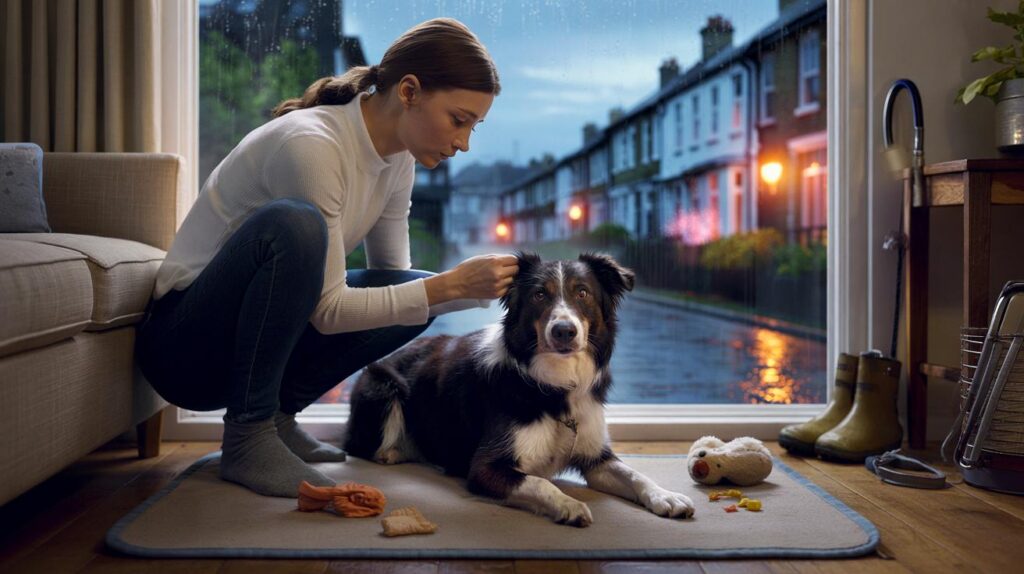
You get home wound tight; your dog reads you like a book. Autumn piles on pressure, and tails tell the truth first.
Britain’s darker evenings, soggy walks and Bonfire Night jitters turn small household tensions into a growl, a whine or a sulk. Owners feel it in their shoulders; dogs feel it in their stomachs, their sleep and their stride.
Why your stress leaks into your dog’s day
Dogs track human mood with remarkable accuracy. They scan faces, follow tone, and monitor tiny shifts in movement. Your raised voice nudges their arousal up. Your clenched jaw can shorten their fuse. Over time, that drip-feed of pressure shapes behaviour at home and on walks.
Research has linked owner stress with changes in a dog’s long-term cortisol patterns. That means your habits, not just your bad day, can set a background level of tension. Add poor sleep, skipped walks, or rushed mealtimes, and your companion starts running on fumes.
Calmer humans produce calmer dogs. Lower shoulders, slower breath and predictable routines reset both nervous systems.
Autumn’s double whammy in britain
Shorter daylight shrinks exercise windows. Rain and mud cut sniff time. Fireworks disturb nights for a fortnight either side of 5 November. Doorbells ring more around Halloween. Work deadlines tighten before Christmas. Owners move faster; dogs cope with less information and more noise. That’s the recipe for anxious pacing, tummy upsets and training setbacks.
Spot the signs before they spiral
Stress in dogs rarely arrives as one dramatic moment. It drips through small changes that build into bigger problems. Watch for clusters during the same week.
- Out-of-context yawning, lip licking or pinned-back ears.
- Shadowing you from room to room, or hiding away under a table.
- Restlessness at night or a startle at faint sounds.
- Loose stools, vomiting or a sudden loss of appetite.
- Chewing doors, shredding post, or barking after you leave.
- Grumbles during handling, or stiff, slow movement after exercise.
One sign once is noise; the same sign, three days running, is a signal to act.
| sign | likely trigger | quick response |
|---|---|---|
| yawning and lip licking indoors | tense voices, rushed routine | switch to soft tone; add a five‑minute calm break |
| chewing or shredding | boredom, excess energy | offer a stuffed chew; give a 15‑minute sniff walk |
| restless evenings | missed nap, overstimulation | dim lights; slow grooming; short scatter‑feed on a mat |
| clinginess when you return | unpredictable arrivals | create a calm return ritual; no fuss for 60 seconds |
Nine fixes you can start tonight
Build a five‑minute breathing ritual
Stand still after you get in. Drop your shoulders. Inhale for four, exhale for six, repeat ten times. Your dog will mirror your slower pace. Pair it with a cue like “all done” so the end of work energy has a clear full stop.
Keep the timetable boring, on purpose
Feed and walk within a 30‑minute window every day. Predictability lowers baseline arousal. Add a ten‑minute buffer before each outing for a toilet break and a calm lead clip. Small margins prevent last‑minute rushes that spike nerves.
Swap fast miles for slow noses
Two “sniffaris” of 20 minutes on a long line each day beat one frantic sprint. Let your dog choose routes. Sniffing burns mental energy, steadies breathing and softens reactivity. Wet parks still work; edges and hedgerows hold the best smells.
Teach a settle on a mat
Place a mat near you. Scatter five small treats. When paws hit the mat, say “good” and feed low and slow. Build to three short sessions per day, one to three minutes each. This creates a portable calm zone for TV evenings and visitors.
Use touch that signals safety
Slow ear strokes, chest rubs and gentle grooming switch on rest-and-digest mode. Count ten strokes, pause, and watch for softer eyes or a sigh. Stop if your dog turns away. Consent builds trust more than force ever will.
Rotate enrichment like a toy library
Offer two items per day and swap tomorrow: a stuffed kong, a lick mat, a snuffle mat, a safe chew. Chewing reduces heart rate and gives an outlet for tension. Freeze soft food in layers for longer focus.
Dial down the soundtrack
Background TV or street noise can keep arousal high. Try low-volume talk radio or white noise during fireworks season. Build a den: covered crate or a cosy corner with heavy blankets. Pair bangs with scattered treats so booms predict snacks, not fear.
Outsource where needed
Book a midday walker during peak workload weeks. Ask a neighbour for a garden let-out if trains run late. If worry lingers, speak to your vet. Pain, digestive issues or thyroid shifts can fuel behaviour change. A qualified behaviourist can design a plan and, if needed, work alongside medication or pheromone support.
Protect your own recovery
Pick two ten‑minute slots daily with no phone and no emails. Drink water. Cut late caffeine. Short human resets stop the spillover that lands on your dog. Write a firework‑week plan now: early walk, blinds down, dinner early, chew ready.
When to call the vet or a behaviourist
Seek help if your dog stops eating for a day, shows bloody stools, snaps when touched, or tries to escape rooms. Sudden change after a fall, collision or a difficult play session needs checking. Separation distress rarely improves without a structured plan. Medical pain and gut discomfort often masquerade as “naughty”.
Pain hides inside behaviour. Rule it out first; training works better when bodies feel safe.
Make the next 30 days calmer
Set one tiny target per week and track it. Small gains stack. Your dog will show you the difference in softer movement and steadier sleep.
- Week 1: fix meal and walk windows; add the five‑minute breathing ritual at the door.
- Week 2: two sniff walks on a long line, four days out of seven.
- Week 3: mat settle training, nine micro‑sessions across the week.
- Week 4: firework prep; den set‑up; sound at low volume with food; chew ready by 6pm.
Extra detail that saves stress
A micro‑ritual on return prevents door‑excitement. Keys down, shoes off, breathe ten cycles, scatter five treats on the mat, then greet. The sequence tells your dog, “Calm first, fuss second.” Repeated twice a day for a week, it becomes habit.
Risk comes from over‑exercise in bad weather. Long, fast romps on slippery ground strain joints and spike adrenaline. Short, thoughtful sessions beat heroics: ten minutes of nose work indoors, a cardboard “parcel” to shred, and a gentle massage. The advantage is measurable: fewer zoomies at night and better bowel rhythm.
For scent games, label three boxes with A, B, C. Hide a treat in one, rotate positions, and let your dog search. Start easy. Each success builds confidence that carries into noisy, busy days. Confidence reduces reactivity far more than correction.
If fireworks are the main worry, plan “soundproofing by schedule”: early walk before dusk, curtains closed by 5pm, TV or radio at low level, high‑value chew, and a calm corner where no one disturbs your dog. Keep leads and tags on during peak nights, just in case a bang spooks the boldest hound.



Finally, something practical. The breathing ritual is gold – definately trying it tonight.