
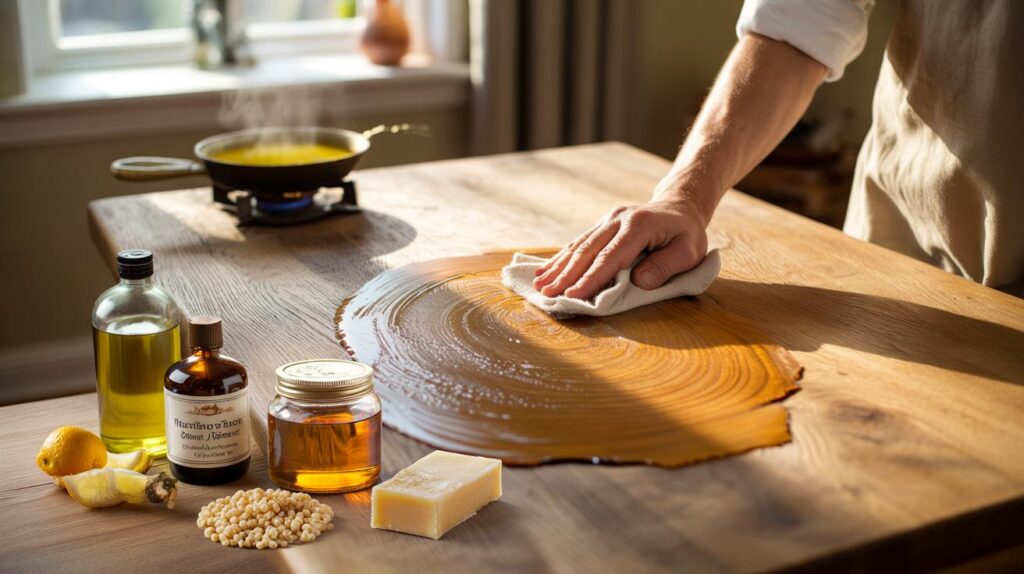
Across Britain, families are rediscovering a kitchen ritual that once scented parlours, saved shillings and kept heirlooms looking respectable.
Today, that method returns with clear ratios, gentle heat and everyday ingredients, promising a drier finish than many bottled polishes.
What is driving the home-made wood polish revival
Households want fewer solvents on surfaces, lower costs and finishes that feel like wood, not plastic. A three-ingredient balm meets those aims. It revives sheen, tightens the look of the grain and leaves a dry, clean touch. It also cuts packaging waste and travels from pantry to parlour without a van.
The appeal is practical. Beeswax brings structure and a soft glow. Olive oil nourishes fibres and carries the wax. A few drops of citrus essential oil lift odour and mask any mustiness. Carnauba wax can replace beeswax for a plant-only option with a slightly glossier result.
The golden ratio: 35 g beeswax to 70 ml extra virgin olive oil, plus 5–10 drops of lemon or sweet orange oil.
The 3‑ingredient method, step by step
Gather and measure
- 35 g beeswax pellets or grated block (or carnauba, same amount)
- 70 ml extra virgin olive oil
- 5–10 drops lemon or sweet orange essential oil
- Double boiler or heatproof bowl over a pan of simmering water
- Sterilised glass jar with lid
- Cotton or microfibre cloths, and 240‑grit sandpaper
Use gentle heat: the 82°C rule
Set up a steady bain‑marie. Keep water at a tremble, not a boil. Wax scorches near 82°C and loses clarity. Stir beeswax as it melts for 5–7 minutes. Once clear, stream in olive oil while whisking. The mix turns golden and uniform. Take it off the heat, add the citrus drops, then pour into the jar. It firms to a soft butter in about half an hour.
Never let the wax exceed 82°C. Slow heat preserves the sheen and helps the balm set to a smooth, spreadable texture.
Prepare, apply and buff
Dust the surface and mask hardware. For tired finishes, a light key with 240‑grit sandpaper improves bonding. Work in small sections. Scoop a pea‑sized amount onto a clean cloth and massage in slow circles with the grain. Wait 15 minutes, then buff with a fresh cloth until the surface feels dry and satiny. Repeat for two or three whisper‑thin coats.
Three thin coats beat one thick coat that grabs at your fingers and attracts dust.
Which woods benefit, and how often you should reapply
Use the balm every two to three months on pieces that see daily handling. Apply more often on dining tables and bannisters; less on bookcases. The film resists light splashes and scuffs yet lets timber breathe. Expect slightly deeper tones on pale species after the first coat. Always test on a hidden corner.
| Wood | Effect | Notes |
|---|---|---|
| Oak | Highlights grain, warms colour | Responds well to beeswax depth; carnauba adds extra shine |
| Pine | Evens blotches, soft glow | May darken a shade; use thin coats and test |
| Walnut | Richens figure, silky hand | Buff thoroughly to avoid haze on dark tones |
| Teak | Tames dryness, subtle lustre | Remove factory oils before first application for good grip |
| Beech and kitchenware | Smoother feel, cleaner look | Omit fragrance on spoons, boards and bowls used with food |
Cost, time and results you can expect
A 100 ml batch takes about 12 minutes of hands‑on time. At typical prices, 35 g beeswax costs roughly £1.00. Seventy millilitres of olive oil adds around 20–30 pence. Ten drops from a 10 ml bottle of citrus oil come to about 20–40 pence. That puts each jar near £1.50. A jar covers several chests of drawers and a dining table with multiple coats.
Compared with spray polishes, you avoid wet residues and silicones that can build up and streak. The finish is dry to the touch within minutes of buffing. The odour fades to a faint citrus‑wax note by the next day.
Safety and household hygiene
- Food contact: skip essential oils on chopping boards and baby items, or use a food‑safe citrus oil at one or two drops only.
- Allergies: check for sensitivities to beeswax or citrus. Patch test on skin and on a hidden wood area.
- Heat: use a stable pan on low. Never leave melting wax unattended. Keep water below a simmer.
- Storage: label the jar and store it cool and dark. Use within six months for best scent and glide.
- Floors: do not use on treads or flooring. The low‑friction sheen can become slippery.
Troubleshooting and smart tweaks
Sticky surface
If a surface stays tacky, you used too much or buffed too soon. Wipe with a cloth lightly dampened with olive oil, then buff dry. Apply thinner coats next time and extend the wait to 20 minutes in cool rooms.
Too soft or too hard in the jar
Soften a stiff batch by reheating and adding 5 ml olive oil. Firm up a runny batch by melting in 5 g more wax. Adjust in small steps until it spreads like soft butter.
Cloudy finish on dark woods
Clouding comes from trapped wax. Warm the surface gently with a hairdryer on low and buff with a clean cloth to clarity. Work thinner on the next pass.
Choosing between beeswax and carnauba
Beeswax gives a mellow glow and a forgiving spread. Carnauba sets harder and shines more, yet needs extra buffing. If you want a quicker, satin result, start with beeswax. For table‑top sparkle, try carnauba in the same 1:2 ratio with oil.
Where this fits in your wider care routine
Plan a simple rotation. Dust weekly with a dry cloth. Refresh high‑touch areas every eight weeks. Re‑key tired patches with 240‑grit before the first coat of the season. For water rings, let the wood dry fully, then massage a tiny amount of balm and buff warm to lift the mark’s edge.
Extend the idea to small repairs. A dab fills hairline scratches on cabinet fronts. On garden tools with wooden handles, a single coat after winter stops splitting. For musical instruments and cutting boards, keep fragrance minimal or absent, and aim for one very thin coat followed by long, gentle buffing.
What this means for your purse and the planet
Each batch replaces multiple aerosol cans and plastic bottles. The jar refills in minutes, and the cloths wash and reuse. You control every input, right down to the scent and shine. If olive oil feels too heavy on a pale maple, switch to a light, neutral oil and keep the same 1:2 ratio with wax. If you need more scuff resistance on a hall table, add one more thin coat and extend the buffing session.
Small habits add up. With a steady hand and a watch on the thermometer, the 35 g and 70 ml rule revives tired timber, keeps surfaces calm to the touch and frees you from harsh aerosols. That is a quiet win for homes, budgets and anyone who prefers the feel of real wood under their fingertips.



Tried this today—35 g wax to 70 ml olive oil—and my oak sideboard looks alive again. Three whisper‑thin coats, 15‑minute wait, then a hard buff: dry, satiny, no greasy feel. This is definately going into my weekend routine. Thanks!