
Bills feel heavier and water rules tighten. A small bathroom tweak could trim costs and stress without changing your routine.
Toilets swallow a hefty share of household water, and older cisterns can send nine litres down the drain at once. A low‑tech bottle placed inside the tank cuts the refill volume automatically, every time you press the button. The trick costs nothing, takes minutes, and suits renters as much as homeowners.
How a simple bottle cuts each flush
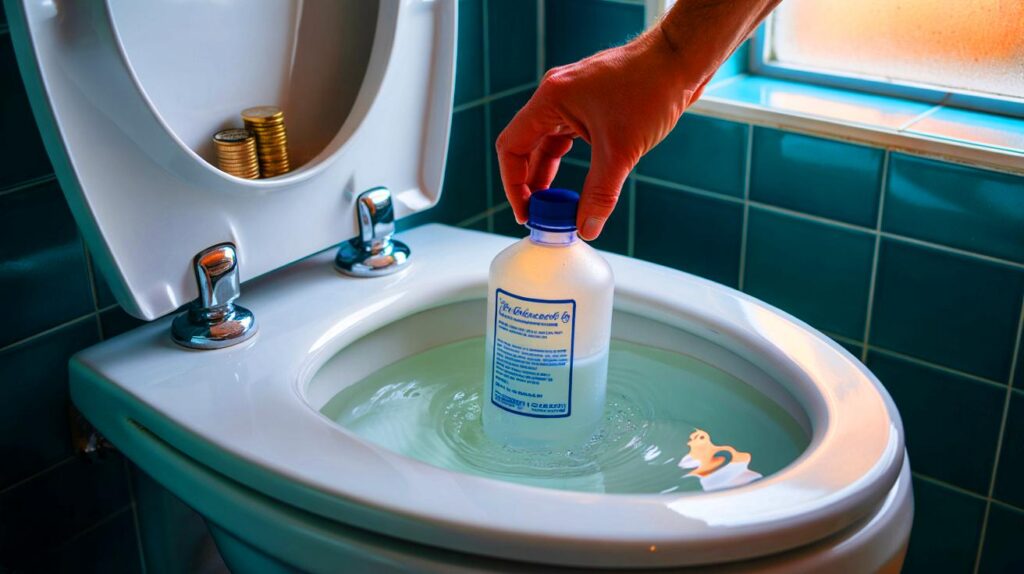
The method is straightforward. A sealed plastic bottle occupies space in the cistern, so the valve refills to a lower volume. Less water stored means less water released. With the right placement, you still get a single, clean flush, only with fewer litres used.
Put one sturdy, sealed bottle in the cistern and trim roughly 1.5 to 3 litres per flush — up to 30% on older tanks.
Many legacy toilets hold 7 to 9 litres. With that capacity, squeezing out 15–30% makes a clear dent in usage. Newer dual‑flush models already run leaner, yet a carefully sized displacement can still shave a little more, provided performance stays sound.
Step‑by‑step: fit the bottle without harming the mechanism
Choose a smooth, robust bottle of 0.5–1.5 litres. Fill it with water or sand. Tightly screw the cap. The bottle must not leak or deform.
- Lift the cistern lid and locate the moving parts: the float and the flush valve or siphon.
- Turn off the supply if needed. Flush once to see how components travel.
- Place the bottle vertically in a free corner, away from the float arm and valve body.
- Turn the water back on. Let the cistern fill. Flush and watch for smooth operation.
- Adjust position if you notice rubbing, slow refilling, or an incomplete clear.
The goal is unchanged behaviour: one press, one clean evacuation, no second flush required.
Avoid common mistakes and keep it reliable
Check sealing and stability
A leaky bottle slowly fills and loses effectiveness. A soft, flimsy wall can collapse under water pressure. Use a well‑made PET bottle, cap it hard, and test it under the tap before fitting. Sand adds weight and prevents floating, but clean water works if the shape tucks securely into a corner.
Protect the moving parts
Give the float and valve free travel. If the bottle nudges the float, the fill level may drift, or the valve may fail to shut. Keep a finger’s gap between the bottle and every moving component.
Never use brick or crumbly blocks
Bricks shed grit, discolour the water, and can abrade seals. Ceramic lumps can crack and jam. Stick to intact plastic bottles with rounded edges.
Test performance, not just volume
If waste lingers or paper clings, reduce the displacement or reposition the bottle. A modest, reliable saving beats a large saving that forces a second flush. Listen for trickle sounds that suggest a seeping valve, and fix those leaks first; a silent leak wastes far more than any bottle can save.
If the flush struggles, back off the displacement. Efficient toilets save water only when they clear the pan in one go.
When to consider a dual‑flush button instead
Dual‑flush kits let you choose a short or full flush and often deliver bigger day‑to‑day savings. Many standard cisterns accept a retrofit kit with basic tools.
Costs and payback
A typical conversion kit costs £15–£35. Fitting takes about 20–30 minutes if access is easy. Savings vary with household size and habits. In a two‑person flat, a bottle may save around 10–20 litres a day. A dual button, used properly, can double that.
Big families see the fastest returns. Assume an average of five flushes per person per day. In a four‑person home, a 3‑litre cut per flush saves about 60 litres per day, or roughly 22 cubic metres per year. Depending on your combined water and wastewater tariff, that can land anywhere from £50 to over £100 in annual bill reductions.
How much could you save? Two quick scenarios
| Household | Saving per flush | Flushes per day | Annual water saved | Bill impact (indicative) |
|---|---|---|---|---|
| 2 people, older cistern | 1.5 litres | 10 | 5.5 m³ | ~£15–£30/year |
| 4 people, large cistern | 3 litres | 20 | 21.9 m³ | ~£60–£120/year |
These ranges reflect typical UK metered charges for water plus sewerage. Your figure depends on local tariffs and how often a short flush suffices.
Go further without a plumber
Capture warm‑up water
Place a bucket in the shower while it warms. Most homes can reclaim 4–6 litres a day this way. Tip it into the cistern or pour it straight into the bowl to trigger a gravity flush. Keep shampoo and soap out of the bucket if you plan to feed the cistern.
Fit small flow accessories
A basin tap aerator maintains comfort while reducing flow. A partial cistern bung designed for toilets also works, with smoother edges than ad‑hoc objects. Many lids hide an adjustment screw on the float; a slight tweak can lower the set level by a few millimetres for repeatable savings.
Hunt down silent leaks
Dye the cistern with a food colouring drop. Wait ten minutes without flushing. If colour appears in the bowl, the valve leaks. Replacing a worn seal or flapper can save thousands of litres a year and costs only a few pounds.
What if your flush needs more water?
Some pans pair poorly with weak flush volumes, especially on long, older soil runs. If you notice frequent streaks, odours, or slow drains, restore a little volume or switch to a dual‑flush kit for on‑demand control. Hygiene beats headline savings. You want the lightest flush that still clears waste reliably.
Quick compare: bottle, dual‑flush, new toilet, or greywater
- Bottle displacement: free, reversible, instant results, saves up to 30% on large cisterns; check performance monthly.
- Dual‑flush retrofit: modest cost, larger potential savings, gives choice per use; needs correct setup.
- New efficient WC: highest upfront cost, best long‑term design, modern 6/4‑litre or lower volumes; plan for installation.
- Greywater reuse: buckets or plumbed systems reduce potable water use; watch hygiene and keep solids out of pumps.
Start with the bottle. If the flush stays crisp, you gain litres every day for free. If not, step up to a controllable dual‑flush.
Extra tips for renters and busy households
The bottle tweak is non‑destructive and removable in seconds, which suits rented homes. Keep the cistern lid seated flat to reduce noise. Label the bottle with the date you fitted it and check it during a regular clean to confirm it stays sealed and clear of moving parts.
Families with children may prefer a slightly smaller displacement to avoid half‑flush mishaps. Households on an unmetered supply still benefit, because many regions impose hosepipe bans and encourage lower usage. Lower demand also lightens the load on local treatment works during dry spells.
If you plan to combine measures, start small and test after each change. A little trimming on the fill level, a well‑placed bottle, and smart use of the short button can stack nicely. The aim is a dependable, one‑press flush that uses only what it needs, not what the old cistern happens to hold.



Brilliant hack! Tried the bottle trick last winter and our bill dropped noticeably; no second flushes either. For renters this is gold. Quick question: is sand in the bottle better than water for long‑term stabilty?