
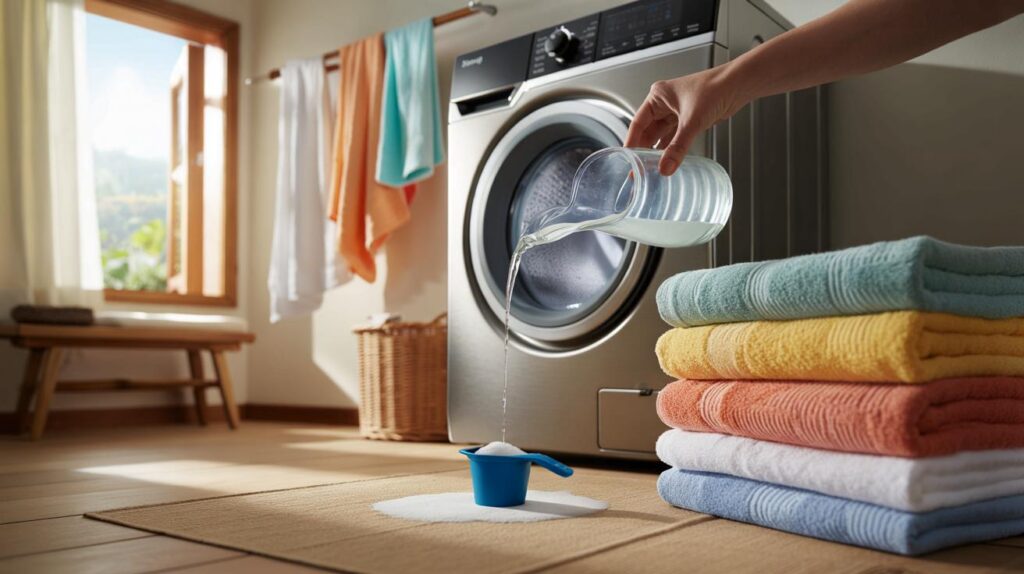
Cold, damp homes and busy bathrooms often leave freshly laundered towels smelling faintly sour, even when they look spotless and feel fluffy.
That nagging whiff usually points to trapped moisture, leftover detergent and cooler cycles that miss the mark. The remedy sits in simple, repeatable habits that restore freshness and keep pile soft without wrecking fibres.
Why clean towels still smell musty
Towels face unique pressure. They hold water, body oils and skin cells, then often hang in humid rooms. Add low-temperature cycles and generous scoops of detergent, and odour finds the perfect host.
Hidden culprits in the fibres
- Persistent humidity: slow drying lets microbes multiply inside cotton loops.
- Detergent overload: excess surfactants cling to fibres and trap moisture.
- Cool washes: 30–40°C leaves biofilm behind, even if fragrance masks it at first.
- Stagnation: damp towels in a laundry basket or a closed drum turn sour fast.
- Fabric softeners: cationic coatings flatten pile and reduce absorbency, so towels stay wetter for longer.
Odour is less about dirt and more about residue plus moisture. Break that cycle and the smell goes with it.
The surprising habit that resets freshness
One change does the heavy lifting: schedule a 60°C cotton cycle to purge bacteria and built-up residues. Do it every three to four weeks for regular bathroom towels, or sooner if the room stays humid.
Cut the detergent dose as well. Modern formulas clean efficiently at lower doses. Using less prevents residue, speeds rinsing and keeps loops open so air flows and water escapes.
Then add plain white vinegar during the rinse. Acetic acid (about 5%) neutralises alkaline film and helps dissolve stubborn build-up. It leaves no vinegar scent once dry.
Three numbers that matter: 60°C once a month, 150 ml white vinegar in the rinse, and a lighter detergent scoop.
How to do the 60°C reset without ruining towels
- Check the care label first; most cotton towels tolerate 60°C well.
- Load loosely to let water and heat circulate through the loops.
- Use half your usual detergent dose for this reset wash.
- Pour 150 ml of white vinegar into the fabric softener drawer so it enters during the final rinse.
- Select a full-length cotton programme with an extra rinse if available.
Drying and storage: where most odours begin
Drying speed decides everything. Remove towels from the drum at cycle end. Shake them to lift the pile, then dry fast.
- Line-dry outdoors when possible; moving air strips moisture quickly.
- Indoors, hang on a heated rail or in a ventilated room with a window cracked open.
- A tumble dryer on low to medium heat for 10–15 minutes at the end can fluff pile and finish the job.
- Never fold or stack when even slightly damp.
Think hours, not days. Aim for towels to go from wash to fully dry within the same day.
Do this, skip that: a quick guide
| Action | Why it helps | How often |
|---|---|---|
| 60°C cotton wash | Breaks biofilm and clears residue | Every 3–4 weeks |
| Reduce detergent dose | Improves rinsing and drying speed | Every wash |
| 150 ml white vinegar in rinse | Neutralises odour and softens without coating | When smells linger |
| Quick, breezy drying | Stops musty growth | Every wash |
| Clean door seal and drawer | Removes hidden sludge that re-seeds odour | Monthly |
| Drum maintenance cycle | Flushes grime from inner parts | Every 2 months |
Small tweaks that make a big difference
Ventilation and spacing
Give each towel its own hook or bar. Crowding slows evaporation. Crack a window after showers or run an extractor for 20 minutes. In winter, open doors to share heat and airflow across rooms.
Water hardness and product choice
Hard water boosts residue. If you live in a hard-water area, use a detergent with built-in softeners or add a water softening additive. This lets you cut the dose further and still rinse clean.
What to avoid
- Strongly fragranced detergents to mask smells. Scent hides the issue rather than fixing it.
- Bleach mixed with vinegar or acids. Keep these separate to avoid dangerous fumes.
- Overloading the drum. Packed towels don’t rinse or spin well.
- Fabric softener on towels. It reduces absorbency and holds damp.
A realistic plan for busy households
Rotate two sets per person so you always have a dry spare. Wash bathroom hand towels every three days and bath sheets weekly, with the 60°C reset once a month. If a towel smells after one use, bump the reset up to fortnightly until it settles.
Time and cost stay modest. A monthly 60°C cycle on a modern A-rated machine typically adds a fraction of a kilowatt-hour compared with 40°C. The vinegar dose costs pennies and replaces softener. Faster drying saves energy because shorter tumble times finish the job.
When a towel is past its best
Flat, harsh towels that refuse to dry quickly may have worn fibres or permanent residue. If a 60°C reset plus vinegar and reduced detergent fail after three attempts, demote them to gym rags. Choose new towels with dense, looped cotton and a mid-weight GSM so they dry at a reasonable pace.
Extra know-how for long-lasting softness
Break-in wash for new towels
New towels often carry sizing that repels water. Wash them once with half-dose detergent and 150 ml white vinegar before first use. Skip softener. This primes absorbency from day one.
Targeted refresh for heavy-use weeks
After guests or a flu spell, run a short 60°C refresh on towels and bath mats. Open windows during showers, and add an extra spin to push out more moisture before drying.
Keep it simple: lighter detergent, a hot reset, swift drying, and a vinegar assist when needed. Freshness follows.



Followed your three-step fix last night—half detergent, 60°C cotton, 150 ml white vinegar in the rinse—and dried them quickly on a rail. Towels that stank for weeks are neutral again and actually feel flufier. Didn’t expect vinegar to leave zero smell. Cheers!
Quick question: do you reccomend the 60°C reset for bamboo-cotton blends or towels with decorative borders? I worry about shrinking and colour bleed. Also, will regular vinegar in the softener drawer degrade the rubber door seal over time, or is that just a myth?